How to Hike Songnisan in Boeun, from 1,058.4 m Cheonwangbong Peak to Beopjusa Temple and Sejogil
Songnisan in Boeun, Chungcheongbuk-do, is a national park where Cheonwangbong Peak at 1,058.4 m, the rocky ridge of Munjangdae, the cultural heritage of Beopjusa Temple, and the relatively gentle Sejogil forest trail are all connected within one area. Since the physical demands of a summit hike and a forest walk differ considerably, it is safest to decide on your goal for the day first and check trail restrictions and permitted entry times immediately before setting out.
I’ve been here?
Your check-in helps the next traveler.
26 people viewed this week Be the first
One tap — no writing needed
The Terrain of the “Mountain That Left the Secular World,” Designated a National Park in 1970
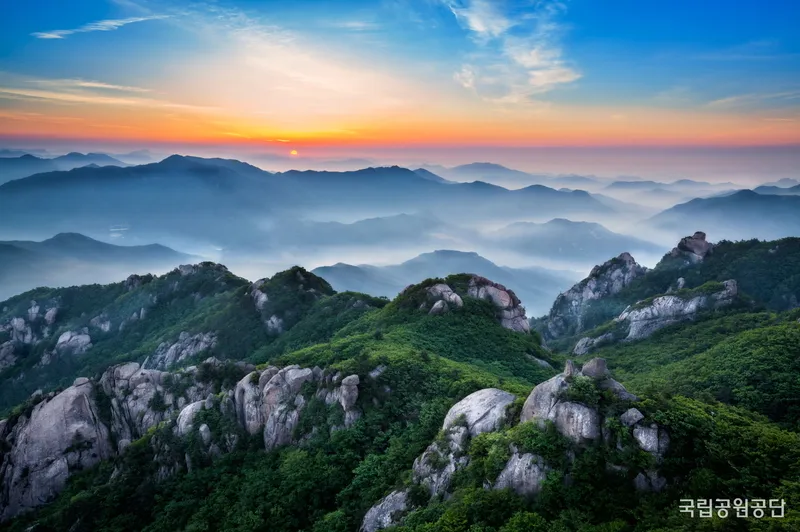
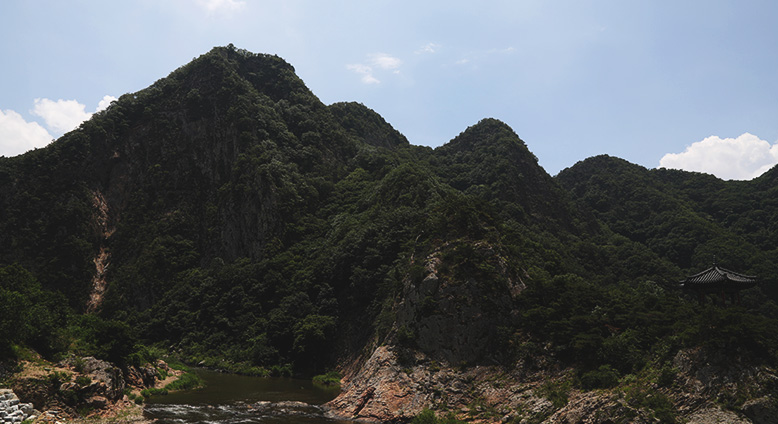
Songnisan is a mountain spanning Boeun in Chungcheongbuk-do and Sangju in Gyeongsangbuk-do, with its main peak, Cheonwangbong, standing at 1,058.4 m. The Korea Forest Service introduces the mountain as rising at the junction of the Baekdu Daegan and Hannam-Geumbuk Jeongmaek mountain ranges, encompassing eight peaks including Birobong, Gilsangbong, and Munsubong, as well as rocky landscapes such as Munjangdae and Sinseondae. It was designated a national park in 1970.
“Songni” literally means leaving the secular world. Boeun County explains that Beopjusa Temple was founded on Songnisan, which was a border area during the Three Kingdoms period, and became a base that demonstrated Silla’s national power. Therefore, it is more accurate to view this area not simply as a mountain for summit certification, but as a region shaped by the overlap of mountain Buddhist temples and the rocky ridges of the Baekdu Daegan.
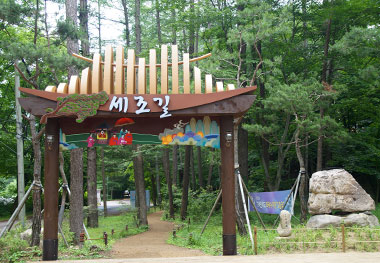
A Day to Choose Sejogil: 2.4 km from the Beopjusa Iljumun Gate to Sesimjeong
If elevation and a long hike feel burdensome, you can first choose the 2.4 km Sejogil trail running from the Beopjusa Iljumun Gate to Sesimjeong. Tourism information introduces this as a forest path connected to the story of King Sejo walking through Songnisan during his stay there. If combined with a visit to the Beopjusa grounds, allowing approximately 2 hours 30 minutes to 3 hours including the round trip and sightseeing is generally reasonable.
The starting area for Sejogil is around 405 Beopjusa-ro, Songnisan-myeon, Boeun-gun, Chungcheongbuk-do. Many visitors plan to tour Beopjusa along with the trail itself, so check the temple’s visiting hours and the current status of national park trail restrictions on the same day. After rain, areas around the valley and sections with decking may be slippery, so sneakers or hiking shoes with nonslip soles are recommended.
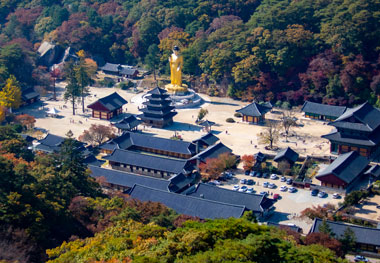
Why Beopjusa Became the Trailhead: A Mountain Temple’s Present-Day Legacy from the 7th to 9th Centuries
Beopjusa was inscribed in 2018 as a component of the UNESCO World Heritage site “Sansa, Buddhist Mountain Monasteries in Korea.” UNESCO evaluates the seven mountain temples, including Beopjusa, as demonstrating the spatial organization of Korean mountain temples formed between the 7th and 9th centuries, along with traditions of faith, practice, and everyday life that continue to the present day.
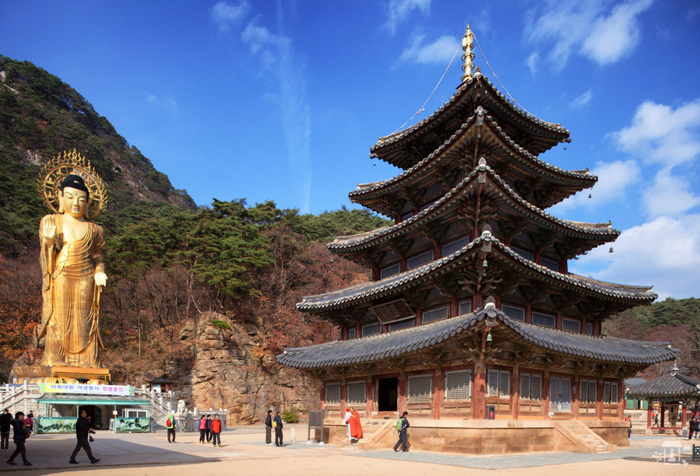
When passing through the Beopjusa area, it is advisable to set aside time to view individual cultural assets such as Palsangjeon, the Twin Lion Stone Lantern, and Seokryeonji. If combining a summit hike on the same day, the itinerary is less demanding if you separate the goals—for example, Beopjusa and Sejogil in the morning, or the temple grounds in the afternoon—rather than rushing through the temple visit.
Cheonwangbong at 1,058.4 m and Munjangdae: Sections Requiring Different Preparation from a Forest Path
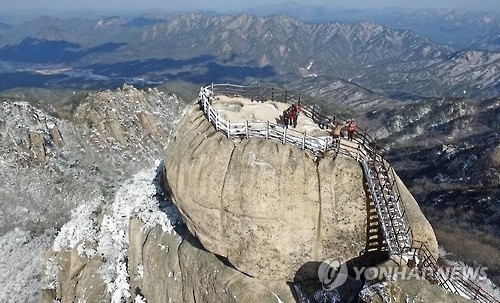
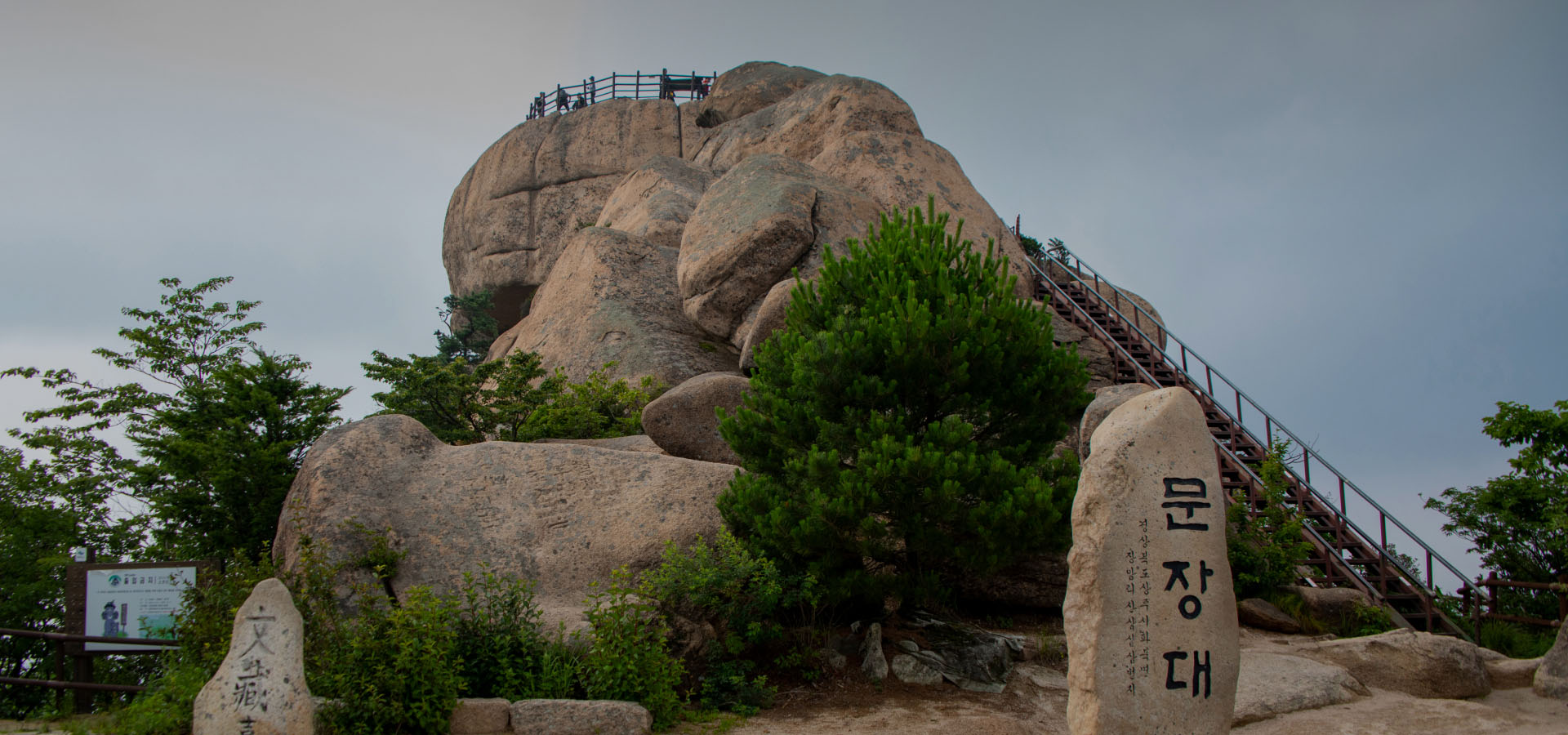
Cheonwangbong, at 1,058.4 m, is Songnisan’s main peak, while Munjangdae is the mountain’s signature rocky ridge viewpoint. The Korea National Park Service Songnisan page lists numerous courses separately, including Cheonwangbong, Munjangdae, and Sinseondae, so a short walk such as Sejogil should not be considered to have the same difficulty as a summit hike.
When planning a summit course, set a departure time that allows you to descend before sunset, and bring water, snacks, a windproof outer layer, and hiking shoes as basic equipment. The Korea National Park Service advises visitors to check the designated hiking hours system and the trail restriction status before setting out. Since the availability of individual sections may change according to wildfire prevention measures, heavy rain or typhoon advisories, and seasonal safety measures, it is best not to rely only on information from the previous day.
Three Things to Confirm at the Songnisan National Park Office at 84 Beopjusa-ro
The address of the Songnisan National Park Office is 84 Beopjusa-ro, Songnisan-myeon, Boeun-gun, Chungcheongbuk-do, and its main telephone number is 043-542-5267. There is no separate admission fee for general access to the park itself, but admission fees for Beopjusa and fees for individually reserved facilities should be checked separately. It is also important not to mistake the park office’s customer service hours for general visiting hours.
On the official national park website, you can check the difficulty of each course, real-time restriction information, the designated hiking hours system, and the locations of parking lots and visitor support centers. Some sections, such as Myobong, apply a reservation system during designated operating periods. For example, the park reservation page states that from September 1 to October 31, the section operates from 09:00 to 18:00, admission closes at 13:00, and online reservations and on-site applications are both available. Reservation requirements and operating periods may change each year.
- National park inquiries: 043-542-5267
- Myobong trail inquiries: 043-542-5269 or Hwabuk Branch Office 054-533-3389
- Facility and visitor program reservations: 1670-9201, weekdays 09:00–18:00
Combining the Malti Pass Observatory, Jeongipumsong, and Orisup Before or After Your Hike
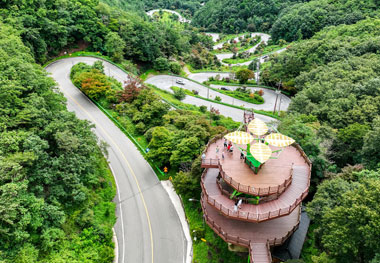
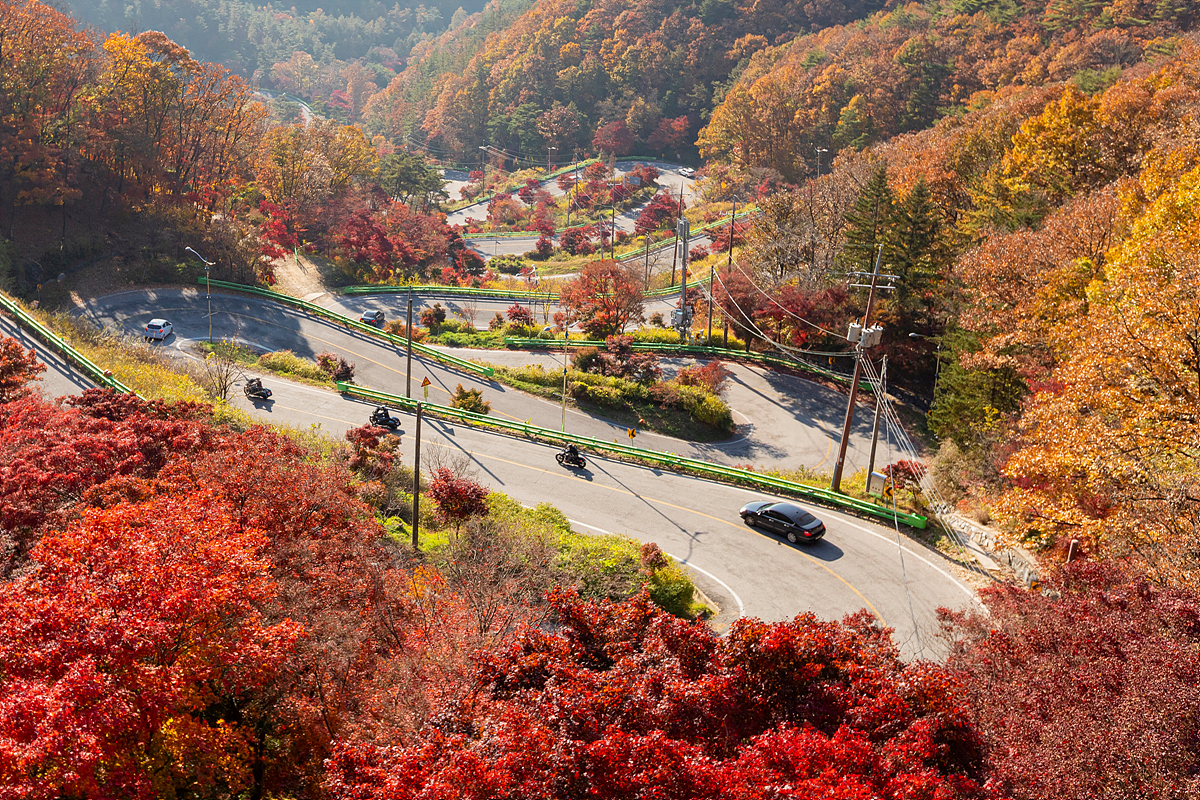
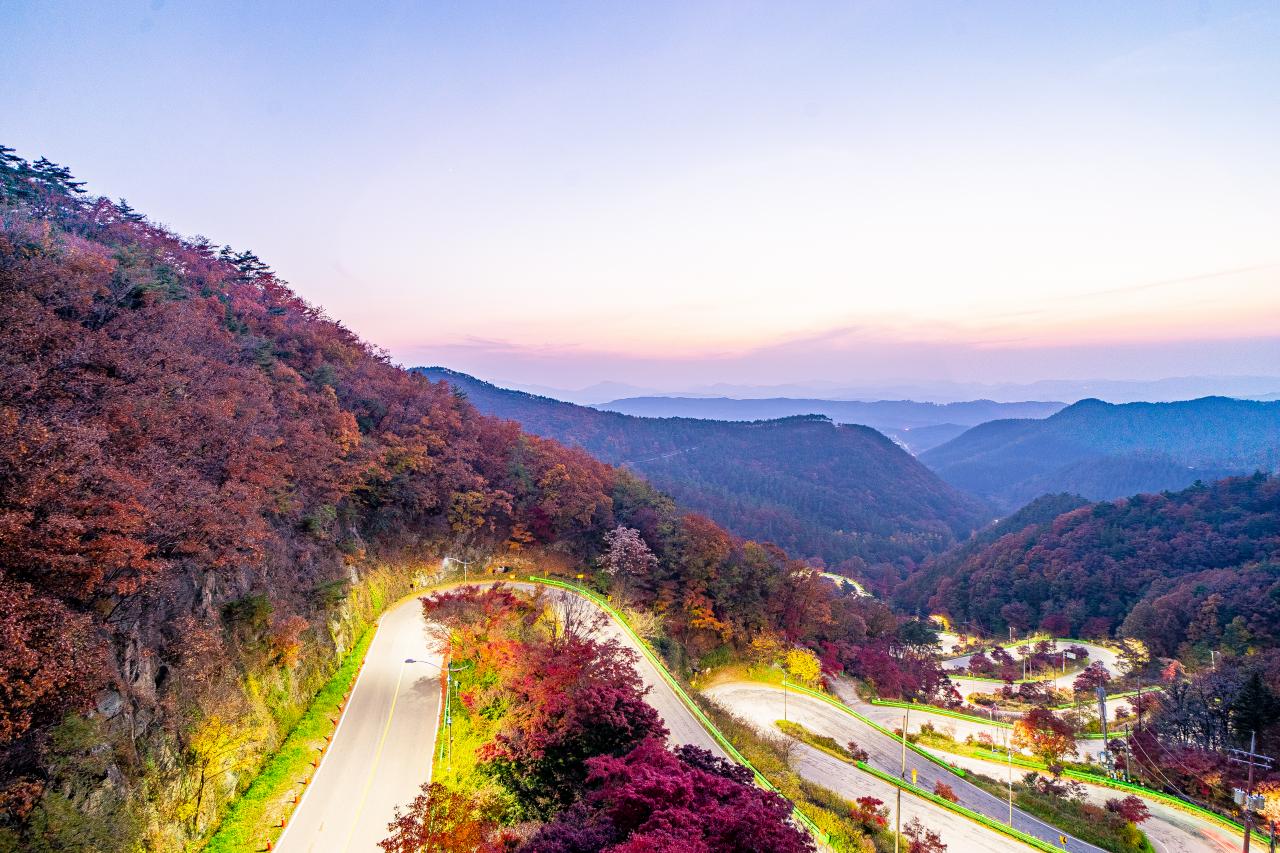
If you have access to a vehicle, you can combine the Malti Pass Observatory and Jeongipumsong with your visit to Songnisan. Boeun County introduces the Malti Pass Observatory as a two-story viewing facility opened in 2020, measuring 16 m wide and 20 m high, with views over the 12 bends of Malti Pass. To avoid driving again near the summit after a hike, it is better to visit Malti Pass before entering the mountain or on the following day.
For a light, walking-focused outing, the 2 km Orisup Forest Path from Songnisan Sculpture Park to Beopjusa is another option. Songnisan Sculpture Park was created in October 1997 and displays 27 works by 27 artists from the Chungcheong region across a site of approximately 24,000 m². The park is open year-round, and the walk from Songnisan Bus Terminal to the sculpture park is listed as taking approximately 13 minutes.
Buses, Parking, and Wheelchair Access: Assess Summit Hiking and Walking Courses Separately
By public transportation, take a bus bound for Songnisan from the Boeun Intercity Bus Public Terminal, get off at Songnisan Bus Terminal, and then walk approximately 13 minutes to Songnisan Sculpture Park. However, the actual trailheads for hikes to Cheonwangbong and Munjangdae vary depending on the selected course, so after getting off at the terminal, you should check the locations of the visitor support center, temple, and parking lot again on a map.
Wheelchair and stroller users may find it more practical to consider level routes around Beopjusa and Songnisan Sculpture Park instead of the summit trails. Accessible Tourism information states that Songnisan Sculpture Park has an above-ground parking lot with six spaces near the main entrance, a step-free access route, and an accessible restroom. By contrast, Cheonwangbong and Munjangdae include rocky ridges, stairs, and sloped sections, making them difficult to use under the same accessibility standards.
Before You Go
- Address
- 84 Beopjusa-ro, Songnisan-myeon, Boeun-gun, Chungcheongbuk-do
- Hours
- National park trails vary according to the course, season, and restrictions. Example operating hours for the Myobong reservation system: 09:00–18:00, admission closes at 13:00 (operating period: September 1–October 31).
- Closed
- No regular closing days. Partial trail restrictions may occur due to wildfire prevention, weather advisories, and seasonal safety measures.
- Admission
- General visits to Songnisan National Park are free. Admission to Beopjusa and fees for reserved facilities should be checked separately.
- Phone
- 043-542-5267
- Official site
- https://www.knps.or.kr/front/portal/visit/visitCourseSubMain.do?menuNo=7020095&parkId=120500&parkNavGb=park
- Transport
- Take a bus bound for Songnisan from the Boeun Intercity Bus Public Terminal and get off at Songnisan Bus Terminal. Approximately 13 minutes on foot to Songnisan Sculpture Park.
- Parking
- Check the national park map for parking lot locations by course. Songnisan Sculpture Park has six above-ground parking spaces near the main entrance.
- Time needed
- A visit to Sejogil and Beopjusa takes approximately 2 hours 30 minutes to 3 hours. Hikes to Cheonwangbong and Munjangdae require at least half a day depending on the selected course.
- Accessibility
- Songnisan Sculpture Park has a step-free access route and an accessible restroom. The summit trails include rocky ridges, slopes, and stairs, making them unsuitable for wheelchair and stroller users.
The information above is current as of the time of writing. Please check the official guidance again before visiting.

Places
Nearby Attractions 5
-
 1
1
-
 2
2
-
 3
3
-
 4
4
-
 5
5
Food & Dining 5
-
 6
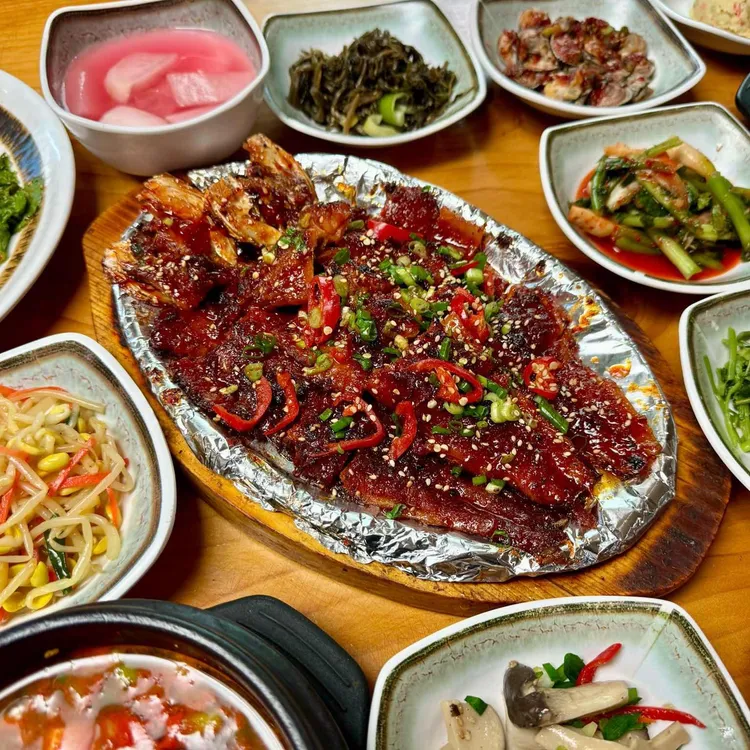
Gisanim Restaurant
6
Gisanim Restaurant -
 7
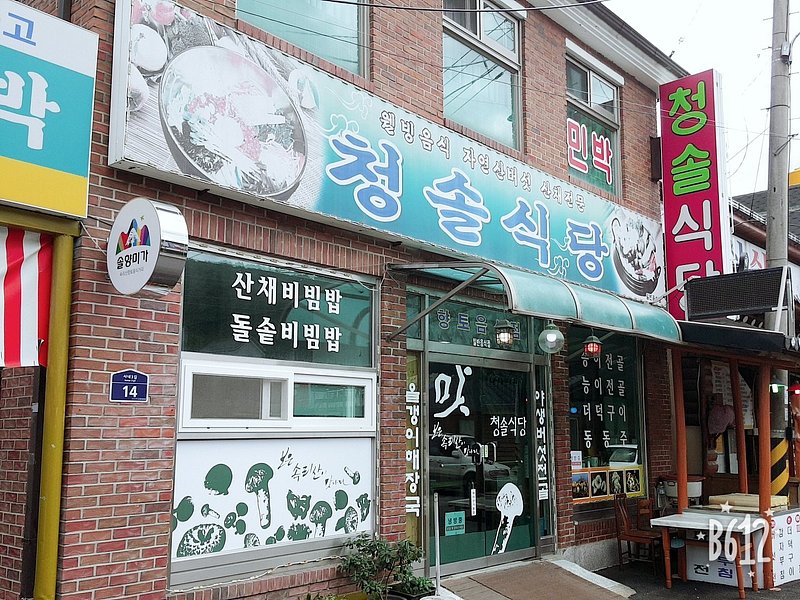
Yegoeul
7
Yegoeul -
 8
8
-
 9
9
-
 10
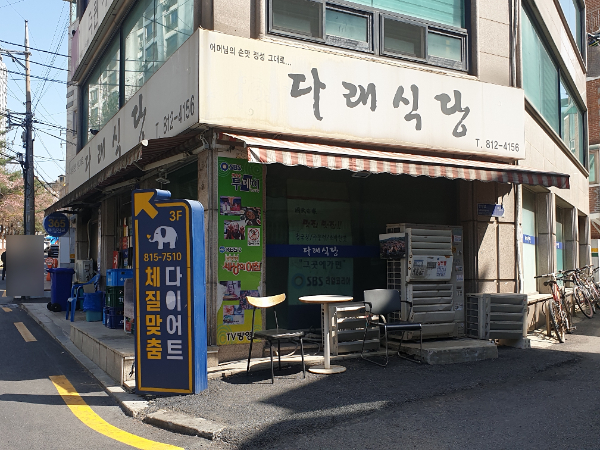
Darae Sikdang
10
Darae Sikdang
Events in This Area
Festivals in This Area

More Travel Guides in This Area
 Travel Guide
The Place Where King Sejo’s Procession Came to a Halt: Jeongipumsong Pine Tree in Boeun
 Travel Guide
20 m Observatory Overlooking Malti Pass’s 12 Hairpin Turns
 Travel Guide
Songnisan Route Combining Beopjusa Temple and Sejo Road
 Travel Guide
Wolryubong’s 400-Meter Peak Where the Moon Rests and the Chogangcheon Wolryubong Loop Trail
Korea News
 News
News
‘NewJeans Expulsion’ Danielle Releases Her First YouTube Video… “We Don’t Know What Will Happen Next”
![aespa’s North American Tour Has Remaining Seats Despite ‘$49’ Bargain Prices… A Stark Popularity Gap with KATSEYE [TEN Starfield]](https://kotourlive-images.s3.ap-northeast-1.amazonaws.com/news/1788485037424_a59b1932_naver_rank_thumb_0000774618_1788485037424.jpg) News
News
aespa’s North American Tour Has Remaining Seats Despite ‘$49’ Bargain Prices… A Stark Popularity Gap with KATSEYE [TEN Starfield]
![[Photo] TWICE’s Dahyun attends a film festival red carpet as an actress](https://kotourlive-images.s3.ap-northeast-1.amazonaws.com/news/1788485316508_edd43ecd_news_870a60a6-6f11-4d73-aa7c-48d91318a0f7.jpg) News
News
[Photo] TWICE’s Dahyun attends a film festival red carpet as an actress
![[On-Site Video] “We’re Departing Separately Together”… BIGBANG Begins ‘COSMOS’ World Tour](https://kotourlive-images.s3.ap-northeast-1.amazonaws.com/news/1788485226518_c5719641_news_fdd4764a-0f4e-4968-8e4e-e98a02872f88.jpg) News
News