Songnisan Route Combining Beopjusa Temple and Sejo Road
Founded in 553 during the Silla period, Beopjusa Temple is the central temple of Songnisan and was rebuilt in 1624 after the Jeongyu Japanese invasion. After visiting Palsangjeon, a National Treasure, and the 33-meter-tall Gilt-bronze Maitreya Buddha, adding Sejo Road creates an itinerary of about three hours.
I’ve been here?
Your check-in helps the next traveler.
19 people viewed this week Be the first
One tap — no writing needed
Why Master Uisin Founded Beopjusa Temple on Songnisan Mountain in 553
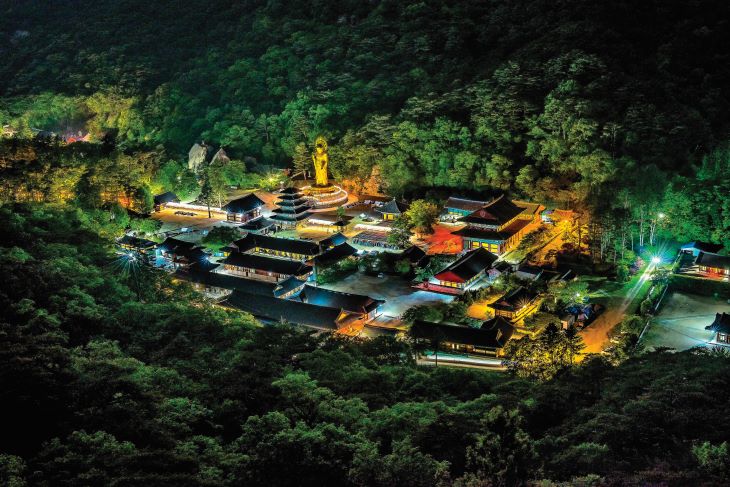
Beopjusa Temple is located on Songnisan Mountain. It is said that Master Uisin founded the temple here in 553, the 14th year of the reign of King Jinheung of Silla, after bringing Buddhist scriptures from the Western Regions and seeing the rugged mountain terrain. Today, Beopjusa is the headquarters temple of the 5th district of the Jogye Order of Korean Buddhism.
In 776, the 12th year of the reign of King Hyegong, Master Jinpyo carried out a large-scale renovation, and the temple developed its full scale through the Goryeo period. After being completely destroyed during the Jeongyu War, it was rebuilt and expanded in 1624, the second year of King Injo's reign, by the monks Samyeong and Byeogam. For this reason, the various halls and cultural heritage sites seen today were not all built during a single period.
Four National Treasures to See First at 405 Beopjusa-ro
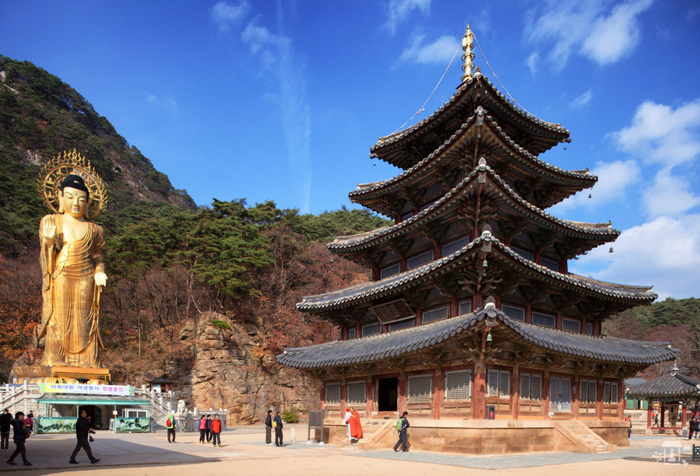
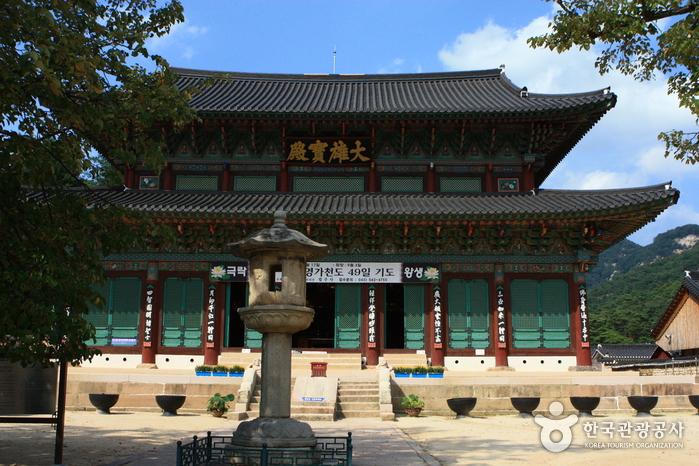
The central hall within the temple grounds is Daeungbojeon Hall. Daeungbojeon is Treasure No. 915, and Beopjusa has 3 National Treasures, 13 Treasures, 1 Natural Monument, and 24 provincially designated cultural heritage sites.
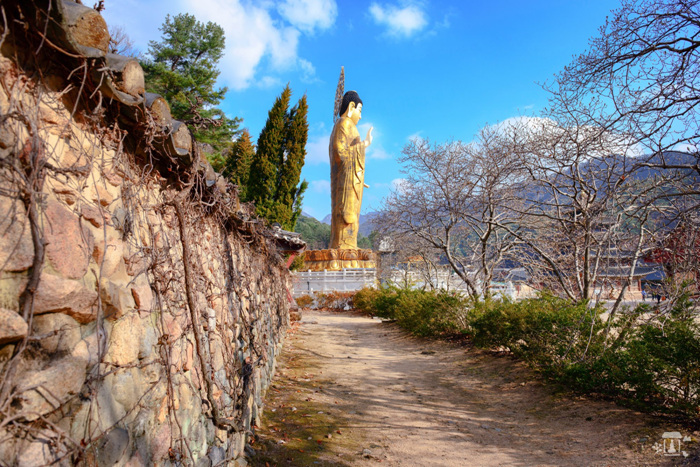
See Palsangjeon Pagoda first. Palsangjeon is the only surviving wooden pagoda in Korea and is National Treasure No. 55. Next, the Twin-Lion Stone Lantern is National Treasure No. 5, while the Stone Lotus Basin is National Treasure No. 64. The Rock-carved Seated Maitreya Buddha is a 6-meter-high stone Buddha from the Goryeo period, and the Gilt-bronze Maitreya Buddha stands 33 meters tall and is a large Buddhist statue made with more than 100 tons of bronze.
How to Prepare a 5,000-Won Admission Ticket from Sunrise to Sunset
The Korea Tourism Organization lists operating hours as from sunrise to sunset. Separate information specifies 04:00–20:00 in summer and 05:00–20:00 in winter, with admission closing at 18:00. Although it is listed as open year-round, visitors cannot begin viewing the temple grounds after admission closes, so it is safer to avoid arriving late in the afternoon.
As confirmed in 2026, individual admission fees are 5,000 won for adults, 2,500 won for teenagers, and 1,000 won for children. Group fees are 4,000 won for adults, 1,600 won for teenagers, and 800 won for children. The age categories are adults 19–65, teenagers 13–18, and children 7–12. Admission fees should be reconfirmed according to the current official information.
Starting-Point Guide for International Visitors Traveling to Songnisan-myeon, Boeun
The address is 405 Beopjusa-ro, Songnisan-myeon, Boeun-gun, Chungcheongbuk-do. Beopjusa's official website is https://beopjusa.org/kor, and its main telephone number is 043-543-3615. The official Songnisan National Park page provides transportation information for trail starting points, but specific bus route numbers, stops, and walking times to Beopjusa are not provided.
Therefore, if you are departing from a train station or bus terminal in Seoul or another city, you should separately plan a same-day public transportation connection to the Beopjusa area of Songnisan-myeon, Boeun-gun. Visitors arriving by car can use the temple parking lot, with a daily parking fee of 7,000 won. The number of available spaces and the exact walking distance from the parking lot to the temple grounds are not provided.
- Beopjusa main telephone: 043-543-3615 (8655)
- Wonjusi: 043-543-4755
- Temple stay: 043-544-5656
- Songnisan National Park main telephone: 043-542-5267
- Tourism information hotline 1330: +82-2-1330, Korean, English, Japanese, and Chinese
An Afternoon on the 2.7-km Sejogil Trail from Beopjusa's Iljumun Gate
If you would like to add a walk after visiting Beopjusa, you can connect to Sejogil Trail. Sejogil Trail is 2.7 km one way from Beopjusa's Iljumun Gate to Sesimjeong, and slightly more than 3 km to Bokcheonam Hermitage. Information indicates that a leisurely round trip takes a little over two hours.
Other descriptions explain that the trail is a free 3.2-km one-way route from the Beopjusa intersection to Bokcheonam Hermitage. Of the entire course, 1.2 km is a barrier-free deck trail accessible to wheelchairs and strollers. An itinerary combining Beopjusa and Sejogil Trail can be planned for about three hours based on visitor reviews.
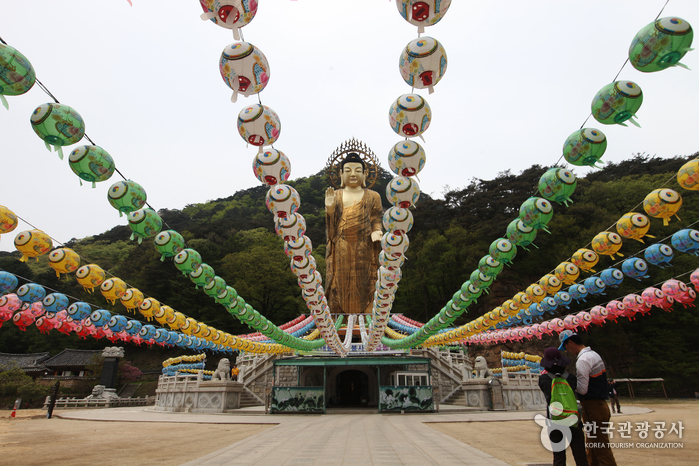
How to Choose a Season within the 18,590,000-㎡ Scenic Site
The Beopjusa Temple area of Songnisan is Scenic Site No. 61 and covers 18,590,000 ㎡. It was designated as a Historic Site and Scenic Site in 1966, then redesignated as a Scenic Site in 2009. Ten traditional temples, including Beopjusa, Bokcheonam Hermitage, and Talgoam Hermitage, are located in this area.
Songnisan National Park was designated Korea's sixth national park in 1970 and has a total area of 278.921 ㎢. Its highest peak, Cheonwangbong, is 1,057 meters above sea level, and eight peaks, including Cheonwangbong, Birobong, and Munjangdae, extend like a bow. The park is known for cherry blossoms in spring, pine trees in summer, autumn foliage, and snowy scenery in winter, so choose the season according to whether you want to prioritize the temple halls or the forest trails.
Often-overlooked Things to Prepare for a Temple Designated a World Heritage Site in 2018
Beopjusa and the Songnisan area were inscribed on the UNESCO World Heritage List on July 3, 2018, together with Tongdosa, Buseoksa, Bongwonsa, Seonamsa, Daeheungsa, and Magoksa. However, the available information does not confirm photography-prohibited areas within the grounds, the scope of glass-wall or access restrictions, or whether English information signs and audio guides are available or whether cash-only payment applies.
If you plan to walk as far as Sejogil Trail, allow about three hours rather than planning only a visit to Beopjusa. Before visiting Songnisan National Park, check the designated mountain-entry hours and current trail control status. Wheelchair and stroller users can prioritize the 1.2-km barrier-free deck section, but this does not mean that the entire Sejogil Trail is barrier-free.
Before You Go
- Address
- 405 Beopjusa-ro, Songnisan-myeon, Boeun-gun, Chungcheongbuk-do
- Hours
- Summer 04:00–20:00, admission closes at 18:00 / Winter 05:00–20:00, admission closes at 18:00
- Closed
- Open year-round
- Admission
- Individual: adults 5,000 won, teenagers 2,500 won, children 1,000 won / Group: adults 4,000 won, teenagers 1,600 won, children 800 won
- Phone
- 043-543-3615
- Official site
- https://beopjusa.org/kor
- Transport
- The official Songnisan National Park page provides transportation information for the starting points of each trail. Specific bus routes, stops, and walking times to Beopjusa could not be confirmed.
- Parking
- Available; daily parking fee 7,000 won
- Time needed
- About 3 hours for visiting Beopjusa and Sejogil Trail together based on visitor reviews; a little over 2 hours for a round trip on Sejogil Trail
- Accessibility
- A 1.2-km section of the entire Sejogil Trail is described as a barrier-free deck trail accessible to wheelchairs and strollers
The information above is current as of the time of writing. Check the official information again before visiting.

Places
Nearby Attractions 3
-
 1
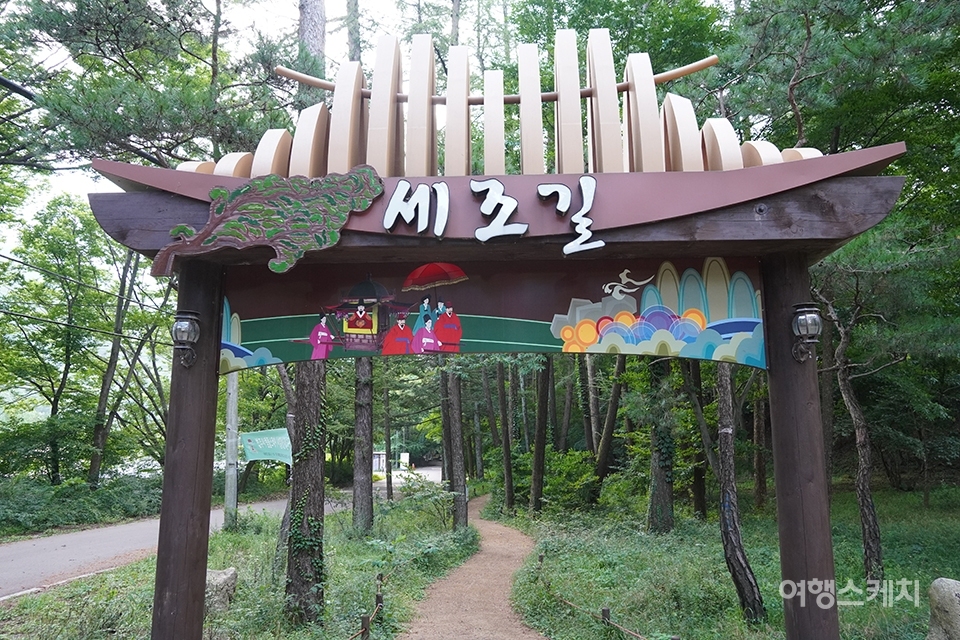
Sejogil TrailA forest trail that runs from the Iljumun Gate of Beopjusa Temple to Sesimjeong.
1
Sejogil TrailA forest trail that runs from the Iljumun Gate of Beopjusa Temple to Sesimjeong. -
 2
2
-
 3
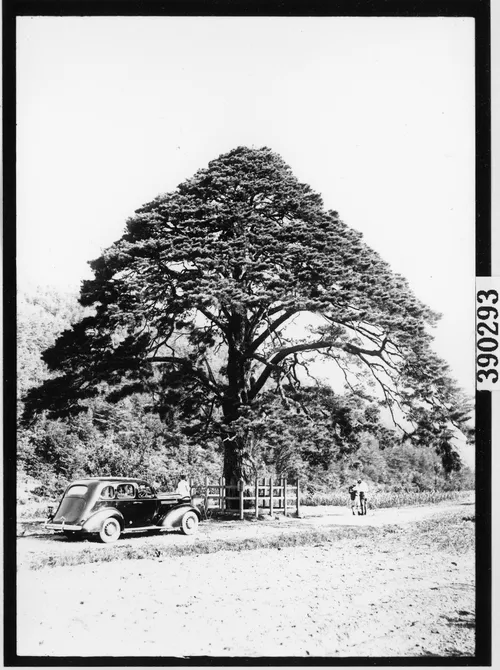
Boeun Songnisan Jeongipumsong Pine TreeSee the approximately 600-year-old natural monument pine tree.
3
Boeun Songnisan Jeongipumsong Pine TreeSee the approximately 600-year-old natural monument pine tree.
Food & Dining 3
-
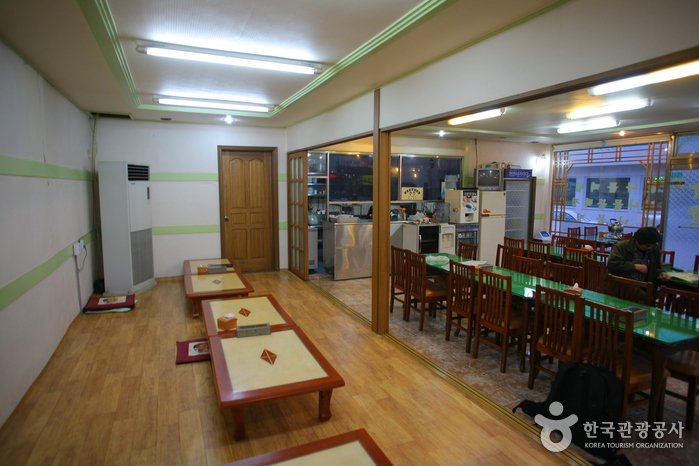 4
MunJangdae RestaurantA local restaurant serving wild mushroom hot pot and a set meal of mountain vegetables.
4
MunJangdae RestaurantA local restaurant serving wild mushroom hot pot and a set meal of mountain vegetables. -
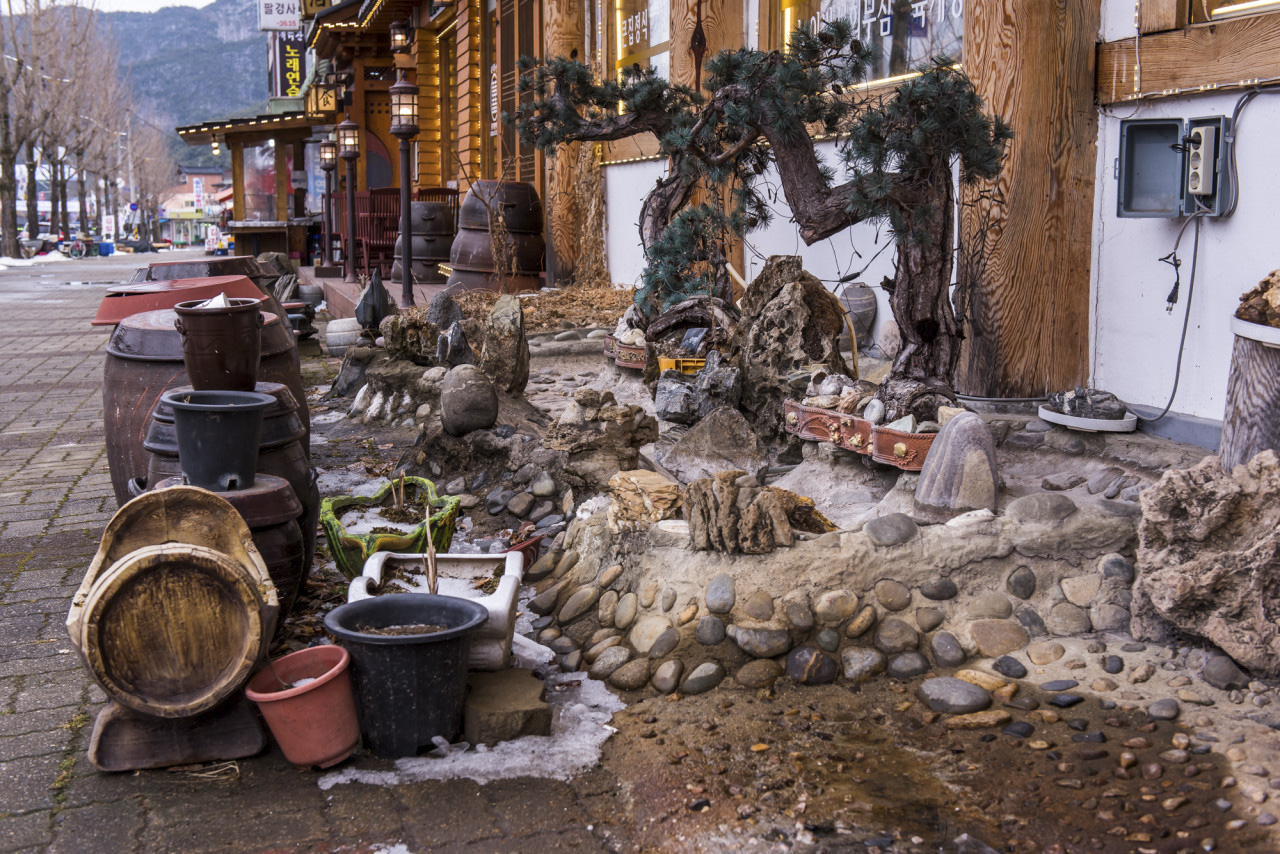 5
Soknisan KeunjipA traditional Korean restaurant serving Keunjip set meals and wild vegetable bibimbap.
5
Soknisan KeunjipA traditional Korean restaurant serving Keunjip set meals and wild vegetable bibimbap. -
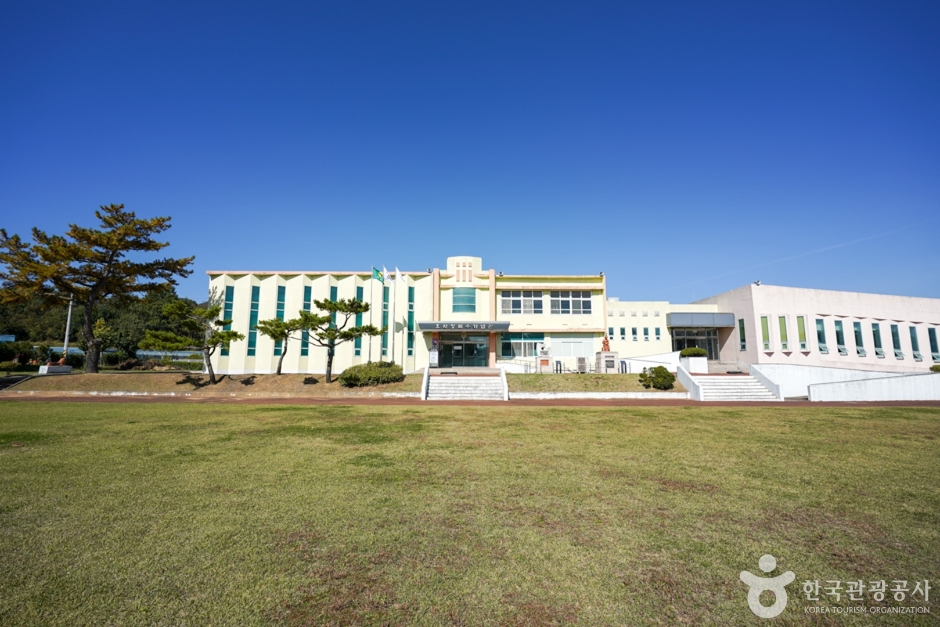 6
Deokrim Sanchae RestaurantEnjoy a set meal featuring wild mountain vegetables, grilled deodeok root, and other dishes made with mountain greens.
6
Deokrim Sanchae RestaurantEnjoy a set meal featuring wild mountain vegetables, grilled deodeok root, and other dishes made with mountain greens.
Events in This Area
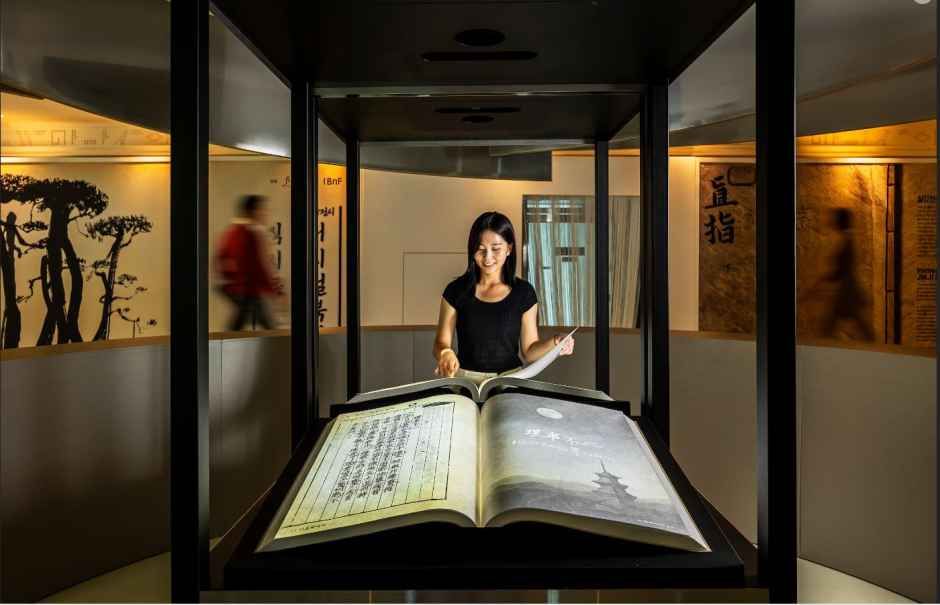
Festivals in This Area
More Travel Guides in This Area
 Travel Guide
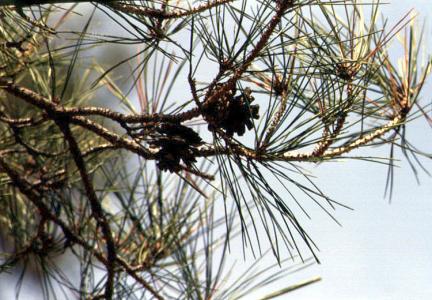
The Place Where King Sejo’s Procession Came to a Halt: Jeongipumsong Pine Tree in Boeun
 Travel Guide
20 m Observatory Overlooking Malti Pass’s 12 Hairpin Turns
 Travel Guide
How to Hike Songnisan in Boeun, from 1,058.4 m Cheonwangbong Peak to Beopjusa Temple and Sejogil
 Travel Guide
How to See Nine Scenic Views and the Sites of Song Si-yeol at Hwayang Gugok’s 3.1 km Valley
Korea News
 News
News
‘NewJeans Expulsion’ Danielle Releases Her First YouTube Video… “We Don’t Know What Will Happen Next”
![aespa’s North American Tour Has Remaining Seats Despite ‘$49’ Bargain Prices… A Stark Popularity Gap with KATSEYE [TEN Starfield]](https://kotourlive-images.s3.ap-northeast-1.amazonaws.com/news/1788485037424_a59b1932_naver_rank_thumb_0000774618_1788485037424.jpg) News
News
aespa’s North American Tour Has Remaining Seats Despite ‘$49’ Bargain Prices… A Stark Popularity Gap with KATSEYE [TEN Starfield]
![[Photo] TWICE’s Dahyun attends a film festival red carpet as an actress](https://kotourlive-images.s3.ap-northeast-1.amazonaws.com/news/1788485316508_edd43ecd_news_870a60a6-6f11-4d73-aa7c-48d91318a0f7.jpg) News
News
[Photo] TWICE’s Dahyun attends a film festival red carpet as an actress
![[On-Site Video] “We’re Departing Separately Together”… BIGBANG Begins ‘COSMOS’ World Tour](https://kotourlive-images.s3.ap-northeast-1.amazonaws.com/news/1788485226518_c5719641_news_fdd4764a-0f4e-4968-8e4e-e98a02872f88.jpg) News
News