Walking Along the Jeonjucheon Shiri at the Jeonju Natural Ecology Museum
Located upstream along the Jeonjucheon and at the foot of Seungamsan Mountain, the Jeonju Natural Ecology Museum is an ecological exhibition center where visitors can experience fireflies, shiri fish, Jeonju’s forests, and carbon neutrality. This guide covers the admission fee, bus drop-off points, parking-lot construction status, guided-tour sessions, and activity route from the perspective of a first-time visitor.

I’ve been here?
Your check-in helps the next traveler.
14 people viewed this week Be the first
One tap — no writing needed
Why it was built along the upper Jeonjucheon Stream and at the foot of Seungamsan Mountain
Jeonju Natural Ecology Museum is located along the upper Jeonjucheon Stream and at the foot of Seungamsan Mountain. Since it was designed as a place to understand the natural environment of Jeonjucheon indoors, it is more suited to an itinerary that takes in both the stream and the forest than to a typical urban museum visit.
It opened on May 22, 2008. The site area is 18,766㎡, the total floor area is 2,074㎡, and the building area is 1,157㎡. The building has one basement level and three above-ground floors. Its design resembles the Korean aucha perch, a freshwater fish inhabiting Jeonjucheon’s clean waters, and incorporates zero-energy architecture.
Visiting hours 09:00–18:00; ticket sales until 17:00
Visiting hours are 09:00–18:00. During the summer season, from May 1 to September 31, visiting hours are extended by one hour. Ticket sales are from 09:00 to 17:00, and ticket sales hours are also extended by one hour during the summer season. This information is current as of September 2026.
The museum is closed on January 1, the day of Seollal and Chuseok, and every Monday. If Monday is a public holiday, it is closed the following day. Additional closure days designated by the mayor may apply. Bringing food and entering with pets are prohibited.
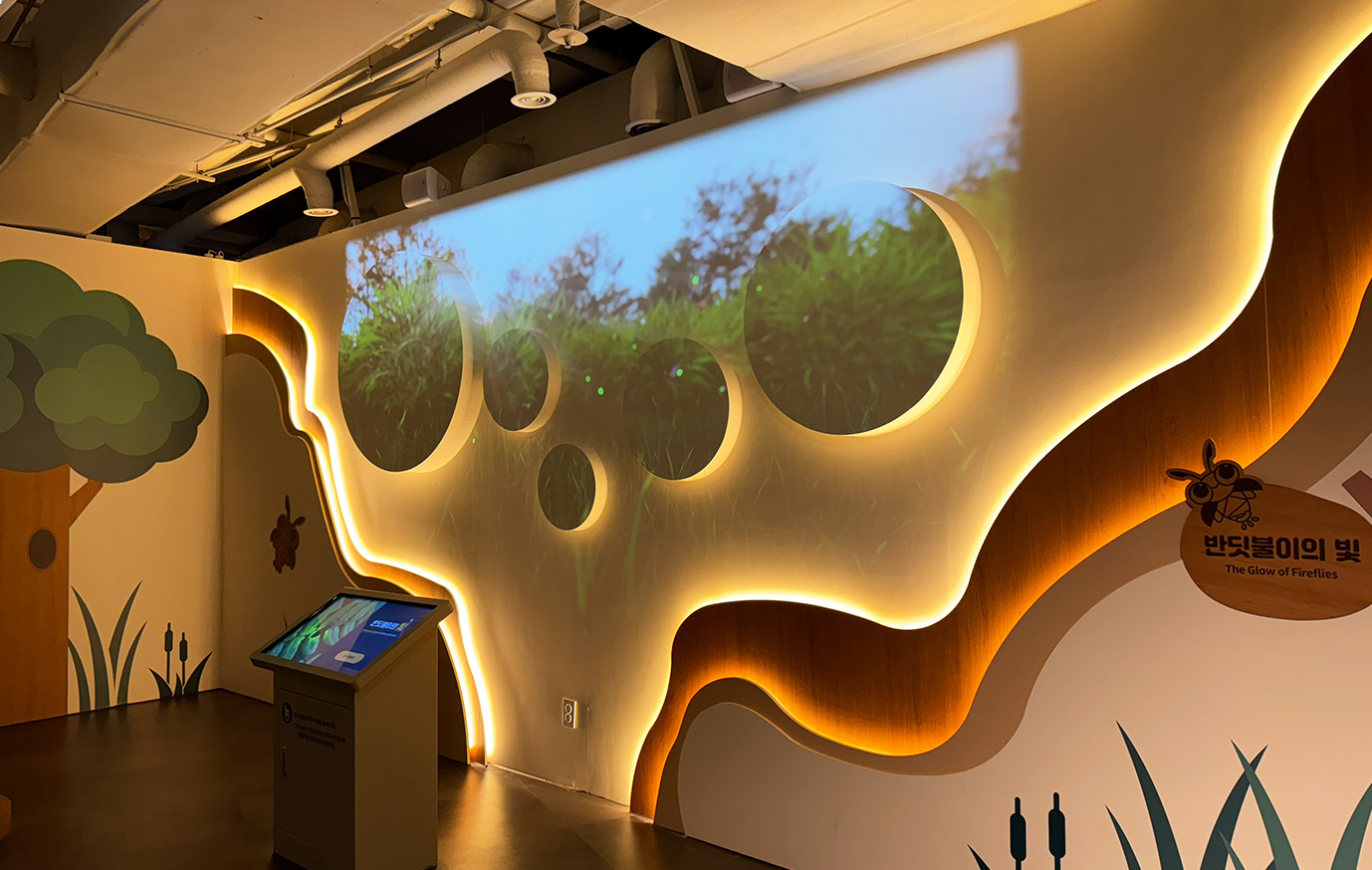
Admission fees of 2,000 won for adults and free-admission groups
Individual admission is 500 won for children, 1,000 won for teenagers and soldiers, and 2,000 won for adults. Groups of 20 or more people entering simultaneously for the same purpose pay 300 won for children, 700 won for teenagers and soldiers, and 1,500 won for adults. These fee details are current as of September 2026.
Preschool children and visitors aged 65 or older are eligible for free admission. Holders of Jeonju’s preferential card for families with multiple children, as well as holders of the Jeonbuk Special Self-Governing Province Ijoa Card registered as residents of Jeonju or Wanju County, are also eligible for free admission. Registered visitors with severe disabilities may enter free of charge with one accompanying guardian.
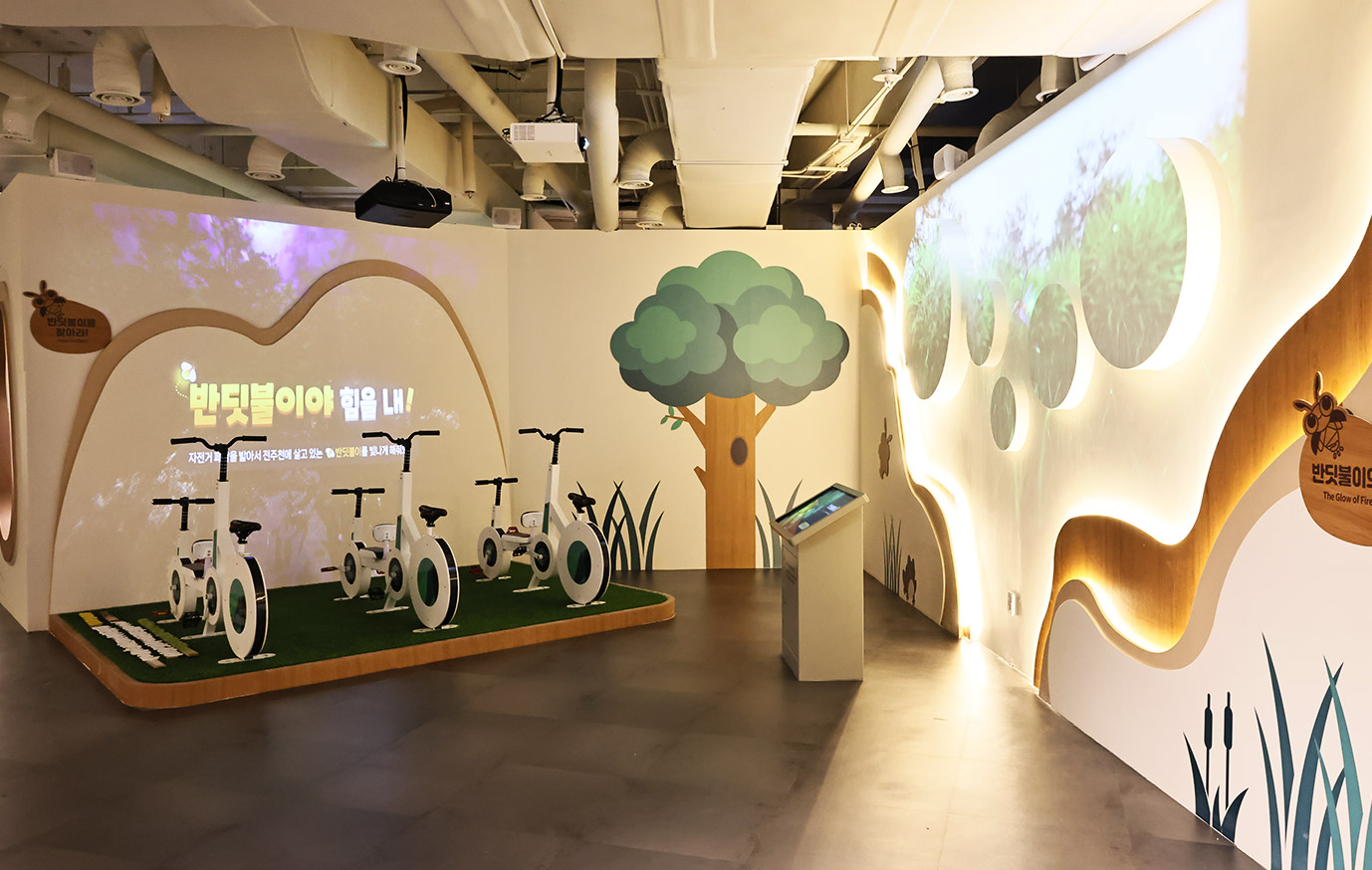
Suggested first-floor route for experiencing fireflies and Korean aucha perch
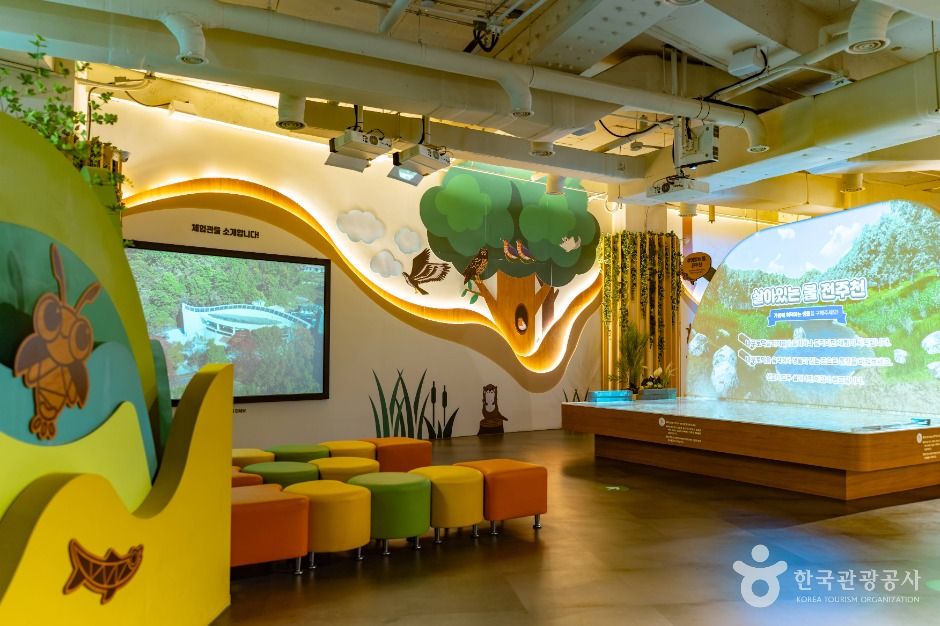
The first floor features the exhibitions “Meet the Fireflies,” “Meet Jeonju’s Living Things,” “Flow Along the Verdant Jeonjucheon,” and “Meet the Yeoulgaksi.” There is also a space where visitors can learn how firefly light is produced and about the life cycle of fireflies.
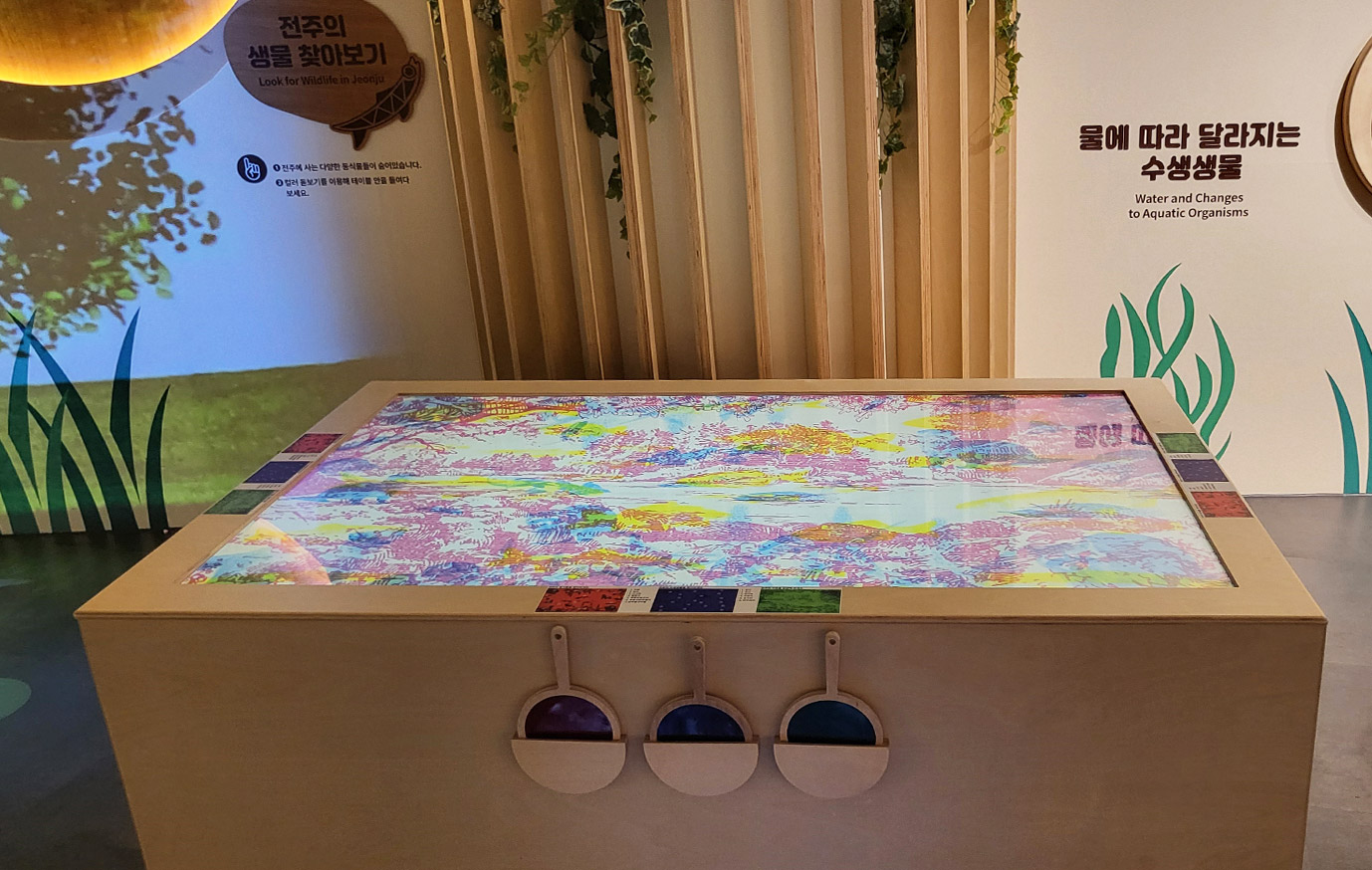
When visiting with children, start with the ecological immersive video experiences: generating electricity by bicycle to light up fireflies, finding plants and animals living in Jeonju with a color magnifying glass, and riding a simulator that lets you fly over Jeonjucheon. “The Story of Yeoulgaksi” covers the ecology of the Korean aucha perch alongside footage of the flowing waters of Jeonjucheon.
Second-floor forest play and the three stages of invasive-species activities
The second floor has the Forest Jeonju Ecology Experience Classroom, an education room, and an early-childhood climate and environmental education room. In the Jeonju Forest Exploration area, visitors can play camping inside a tent. “Jeonju Forest Fresh Air” features a trampoline designed around the concept of running and playing in the forest.
In “Become Animal Friends,” visitors can experience the field of vision of animals such as bees and dogs. There is also a corner where visitors can rotate the wing patterns of the Chinese windmill butterfly to create their own pattern. The invasive-species activity proceeds in three stages: Stage 1, picking up litter in Jeonjucheon; Stage 2, catching invasive species; and Stage 3, collecting information cards about fish in Jeonjucheon. There is also a game-based corner for learning about the soil’s carbon-storage function.
Walking distances after getting off buses 752 and 430
If traveling by bus from outside Jeonju, the simplest approach is to enter the alighting stop listed in the official information as the destination. From the Jop-eunmok stop on bus 752, it is about an 8-minute, 481-meter walk. From the Seungam Village stop on bus 430, it is about a 5-minute, 345-meter walk.
Bus 350 requires about a 10-minute, 645-meter walk after getting off at the Hanbyeokru Jaman Mural Village stop. Bus 110 requires about an 8-minute, 501-meter walk after getting off at the Seungam Village stop. Since bus operating intervals are not provided here, it is safer to check the next vehicle using real-time bus information after arriving in Jeonju.
Current situation: use nearby parking because there is no on-site parking lot
As of September 2026, the on-site parking lot at Jeonju Natural Ecology Museum is unavailable because of the Hydrogen Play Experience Center construction project. Visitors arriving by car must use nearby parking lots, including Chimyeongjasanseongji, the National Intangible Heritage Center, and the Hanok Village on-street public parking lot.
The Hanok Village on-street public parking lot is listed as paid parking, but exact fees and the number of available spaces at nearby lots are not provided. Parking along roads outside designated parking spaces is prohibited because of the risk of traffic accidents involving children. Do not park along the edge of Baram Ssoeneun-gil simply because it looks close.
Guided tours operate six times a day, 30 minutes per session
Guided programs operate year-round, six times a day, for approximately 30 minutes per session. Sessions are held at 10:10, 10:50, 13:30, 14:30, 15:30, and 16:30, and explain the exhibits, interactive features, and the firefly ecosystem. The guided tour time for the exhibition areas is also approximately 30 minutes.
On weekdays, the 10:10, 13:30, and 15:30 sessions are available only for group reservations. However, if there is no group reservation, visitors may register on-site for a guided tour. Each session accepts up to 60 people. Reservations open at midnight 60 days before the experience date, and free applications can be made using mobile-phone identity verification until 24 hours before the experience date. Visitors without reservations may apply on-site for sessions with no existing reservations, but same-day on-site registration may be limited according to visitor-management conditions.
What to confirm by phone before visiting
The address is 21 Baram Ssoeneun-gil, Wansan-gu, Jeonju, Jeonbuk Special Self-Governing Province (Gyodong), and the main telephone numbers are 063-281-5257–5258. The official website is https://ecomuseum.jeonju.go.kr. It is advisable to confirm by phone before departure any details that may change over time, such as operating hours and the parking-lot construction situation.
Visitors may not enter the aquatic-plant planting area of the Waterside Ecology Experience Park, and fishing and catching aquatic animals in the stream are also prohibited. Guided-tour reservations may be canceled due to severe weather. Since there are no registered posts on the official visitor-experience review board, it is difficult to judge waiting times or the on-site atmosphere based solely on repeat visitors’ reviews.
Before You Go
- Address
- 21 Baram Ssoeneun-gil, Wansan-gu, Jeonju, Jeonbuk Special Self-Governing Province (Gyodong)
- Hours
- Visiting: 09:00–18:00. Summer season (May 1–September 31): visiting hours extended by 1 hour. Ticket sales: 09:00–17:00; during the summer season, ticket sales hours are extended by 1 hour.
- Closed
- January 1, the day of Seollal and Chuseok, and every Monday. If Monday is a public holiday, closed the following day. Additional closure days designated by the mayor may apply.
- Admission
- Individuals: children 500 won, teenagers and soldiers 1,000 won, adults 2,000 won. Groups (20 or more): children 300 won, teenagers and soldiers 700 won, adults 1,500 won. Separate free-admission categories apply.
- Phone
- 063-281-5257–5258
- Official site
- https://ecomuseum.jeonju.go.kr
- Transport
- Bus 752: about an 8-minute walk (481 m) from the Jop-eunmok stop; bus 430: about a 5-minute walk (345 m) from the Seungam Village stop; bus 350: about a 10-minute walk (645 m) from the Hanbyeokru Jaman Mural Village stop; bus 110: about an 8-minute walk (501 m) from the Seungam Village stop.
- Parking
- The on-site parking lot is unavailable because of the Hydrogen Play Experience Center construction project. Use nearby parking lots such as Chimyeongjasanseongji, the National Intangible Heritage Center, and the Hanok Village on-street public parking lot (paid).
- Time needed
- The guided program takes approximately 30 minutes for the exhibition areas.
The information above is current as of the time of writing. Check the official information again before visiting.

Places
Nearby Attractions 3
-
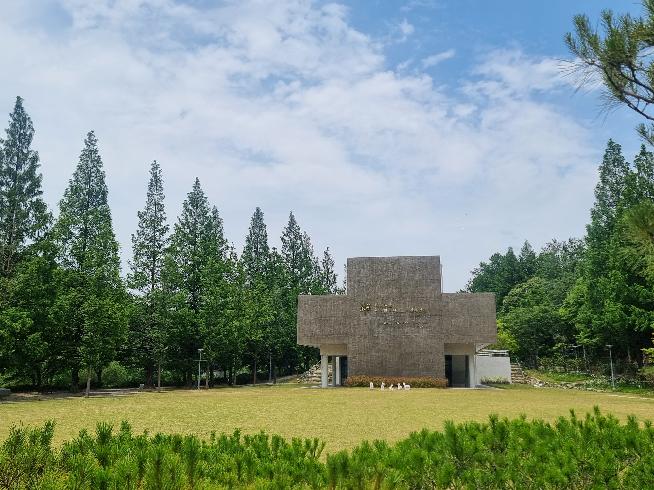 1
Chimyeongjasan Martyrs' ShrineA walk through a Catholic shrine featuring the martyrs’ cemetery and memorial spaces.
1
Chimyeongjasan Martyrs' ShrineA walk through a Catholic shrine featuring the martyrs’ cemetery and memorial spaces. -
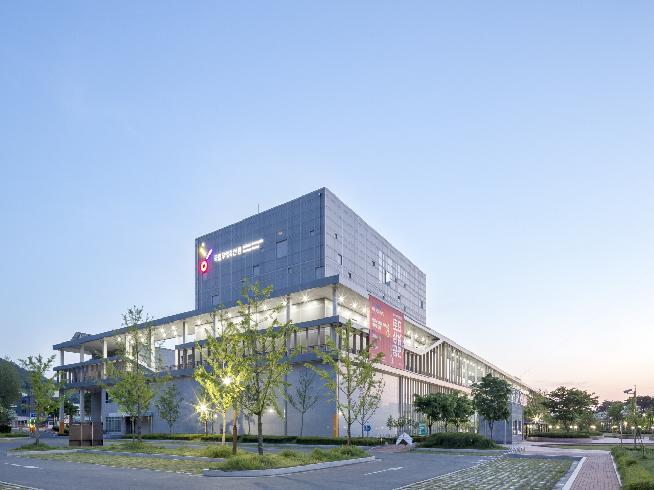 2
National Intangible Heritage CenterA space where you can learn about traditional culture by viewing intangible heritage exhibitions and performances.
2
National Intangible Heritage CenterA space where you can learn about traditional culture by viewing intangible heritage exhibitions and performances. -
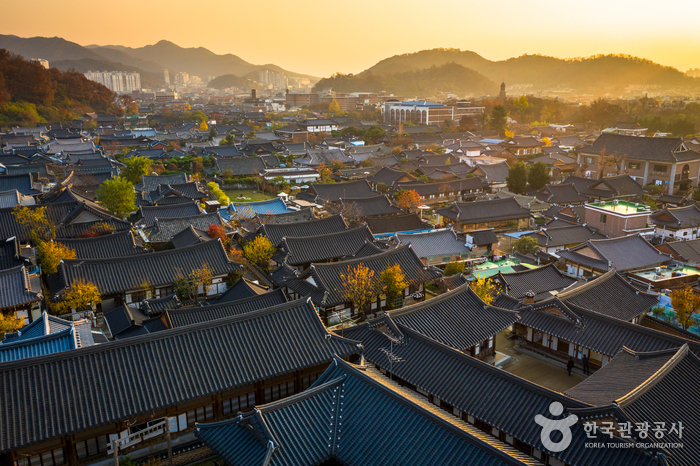 3
Jeonju Hanok VillageA village where you can stroll through hanok alleyways and explore traditional culture and historic attractions.
3
Jeonju Hanok VillageA village where you can stroll through hanok alleyways and explore traditional culture and historic attractions.
Food & Dining 2
-
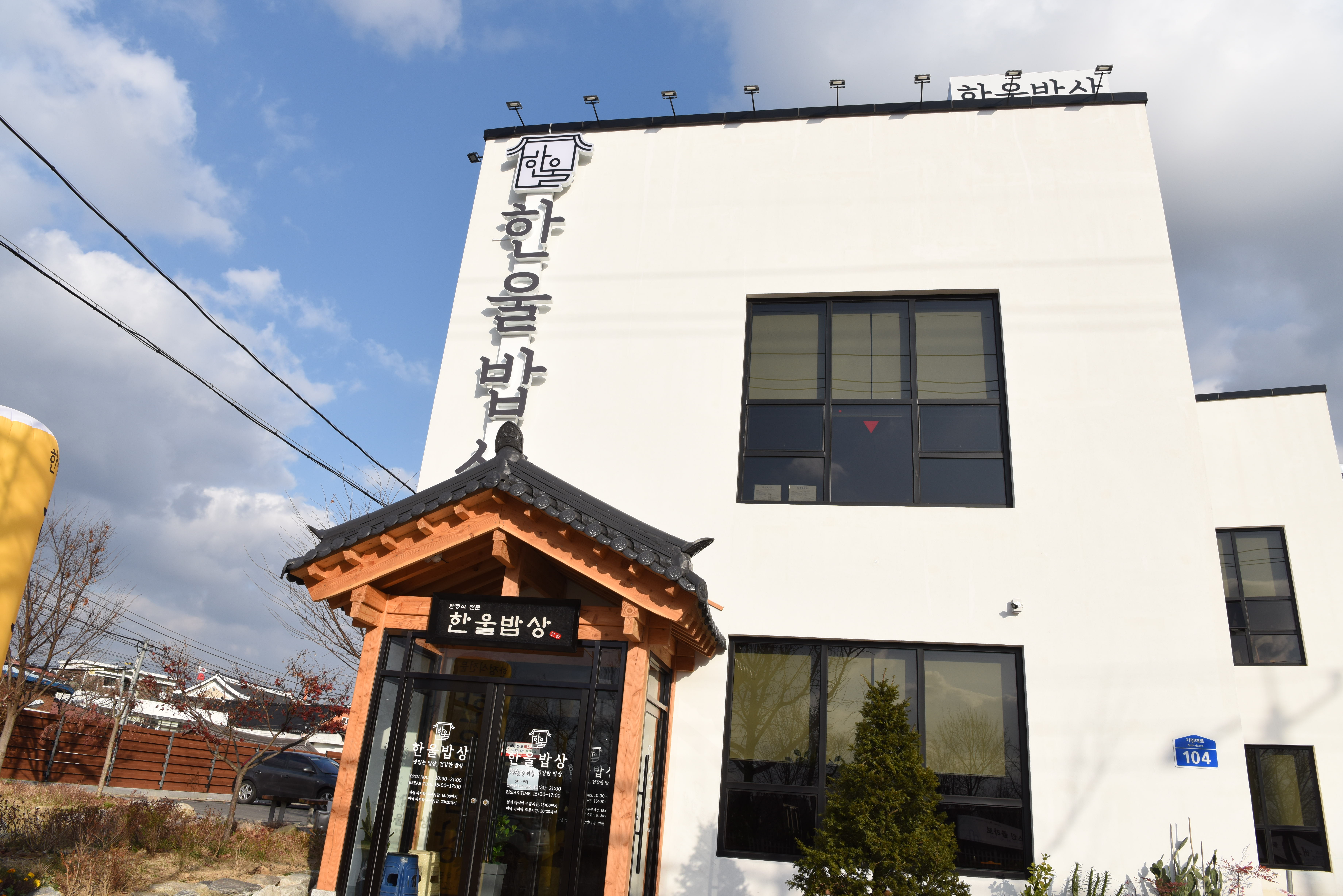 4
Hanul BapsangA restaurant serving Korean set meals and fixed-course meals accompanied by Jeonju-style side dishes.
4
Hanul BapsangA restaurant serving Korean set meals and fixed-course meals accompanied by Jeonju-style side dishes. -
 5
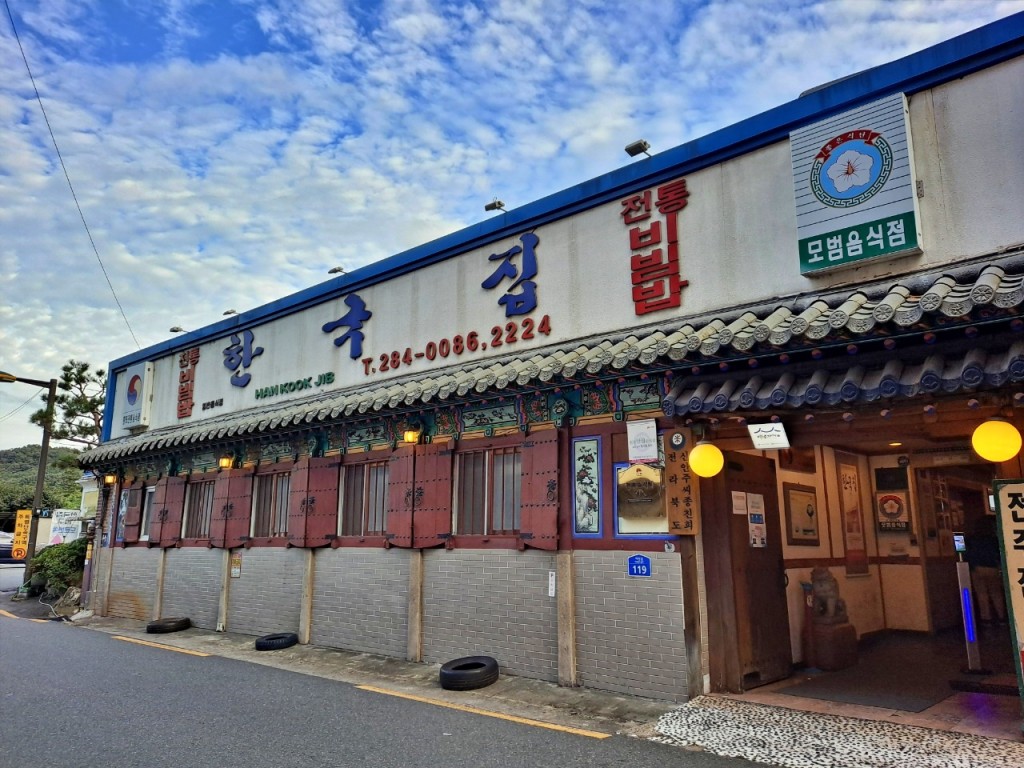
HangukjipA long-established hanok restaurant serving Jeonju bibimbap and traditional Korean cuisine.
5
HangukjipA long-established hanok restaurant serving Jeonju bibimbap and traditional Korean cuisine.
More Travel Guides in This Area
 Travel Guide
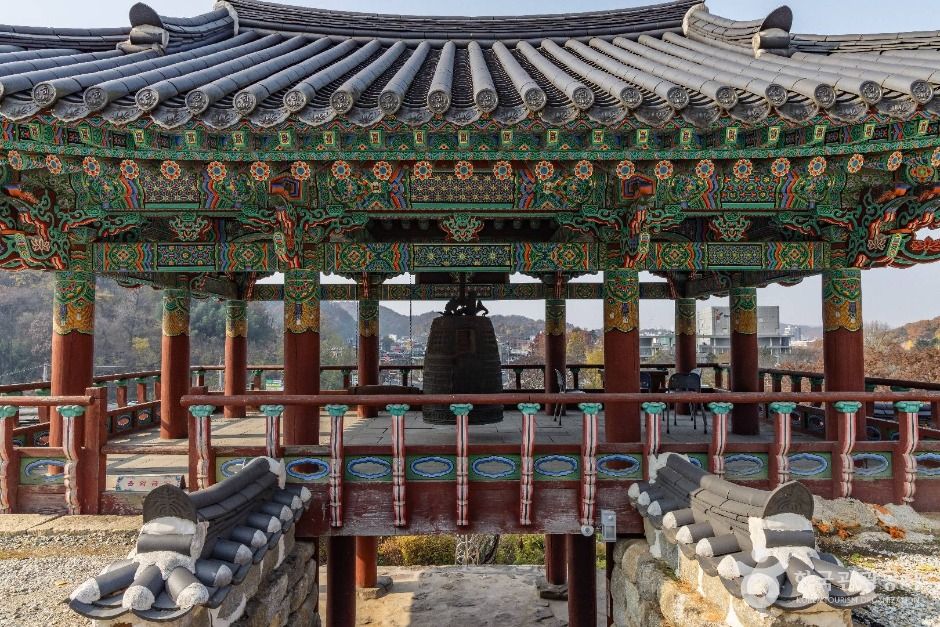
How to Walk Seungamsa Temple and the 3.4 km Baramssoeneun-gil Trail Together
 Travel Guide
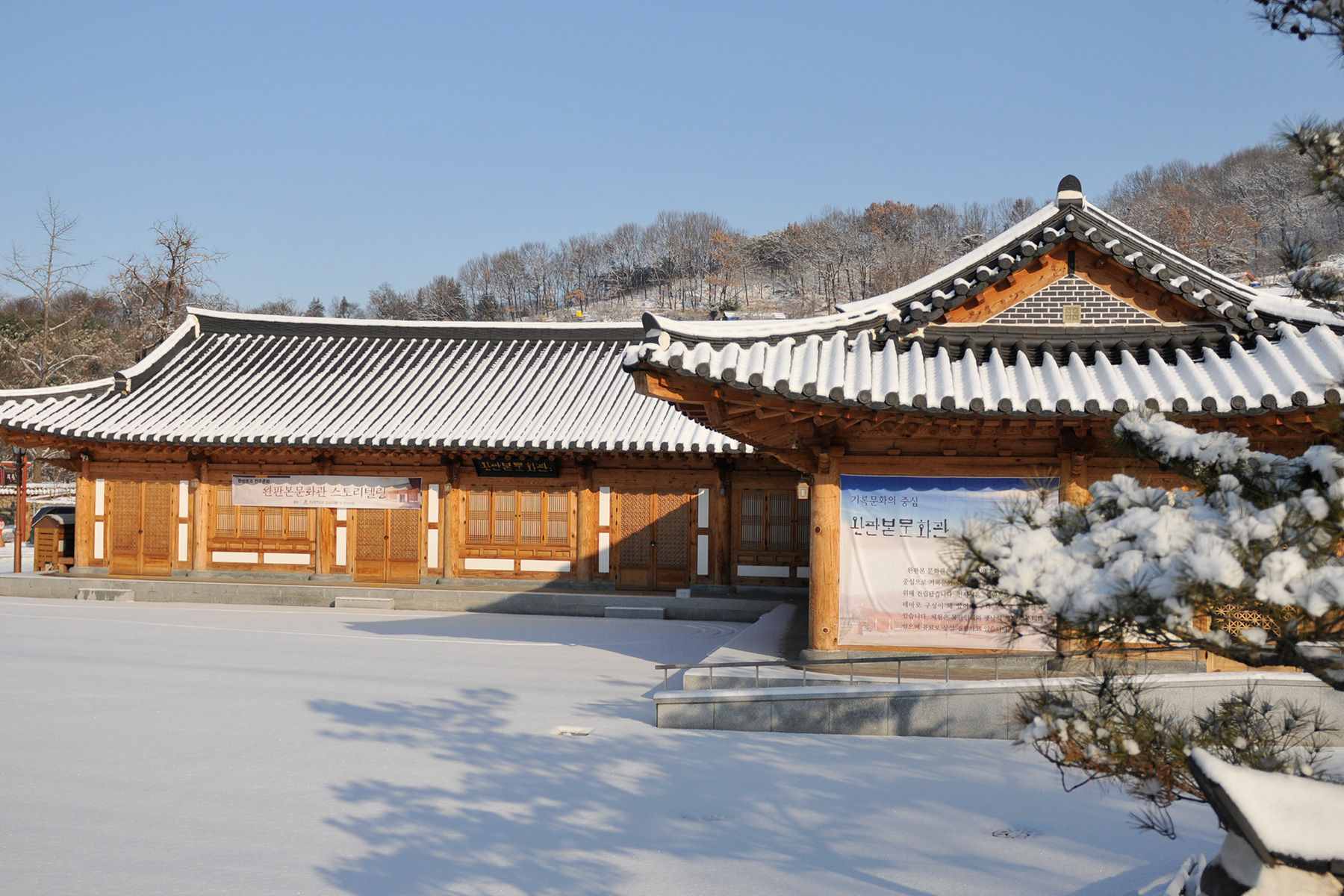
Joseon Publishing and Woodblock Printing at the Jeonju Wanpanbon Culture Center
 Travel Guide
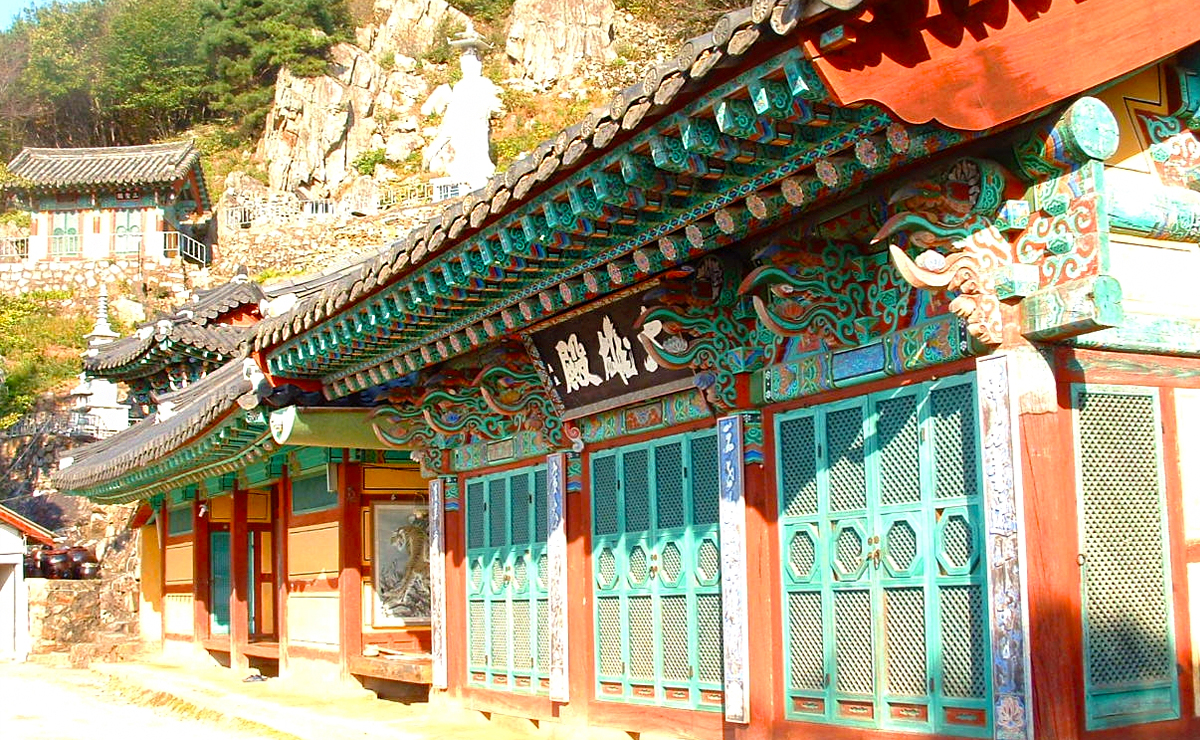
Donggosa Temple and Hanok Village Views on the Slopes of Seungamsan Mountain in Jeonju
 Travel Guide
Learning Traditional Culture at Jeonju Dongheon and Five Hanok Houses
Korea News
![BLACKPINK’s Lisa Dominates the VMA Red Carpet in a Sheer Corset Dress and Red Fur [Star Issue]](https://kotourlive-images.s3.ap-northeast-1.amazonaws.com/news/1790557894714_010e956a_news_94409db1-fab6-40bf-bc7b-4b985b1fbac7.jpg) News
News
BLACKPINK’s Lisa Dominates the VMA Red Carpet in a Sheer Corset Dress and Red Fur [Star Issue]
![BLACKPINK’s Jisoo Spotted by Surprise with BIGBANG in London… Their Special Loyalty as Labelmates [IS High Cut]](https://kotourlive-images.s3.ap-northeast-1.amazonaws.com/news/1790557854683_6ea979f5_news_caab62e5-8462-43c8-8622-da794f3df9de.png) News
News
BLACKPINK’s Jisoo Spotted by Surprise with BIGBANG in London… Their Special Loyalty as Labelmates [IS High Cut]
 News
News
Tattoos All Over Her Body… AOA’s Jimin Draws Shocked Attention After Kwon Mina’s ‘Bullying’ Allegations
![You’ll Have to Look Twice… Choi Min-a-soo Perfectly Pulls Off Everything from a Daring Illusion Dress at the Awards Ceremony to Long Braided Hair [RE:STAR]](https://kotourlive-images.s3.ap-northeast-1.amazonaws.com/news/1790492384850_1f293dad_news_d834c50e-0685-43ef-9aa5-6995cd6d8848.jpg) News
News