Gidang Art Museum, a Grain-Stack-Shaped Museum on Namseongjung-ro in Seogwipo
Seogwipo Municipal Gidang Art Museum was founded by Gidang Kang Gubeom, a Korean businessman based in Japan, and donated to Seogwipo City before opening on July 1, 1987. This overview covers the permanent exhibitions of Suam Kang Yongbeom and Byeon Siji, the architecture inspired by “nul,” traditional grain stacks found in rural Jeju, as well as information on its affordable admission fees and accessibility.
I’ve been here?
Your check-in helps the next traveler.
19 people viewed this week Be the first
One tap — no writing needed
The Seogwipo art museum established by Gidang Kang Gu-beom on July 1, 1987
Seogwipo Gidang Art Museum was established and donated to Seogwipo City by Gidang Kang Gu-beom, a Korean-Japanese businessman whose hometown was Jeju, and opened on July 1, 1987. Introduction materials also describe it as the first municipal art museum in Korea.
For this reason, the museum operates not simply as a space that temporarily hosts exhibitions, but as a public art museum presenting both the name of its Jeju-born benefactor and local art. It is introduced as a space where local artists and citizens can come together.
Jeju rural “nul” architecture built on a 5,092㎡ site
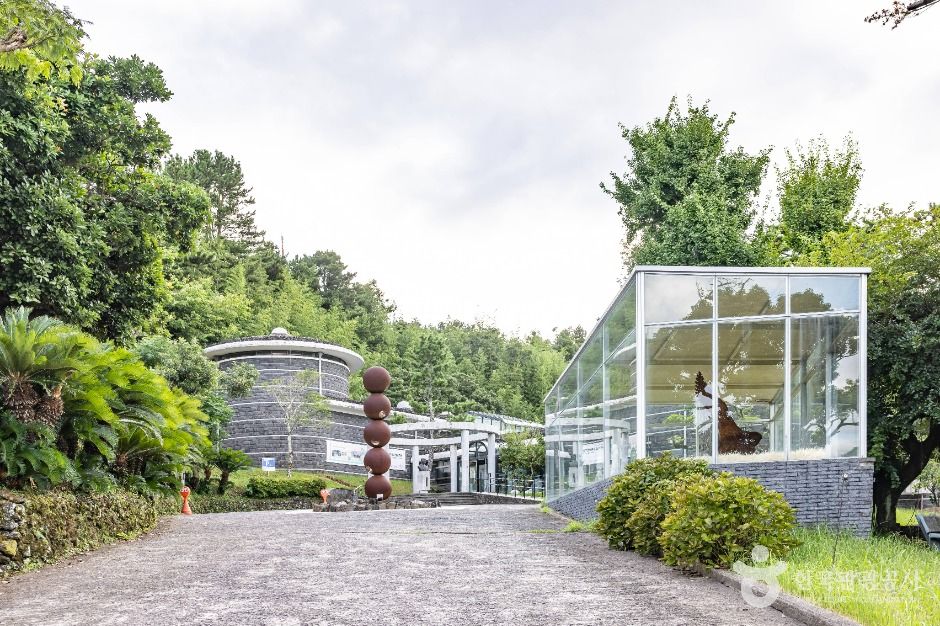
Gidang Art Museum was built on a 5,092㎡ site, and the building covers 1,160㎡. The building consists of one basement level and one above-ground level, making it a manageable size where visitors can follow the exhibition flow in a single visit rather than navigating a large complex art museum.
The architecture embodies “nul,” a Jeju dialect word for a mound of grain bundled and stacked layer by layer in rural Jeju. The galleries are connected by a spiral route, and the interior includes a space with rafter ceilings reminiscent of traditional Korean houses, designed to allow natural light to enter.
Two permanent galleries featuring Suam Kang Yong-beom and Byun Shi-ji
The permanent galleries are divided into the Suam Gallery and the Wooseong Byun Shi-ji Gallery. The Suam Gallery displays the posthumous works of Suam Kang Yong-beom, the elder brother of Gidang Kang Gu-beom and a modern calligrapher.
The Wooseong Byun Shi-ji Gallery presents works by Byun Shi-ji, an artist from Jeju Island known as the “painter of storms.” Even by visiting only the permanent exhibitions, visitors can explore the calligraphic heritage of the benefactor’s family and paintings by a Jeju-born artist along one route.
Collection and local artist exhibitions vary depending on the date of your visit
The special exhibition gallery hosts collection exhibitions centered on works held by Gidang Art Museum, as well as curated exhibitions featuring local and invited artists. Information materials state that collection and special exhibitions are held three to four times a year.
Therefore, an efficient order is to first view the works of Suam Kang Yong-beom and Byun Shi-ji in the permanent galleries, then check whether a special exhibition is being held during your visit. Since the content of special exhibitions changes over time, visitors should not expect to see every special exhibition in a single visit.
Open from 09:00 to 18:00; ticket sales and admission end at 17:30
Visiting hours are 09:00–18:00, and ticket sales and admission end at 17:30. If you arrive in the late afternoon, you must buy a ticket and enter before 17:30, so do not postpone your entry simply because the museum remains open until 18:00.
The museum is closed every Monday, January 1, the Lunar New Year holiday, and the Chuseok holiday. If your Seogwipo itinerary includes a Monday or a major holiday period, you cannot schedule Gidang Art Museum as an indoor activity for that day.
Admission starting at 1,000 won for adults
Individual admission is listed as 1,000 won for adults aged 25–64, 500 won for youths aged 13–24, and 300 won for children aged 7–12. Since age criteria are provided, youths and children are charged according to the applicable age category when purchasing tickets.
Group admission is 700 won for adults and 300 won for youths; the group fee for children is not provided in the information materials. The recommended visiting time is approximately 35 minutes according to reviews and tourism information, making the museum suitable for a short indoor visit between activities in Seogwipo, although a thorough visit including the special exhibition may take longer.
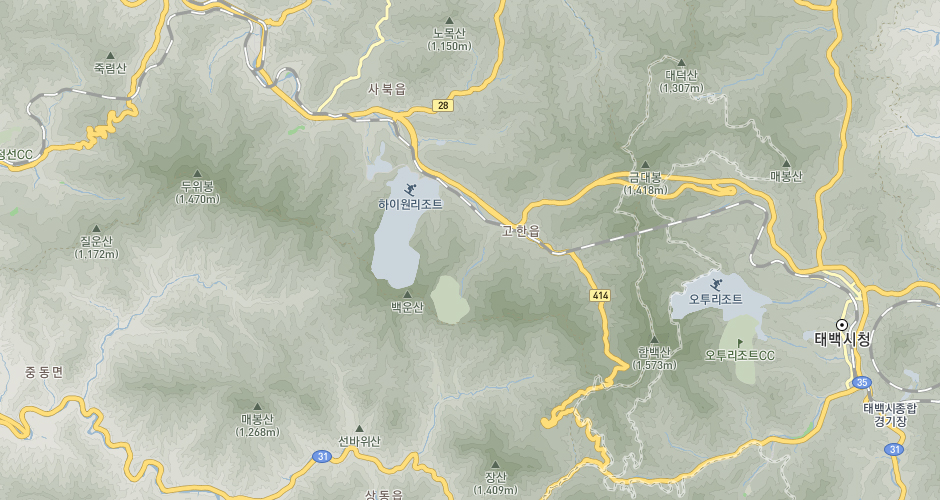
15 Namsungjung-ro 153beon-gil, Seogwipo-si, next to Sammaebong Library
The address is Gidang Art Museum, 15 Namsungjung-ro 153beon-gil, Seogwipo-si, Jeju Special Self-Governing Province. The museum is described as being near Sammaebong Library, or as Gidang Art Museum next to Sammaebong Library, so searching for Sammaebong Library together on a map makes the location easier to find.
Public transportation information confirms only that the museum is near Sammaebong Library; specific bus route numbers, stop names, and walking times from the stop to the museum are not provided. Bus users should therefore check the route on the official Seogwipo City cultural facilities website before departing.
Confirmed information about parking and accessibility facilities is limited but clear
Dedicated parking spaces for visitors with disabilities are available. However, the number of general parking spaces and parking fees are not provided in the information materials, so visitors arriving by car should not assume that general parking will always be available.
The main entrance has no steps, and there is an elevator and restroom for visitors with disabilities. Wheelchair rental is also available. The museum is additionally described as offering convenience services for visitors with visual or hearing impairments and facilities accessible by low-floor buses, providing specific forms of assistance for visitors who require mobility support.
Children’s rest area in the art lounge and things to know before your visit
The museum includes permanent exhibition galleries, a special exhibition gallery, storage facilities, a seminar room, an art lounge, and offices. The art lounge has a children’s rest area and art books, making it useful for families looking for a place where children can stay between exhibitions.
The main contact number is 064-733-1586, and the official website is http://culture.seogwipo.go.kr. Information materials do not confirm whether photography is prohibited, whether payment is cash-only, or whether English information and audio guides are available, nor do they specify access restrictions by gallery. Rather than assuming these services are provided, contact the museum by phone before your visit for accurate information.
A Seogwipo itinerary built around a 35-minute visit
When focusing on the permanent exhibitions, the recommended visiting time is approximately 35 minutes. Considering the operating hours of 09:00–18:00 and the 17:30 ticketing and admission deadline, it is best to arrive in the morning or early afternoon, visit the Suam Gallery and Wooseong Byun Shi-ji Gallery in sequence, and then add the special exhibition gallery.
The museum is next to Sammaebong Library, and the art lounge has art books; the building consists of one basement level and one above-ground level. It suits travelers who want to explore Jeju art and architecture briefly but intensively rather than spend a long time walking around a large outdoor attraction. Travelers who need bus route information, walking times from stops, or general parking details should confirm them in advance by calling 064-733-1586.
Before You Go
- Address
- Gidang Art Museum, 15 Namsungjung-ro 153beon-gil, Seogwipo-si, Jeju Special Self-Governing Province
- Hours
- 09:00–18:00 (ticket sales and admission end at 17:30)
- Closed
- Every Monday, January 1, the Lunar New Year and Chuseok holidays
- Admission
- Individual: adults (ages 25–64) 1,000 won, youths (ages 13–24) 500 won, children (ages 7–12) 300 won. Group: adults 700 won, youths 300 won. The group fee for children was not confirmed.
- Phone
- 064-733-1586
- Official site
- http://culture.seogwipo.go.kr
- Transport
- Near Sammaebong Library. Specific bus route numbers and walking time from the stop were not confirmed.
- Parking
- Dedicated accessible parking spaces available. The number of general spaces and parking fees were not confirmed.
- Time needed
- Approximately 35 minutes based on reviews and tourism information (exhibition viewing)
- Accessibility
- Accessible restroom, elevator for visitors with disabilities, dedicated accessible parking spaces, step-free main entrance, wheelchair rental, services for visitors with visual impairments, and services for visitors with hearing impairments are available.
The information above is accurate as of the time of writing. Check the official information again before visiting.

Places
Nearby Attractions 3
-
 1
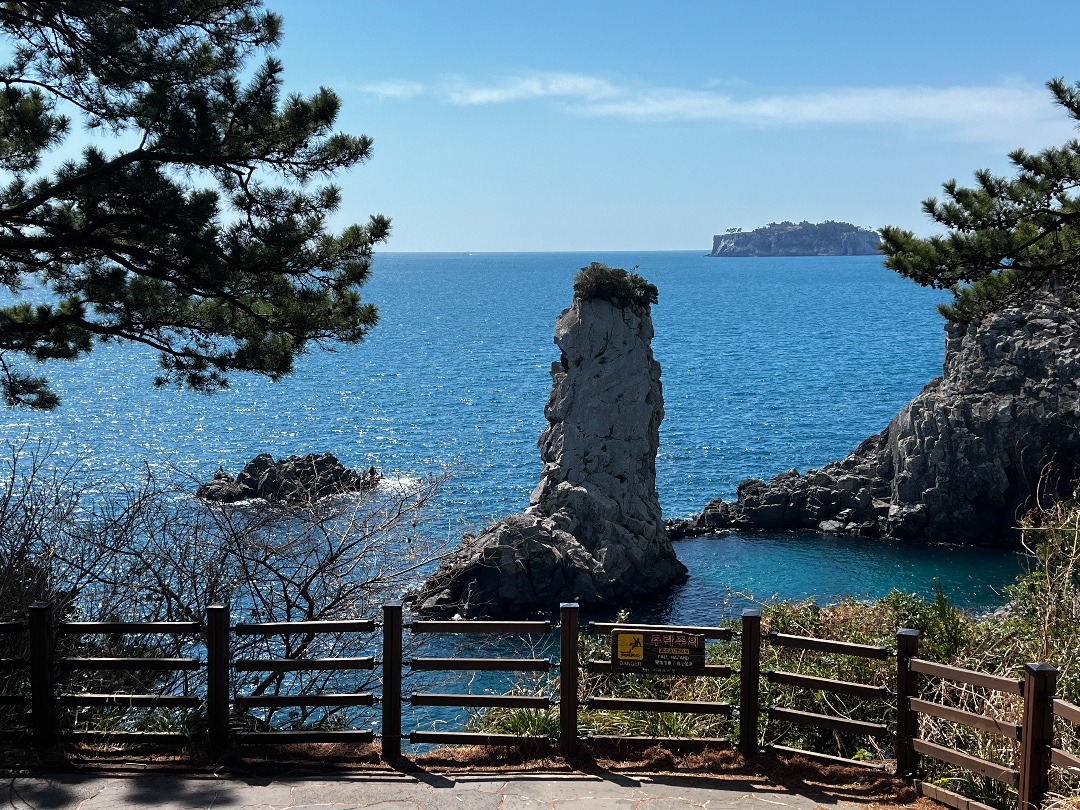
Oedolgae RockA popular spot for strolling while enjoying the sea cliffs and coastal scenery.
1
Oedolgae RockA popular spot for strolling while enjoying the sea cliffs and coastal scenery. -
 2
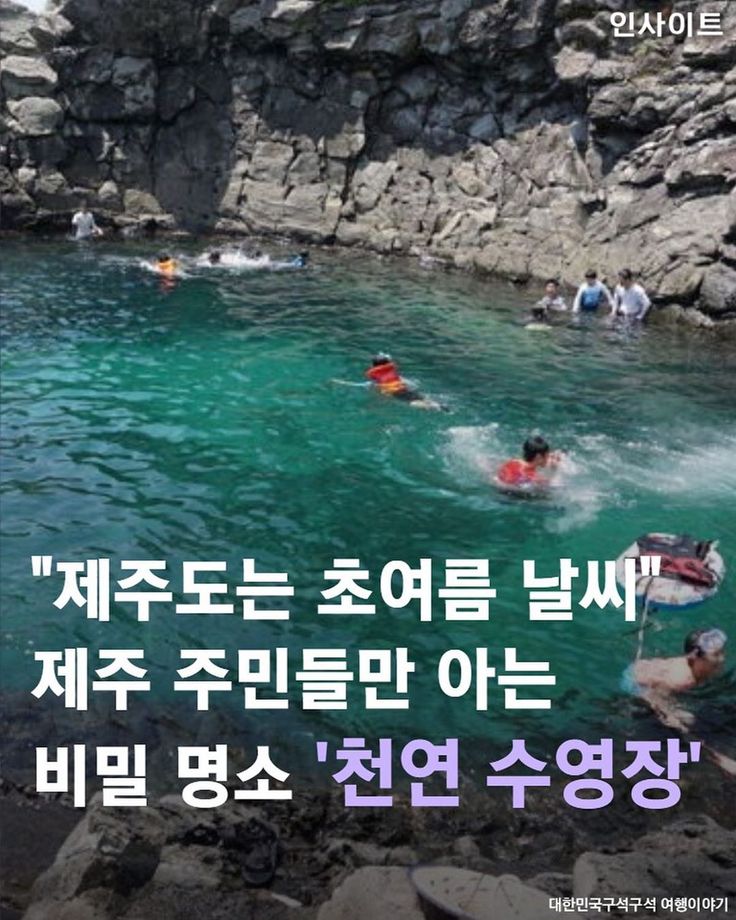
Hwangwooji CoastA place where you can walk along the basalt coast and enjoy sea views while exploring Seonnyeotang Pool.
2
Hwangwooji CoastA place where you can walk along the basalt coast and enjoy sea views while exploring Seonnyeotang Pool. -
 3
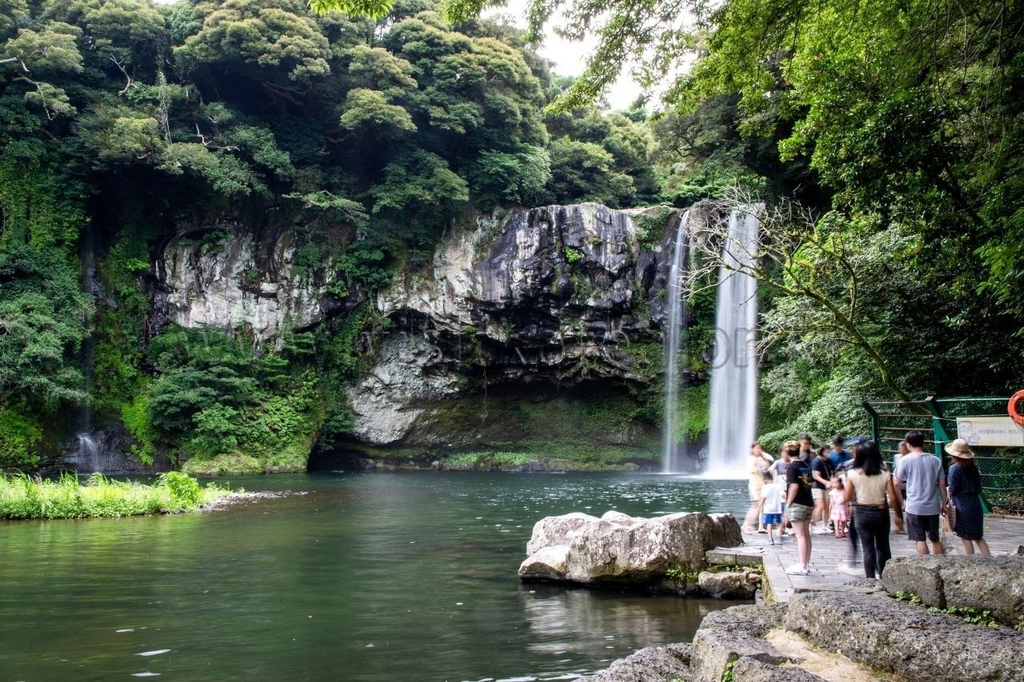
Cheonjiyeon FallsA place to enjoy the waterfall flowing along a subtropical forest trail and the surrounding natural scenery.
3
Cheonjiyeon FallsA place to enjoy the waterfall flowing along a subtropical forest trail and the surrounding natural scenery.
Food & Dining 3
-
 4
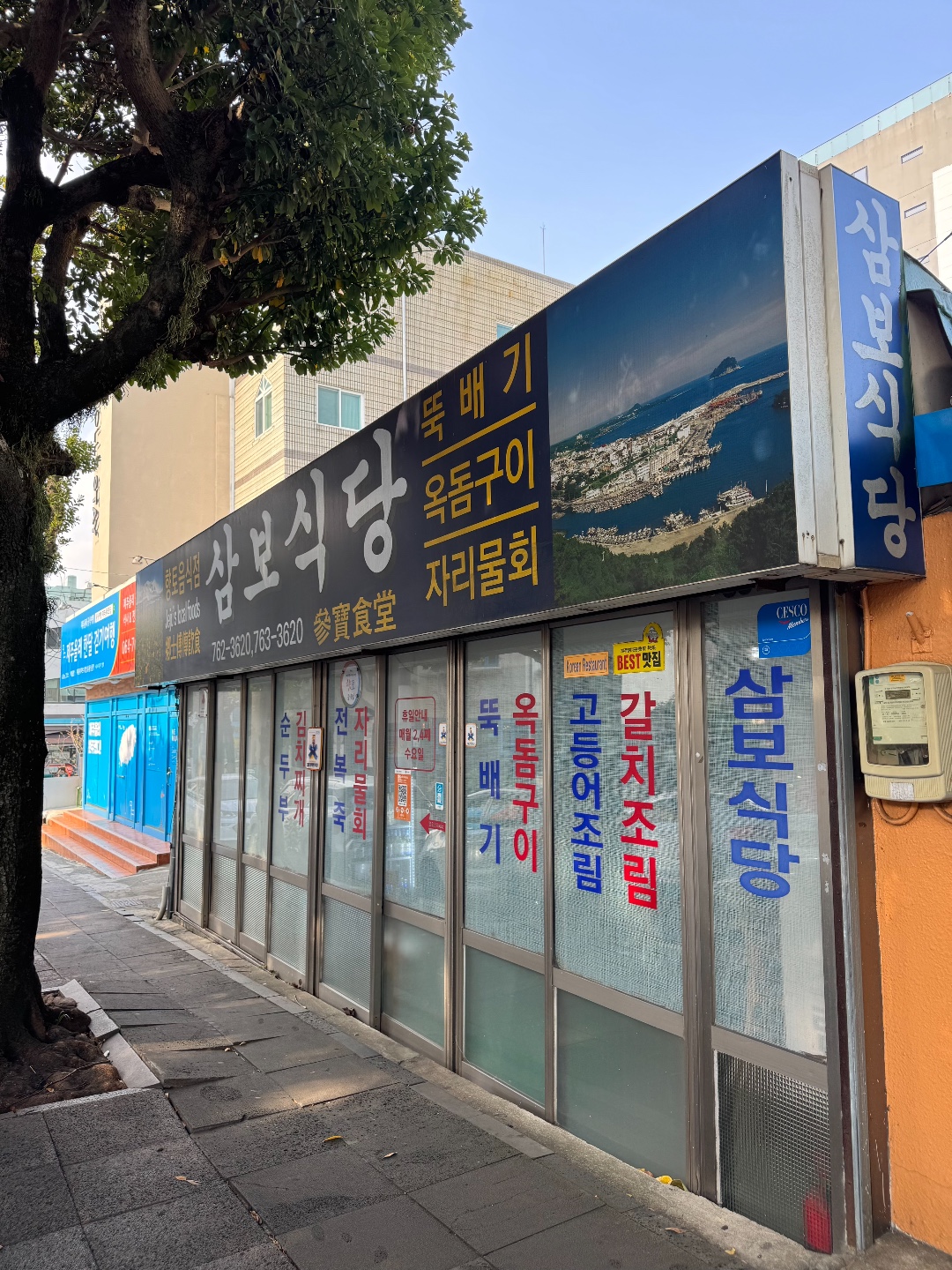
Sambo SikdangA restaurant serving Jeju-style local dishes such as abalone hot pot and grilled tilefish.
4
Sambo SikdangA restaurant serving Jeju-style local dishes such as abalone hot pot and grilled tilefish. -
 5
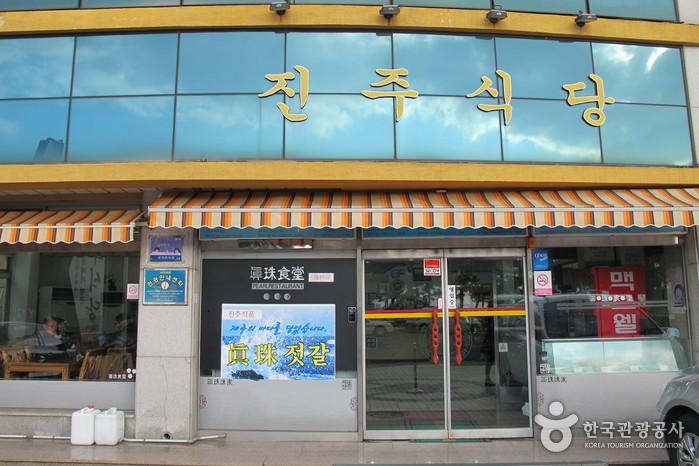
Jinju SikdangA restaurant serving seafood-focused Jeju cuisine, including abalone hot pot and abalone porridge.
5
Jinju SikdangA restaurant serving seafood-focused Jeju cuisine, including abalone hot pot and abalone porridge. -
 6
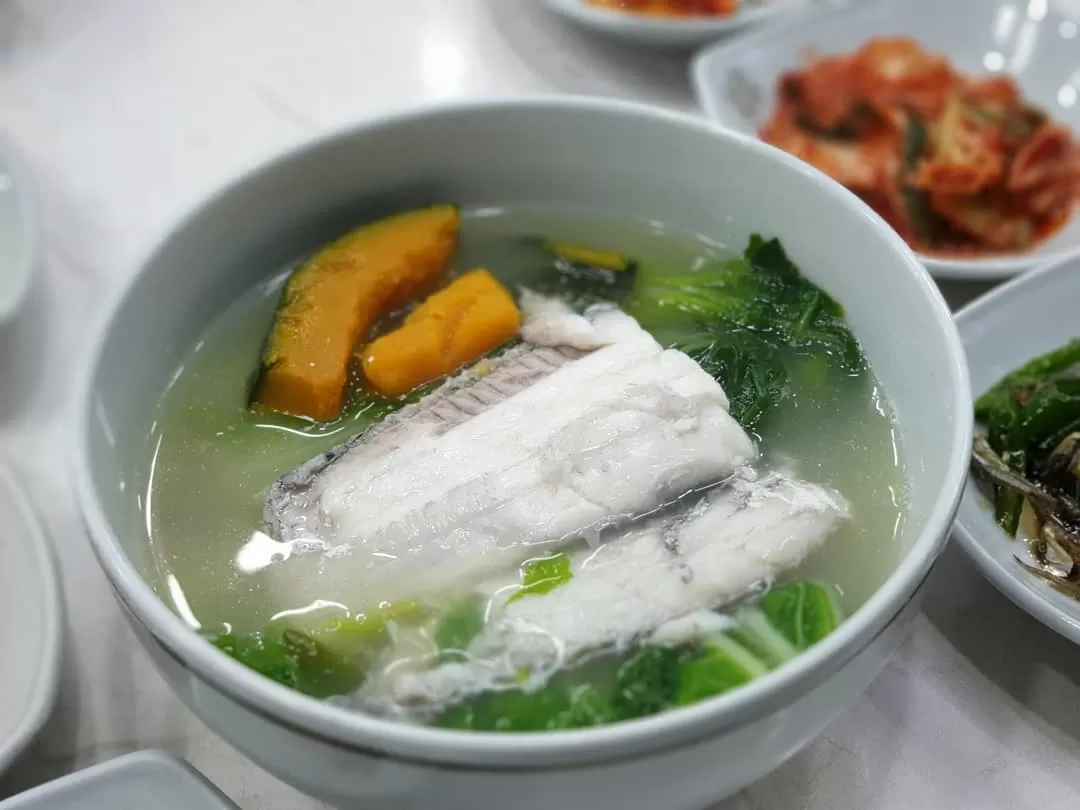
Negeori SikdangA restaurant serving Jeju-style fish dishes, including hairtail fish soup and grilled hairtail.
6
Negeori SikdangA restaurant serving Jeju-style fish dishes, including hairtail fish soup and grilled hairtail.
Events in This Area
Festivals in This Area
More Travel Guides in This Area
 Travel Guide
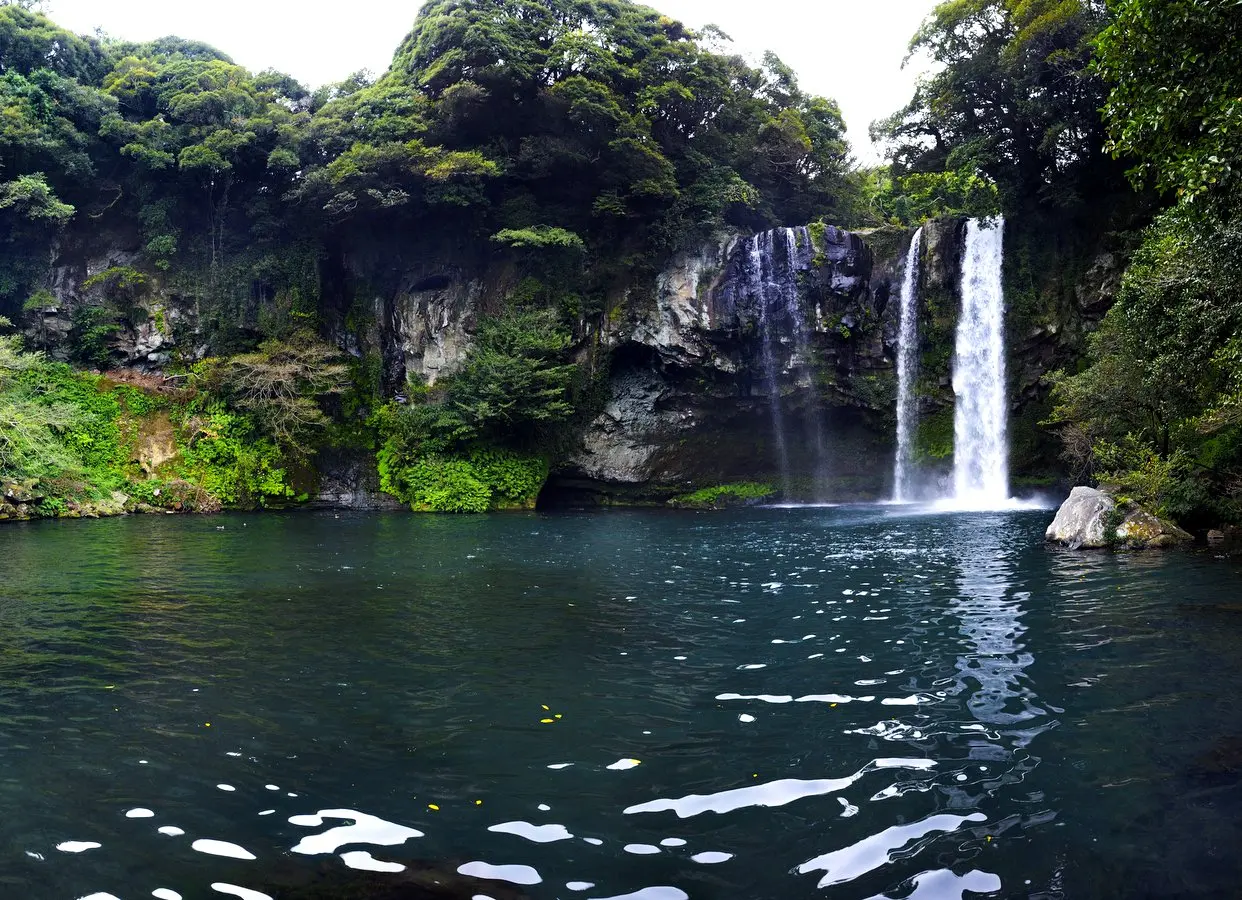
Seogwipo Public Library Facing Hallasan at the Foot of Sammaebong
 Travel Guide
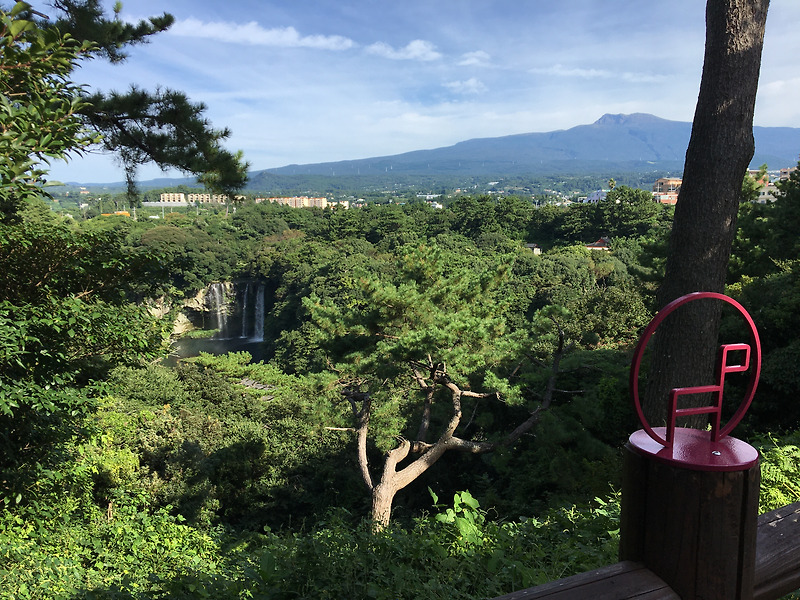
Seogwipo’s Cheonjiyeon Falls and the 22 m Watercourse of Its Subtropical Forest, Walkable Until 10 p.m.
 Travel Guide
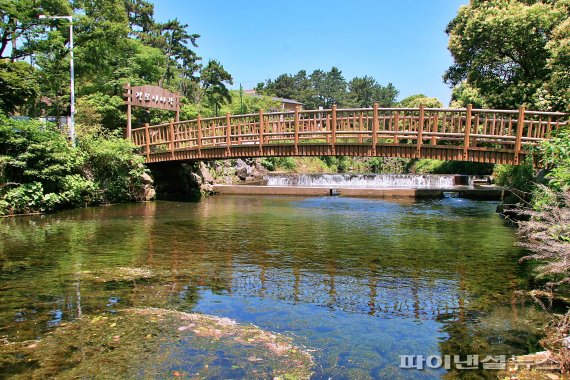
Waterfalls, Saeseom Island and Alleys on the 8.9 km Hayoung Olle Route 1 through Seogwipo’s Old Downtown
 Travel Guide
From Jeongbang Waterfall Waterway to Jaguri Coast and Lee Jung-seop Street, Hayoung Olle Course 2 (6.4km)
Korea News
![BLACKPINK’s Lisa Dominates the VMA Red Carpet in a Sheer Corset Dress and Red Fur [Star Issue]](https://kotourlive-images.s3.ap-northeast-1.amazonaws.com/news/1790557894714_010e956a_news_94409db1-fab6-40bf-bc7b-4b985b1fbac7.jpg) News
News
BLACKPINK’s Lisa Dominates the VMA Red Carpet in a Sheer Corset Dress and Red Fur [Star Issue]
![BLACKPINK’s Jisoo Spotted by Surprise with BIGBANG in London… Their Special Loyalty as Labelmates [IS High Cut]](https://kotourlive-images.s3.ap-northeast-1.amazonaws.com/news/1790557854683_6ea979f5_news_caab62e5-8462-43c8-8622-da794f3df9de.png) News
News
BLACKPINK’s Jisoo Spotted by Surprise with BIGBANG in London… Their Special Loyalty as Labelmates [IS High Cut]
 News
News
Tattoos All Over Her Body… AOA’s Jimin Draws Shocked Attention After Kwon Mina’s ‘Bullying’ Allegations
![You’ll Have to Look Twice… Choi Min-a-soo Perfectly Pulls Off Everything from a Daring Illusion Dress at the Awards Ceremony to Long Braided Hair [RE:STAR]](https://kotourlive-images.s3.ap-northeast-1.amazonaws.com/news/1790492384850_1f293dad_news_d834c50e-0685-43ef-9aa5-6995cd6d8848.jpg) News
News