From the Steps of Seonggeosan Mountain to the Korean War Memorial Tower: The Urban Memories Preserved by Gwangju Park
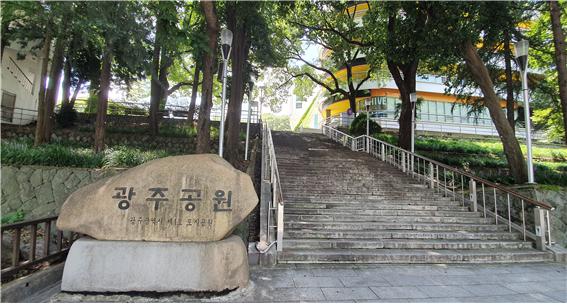
Gwangju Park, the city’s first urban park, was created at the foot of Seonggeosan Mountain beside the Gwangjucheon Stream. This historic site brings together a five-story stone pagoda from the Goryeo period, Gwangju Hyanggyo Confucian School, the steps of a Shinto shrine from the Japanese colonial period, and a Korean War memorial tower along one route. Open 24 hours free of charge, it is well suited to an approximately one-hour walking itinerary combined with Yangnim-dong, Sajik Park, and Yangdong Market.
I’ve been here?
Your check-in helps the next traveler.
No one has checked in yet Be the first
One tap — no writing needed
Gwangju’s First Urban Park, Shaped by Gwangjucheon Stream and Seonggeosan Mountain
Gwangju Park is Gwangju’s first urban park, located at the foot of Seonggeosan Mountain in Gudong, Nam-gu, Gwangju Metropolitan City, in front of Gwangjucheon Stream. The official tourist information lists its road address as 15 Jungang-ro 107beon-gil, Nam-gu, Jeonnam Gwangju Integrated Special City. The park is open 24 hours a day, year-round, and both admission and parking are free.
This is more than a park with a lawn plaza. It contains layers of history, including a Goryeo-period stone pagoda, a Joseon-period hyanggyo and commemorative steles, traces of a shrine from the Japanese colonial period, and memorial facilities related to the Korean War and the April 19 Revolution. Gwangjucheon Stream flows in front of the park, while Sajik Park, the National Asian Culture Center, and Yangdong Market are also nearby, making it a useful link in a historic downtown itinerary.
Goryeo-Period Five-Story Stone Pagoda at Seonggeosaji and Turtle-Shaped Seonggeosan Mountain
The area around Gwangju Park was originally known as Seonggeosan or Seonggugang, and tradition says that the mountain resembles a turtle. The former Gwangju Seonggeosaji Five-Story Stone Pagoda, built during the Goryeo period, remains in the park, showing that the area was connected with a Buddhist temple long before the park was created.
The five-story stone pagoda is designated National Treasure No. 109 and is a granite pagoda approximately 7 meters high. Rather than viewing only the pagoda, continue to the hyanggyo and the group of commemorative steles to understand how Goryeo Buddhist heritage, a Joseon educational institution, and modern memorial facilities came to overlap within one park.
- Suggested route: Park entrance → Gwangju Hyanggyo and commemorative steles → Five-story stone pagoda → Hyeonchung Tower
- Recommended stay: 60–90 minutes when walking while reading about the historic sites
- Cherry blossom season: According to Korea Tourism Organization information, the blossoms are particularly prominent in mid-April each year.
Joseon Administrative Records Preserved by Gwangju Hyanggyo and the Gwangjumoksa Commemorative Steles
Gwangju Hyanggyo, at the foot of Seonggeosan Mountain, was a facility responsible for local education and Confucian rites during the Joseon period. Around the entrance to the hyanggyo is the Gwangju Park group of commemorative steles, which includes steles honoring Gwangjumoksa and county magistrates, as well as provincial governors and governors. These are not merely decorative objects but records commemorating local administrators of the time.
The group of steles also includes monuments to Confucian scholar An Gyuyong, secret royal inspectors Jo Heon and Yeo Gyuik, and some chalbang officials. Even if it is difficult to read all the inscriptions, viewing the path to the hyanggyo together with the steles makes it possible to follow on site how Joseon-era Gwangju operated as a center of education and administration.
Foreign visitors may find that sufficient explanations are not available, so preparing a translation app is advisable. Wheelchairs and strollers can generally enter through the main park entrance with few level changes, but the slopes and stair sections toward the stone pagoda and Hyeonchung Tower may require assistance from a companion or an alternative route.
Steps to Gwangju Shrine and the Site’s Transformation After Liberation in 1945
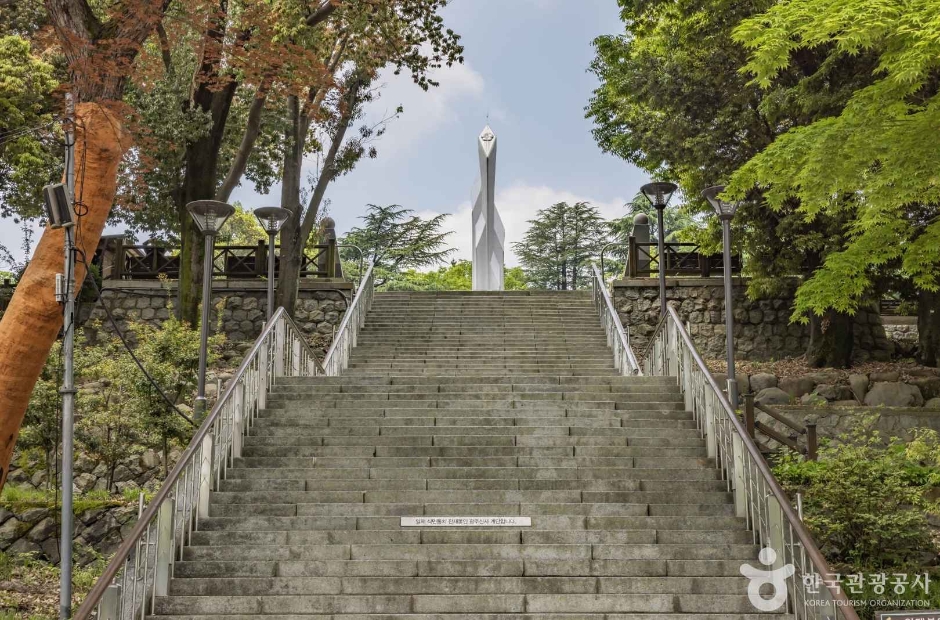
The stone steps rising from the plaza toward Hyeonchung Tower were once the steps leading to Gwangju Shrine during the Japanese colonial period. On August 8, 2019, wording was installed explaining that the steps are a remnant of colonial rule. The steps themselves have been preserved as a way of explaining the past rather than erasing it.
According to press records, Gwangju Shrine was burned by citizens after August 15, 1945, Liberation Day, and the “Tower of the Spirit for Us” was erected on the site on May 29, 1963. Therefore, when climbing the steps, it is important to understand them not only as a scenic walking path but also as a place where a colonial shrine site was transformed into a patriotic memorial space.
The steps are wide but steep, with successive changes in level. Visitors with limited mobility or those using strollers should first check on site whether Hyeonchung Tower can be approached by vehicle or via a gentler path, and should avoid climbing the steps if it feels unsafe.
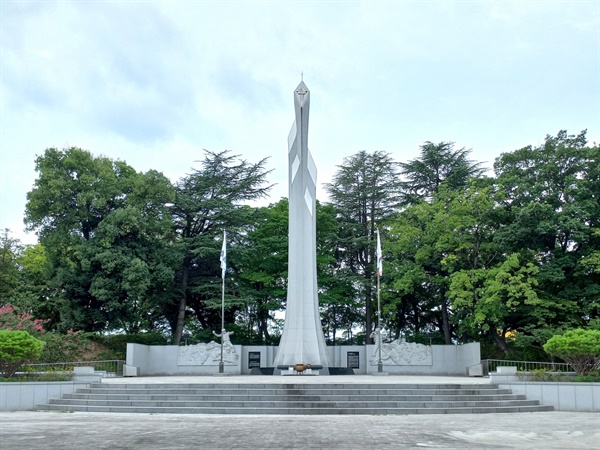
The 2015 “Light of Eternity” Hyeonchung Tower and 15,800 Memorial Tablets
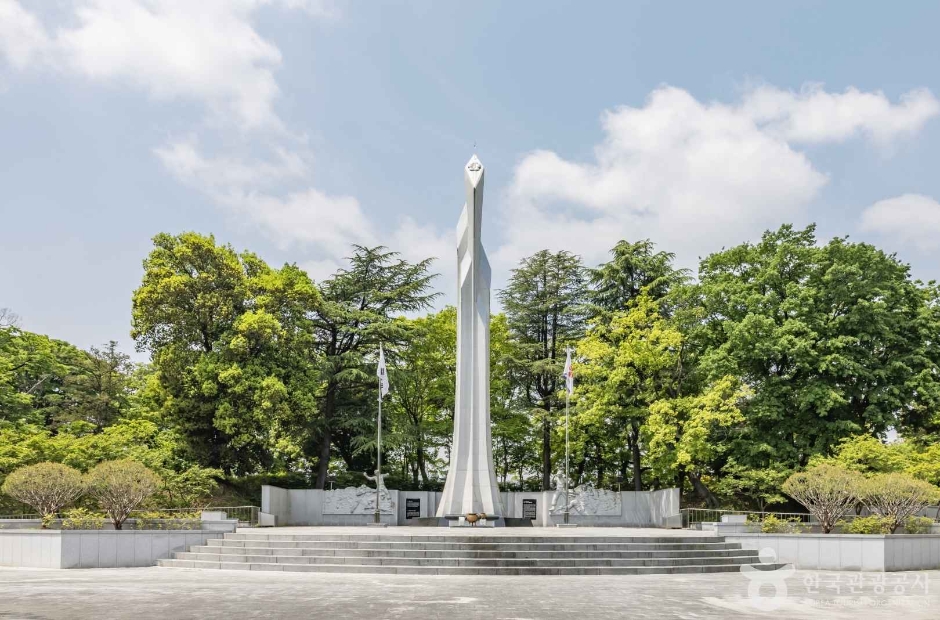
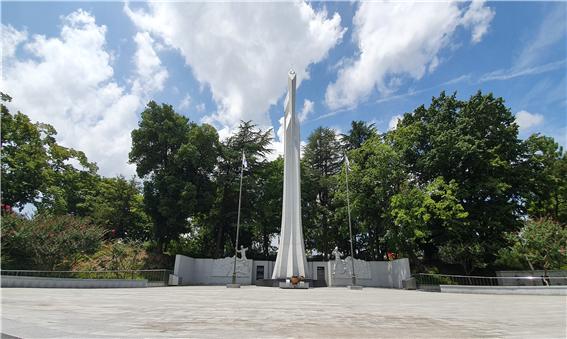
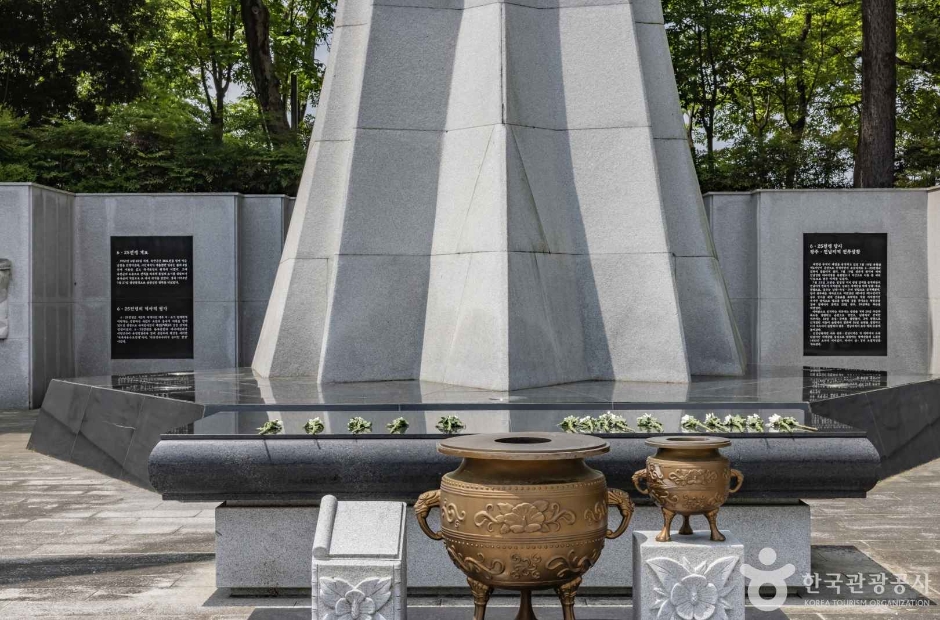
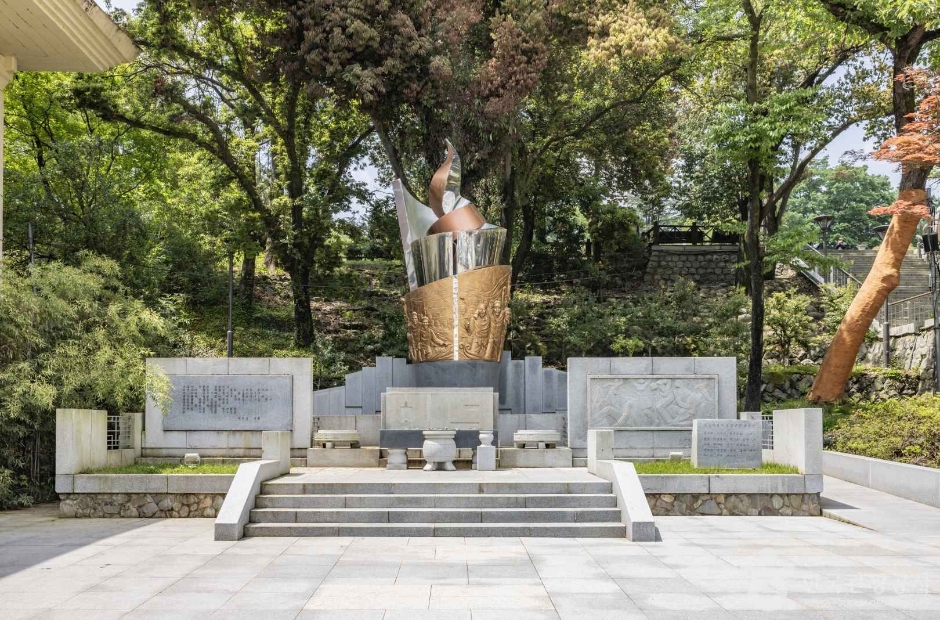
The current Hyeonchung Tower in Gwangju Park was newly built in 2015 under the theme “Light of Eternity.” It uses granite and stainless steel and consists of a hexagonal base and a 25-meter-high tower body symbolizing the Korean War.
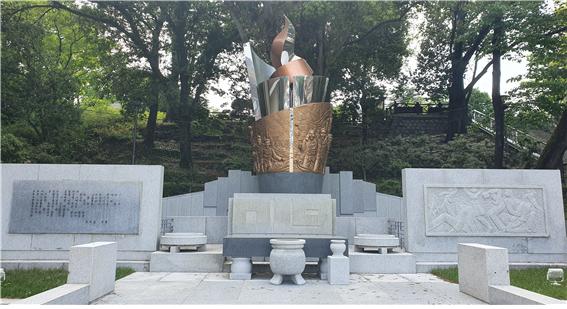
The memorial tablet hall beside Hyeonchung Tower contains tablets honoring approximately 15,800 patriots who died for their country. The bronze eagle and relief wall from the former Chung’ung Tower, built in 1963, were reinstalled and remain on site, so it is worth looking for traces of the older monument rather than leaving after viewing only the new tower.
Near Hyeonchung Tower are also the Memorial Stele for the Spirits of the April 19 Uprising and the Children’s Charter Tower. Memories of the April 19 Democratic Revolution and the Korean War stand together in the same park, so when taking photographs, visitors should respect the character of the memorial space and avoid noisy behavior.
Open 24 Hours Free of Charge: Practical Information to Confirm at 062-672-0660
Gwangju Park is open 24 hours a day, year-round, and admission is free. The official inquiry telephone number is 062-672-0660, while general tourist information is provided by Korea’s Visit Korea website and the Gwangju tourism portal. The park can be accessed at night, but daylight hours are more suitable for reading historical signs and viewing the heritage sites.
Parking is available at the park and is listed as free. However, information about separately reserved parking areas or real-time availability is difficult to confirm from public information alone, so public transportation is preferable on weekends and during cherry blossom season. Restrooms are available, and official accessibility information lists an accessible restroom, designated disabled parking spaces, wheelchair rental, no level difference at the main entrance, and access by subway and low-floor buses.
- Hours: 24 hours
- Closed: None
- Admission: Free
- Parking: Available, free
- Telephone: 062-672-0660
Geumnam 59 “Gwangju Park” Bus Stop and Walking Connections to Yangdong Market and Sajik Park
Visitors traveling by bus can use the “Gwangju Park” stop, which is served by the Geumnam 59 route. Routes and operating times may change, so check Gwangju bus information immediately before departure. Because Gwangju Park is located in the historic downtown area, it is easy to include it in a walking itinerary connecting Sajik Park and the Yangnim-dong Historic and Cultural Village.
Subway users can use Yangdong Market Station on Gwangju Metro Line 1 as a reference point. Exit 2 of Yangdong Market Station is described as being about a two-minute walk from Yangdong Market. From the market, follow Gwangjucheon Stream toward Gwangju Park to combine the market, stream, and park into one route. From the park, the National Asian Culture Center can be reached via Geumnam-ro toward downtown.
For a first visit, a realistic itinerary would allocate 60 minutes for the park, 60 minutes for a meal or shopping at Yangdong Market, and at least 90 minutes for Sajik Park or Yangnim-dong. Since the park is a combination of historic monuments and a place to relax rather than a large-scale tourist facility, it may not suit travelers expecting children’s play facilities or indoor exhibitions.
Before You Go
- Address
- 15 Jungang-ro 107beon-gil, Nam-gu, Jeonnam Gwangju Integrated Special City (Gudong)
- Hours
- 24 hours
- Closed
- Open year-round
- Admission
- Free
- Phone
- 062-672-0660
- Official site
- https://korean.visitkorea.or.kr/detail/ms_detail.do?cotid=bb86b003-ce74-4e2a-902b-015f1a2afd93
- Transport
- The “Gwangju Park” stop on Gwangju city bus route Geumnam 59 is available. From Yangdong Market Station on Metro Line 1, visitors can walk to the park via Gwangjucheon Stream and Yangdong Market.
- Parking
- Available, free
- Time needed
- 60–90 minutes
- Accessibility
- Information indicates an accessible restroom, designated disabled parking spaces, no level difference at the main entrance, wheelchair rental, and access by subway and low-floor buses. The Hyeonchung Tower stair section has slopes and changes in level.
The information above is current as of the time of writing. Check the official information again before visiting.

Places
Nearby Attractions 3
-
 1
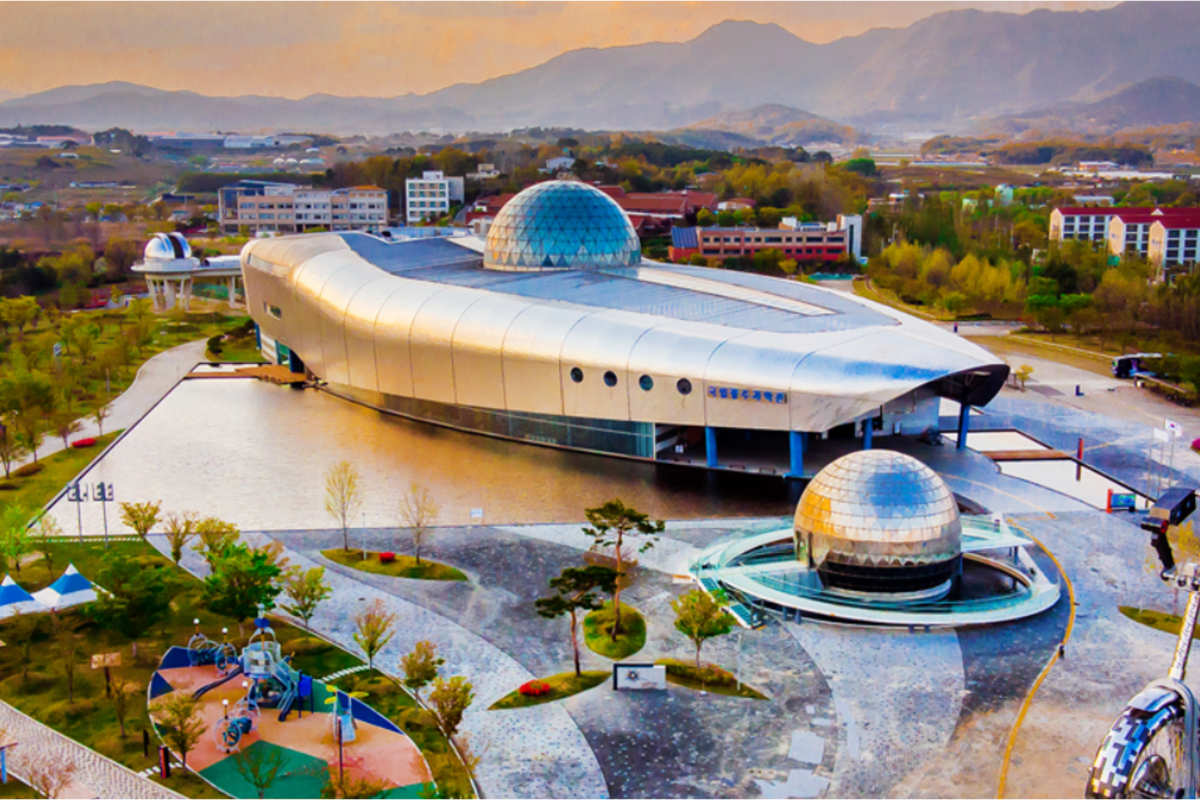
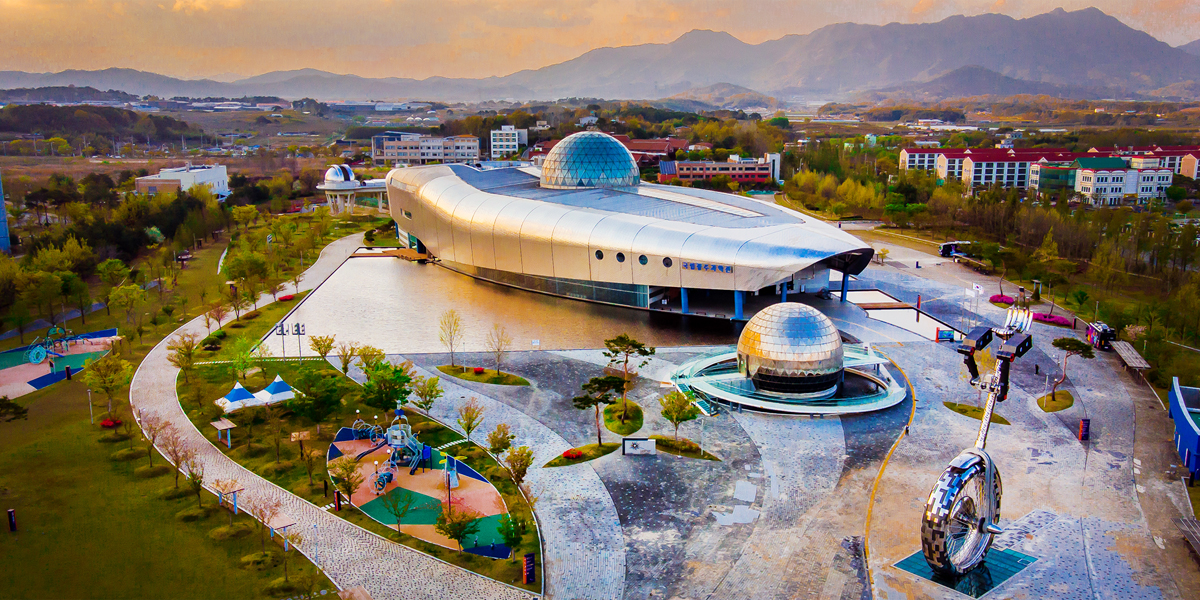
Gwangju National Science MuseumA science museum where you can enjoy science exhibits and hands-on programs.
1
Gwangju National Science MuseumA science museum where you can enjoy science exhibits and hands-on programs. -
 2
2
-
 3
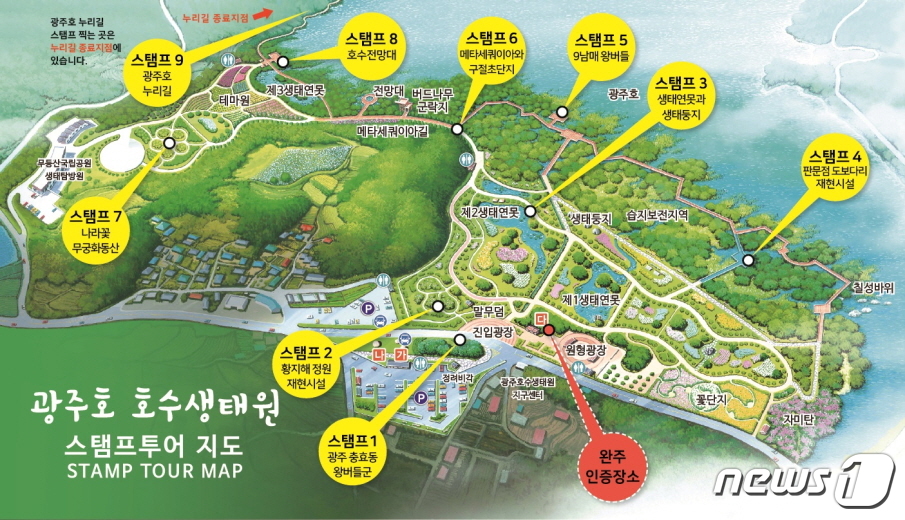
Gwangjuho Lake Eco ParkA place where you can enjoy walks around the lake and observe diverse ecosystems.
3
Gwangjuho Lake Eco ParkA place where you can enjoy walks around the lake and observe diverse ecosystems.
Food & Dining 2
-
 4
4
-
 5
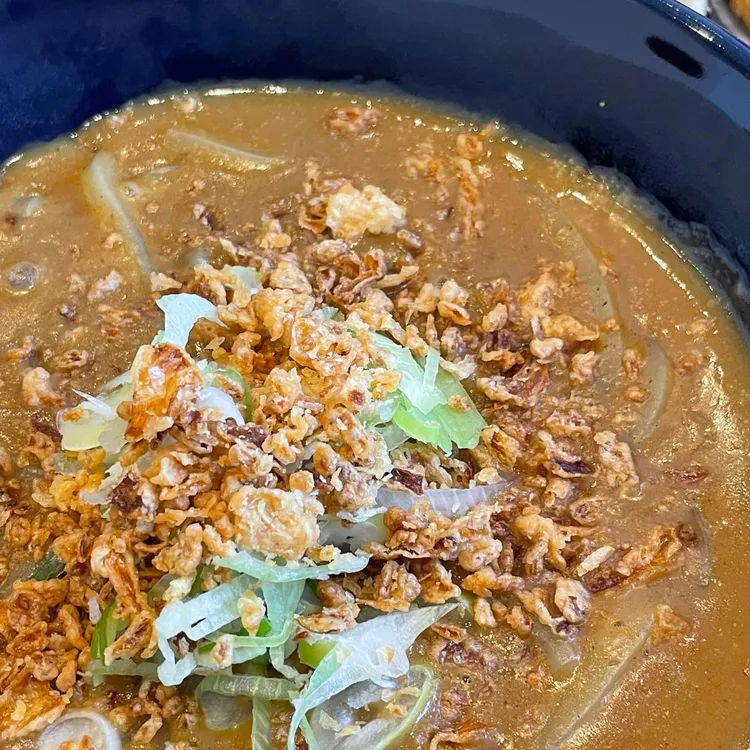
Cheomdan 1811 Gogi Jjamppong Main BranchA Chinese restaurant specializing in meat jjamppong.
5
Cheomdan 1811 Gogi Jjamppong Main BranchA Chinese restaurant specializing in meat jjamppong.
Events in This Area

Festivals in This Area

More Travel Guides in This Area
 Travel Guide
A National Science Museum Bringing Light, Dinosaurs, and Space Together Along One Route
 Travel Guide
A Half-Day Walk Through Gwangju’s Advanced District, from Ssangam Park Lake to the Science Museum
 Travel Guide
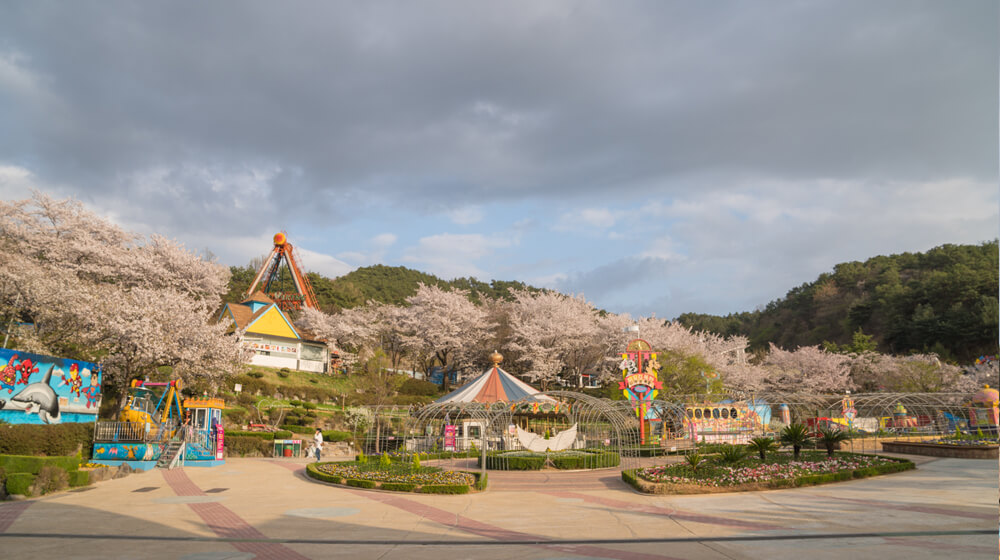
Gwangju Family Land, Where Uchi Park’s Forest Meets a 1991 Amusement Park
 Travel Guide
From the 1992 Zoo to the 2002 Golf Practice Range: A One-Day Route through 960,000㎡ Uchi Park
Korea News
![BLACKPINK’s Lisa Dominates the VMA Red Carpet in a Sheer Corset Dress and Red Fur [Star Issue]](https://kotourlive-images.s3.ap-northeast-1.amazonaws.com/news/1790557894714_010e956a_news_94409db1-fab6-40bf-bc7b-4b985b1fbac7.jpg) News
News
BLACKPINK’s Lisa Dominates the VMA Red Carpet in a Sheer Corset Dress and Red Fur [Star Issue]
![BLACKPINK’s Jisoo Spotted by Surprise with BIGBANG in London… Their Special Loyalty as Labelmates [IS High Cut]](https://kotourlive-images.s3.ap-northeast-1.amazonaws.com/news/1790557854683_6ea979f5_news_caab62e5-8462-43c8-8622-da794f3df9de.png) News
News
BLACKPINK’s Jisoo Spotted by Surprise with BIGBANG in London… Their Special Loyalty as Labelmates [IS High Cut]
 News
News
Tattoos All Over Her Body… AOA’s Jimin Draws Shocked Attention After Kwon Mina’s ‘Bullying’ Allegations
![You’ll Have to Look Twice… Choi Min-a-soo Perfectly Pulls Off Everything from a Daring Illusion Dress at the Awards Ceremony to Long Braided Hair [RE:STAR]](https://kotourlive-images.s3.ap-northeast-1.amazonaws.com/news/1790492384850_1f293dad_news_d834c50e-0685-43ef-9aa5-6995cd6d8848.jpg) News
News