The Courtyard of Gwangju Hyanggyo, Connecting 1393 to the Present
Gwangju Hyanggyo is a Joseon-era educational institution established in 1393 beneath Jangwonbong Peak on Mudeungsan Mountain. After surviving tiger attacks and wars, it was relocated to its current site in Gudong, Nam-gu. This guide covers its free opening hours, the walking route from Geumnamno 4-ga Station, and essential information for first-time visitors, including Daeseongjeon and Myeongnyundang.

I’ve been here?
Your check-in helps the next traveler.
No one has checked in yet Be the first
One tap — no writing needed
Gwangju Hyanggyo, Begun at Jangwonbong Peak of Mudeungsan in 1393
Gwangju Hyanggyo was first established in 1393 (around the seventh year of King Taejo’s reign) beneath Seoseoksan, namely Jangwonbong Peak of Mudeungsan, to enshrine the memorial tablets of Confucian sages, provide local education, and enlighten the people. From the beginning, it was not merely a ritual space but a hyanggyo responsible for Confucian education and the moral cultivation of the local community, a role that connects with its various educational programs today.
Because conflicts with tigers were frequent around Seoseoksan, it was moved inside the eastern gate of Gwangju Fortress. In 1488 (the 19th year of King Seongjong’s reign), Magistrate Gwon Supyeong relocated it to its present site, two ri west of the administrative center of Gwangsan-hyeon. The current official address is 5 Jungang-ro 107beon-gil, Nam-gu, Gwangju, while cultural heritage materials record it as 22 Gudong, Nam-gu, Gwangju Metropolitan City. Since the address formats differ, it is safest to provide the official website address when using a taxi or navigation system.
The Layout Rebuilt in 1600 after Its Destruction in 1597
Gwangju Hyanggyo’s buildings were destroyed during the Second Japanese Invasion of Korea in 1597, but they were reconstructed in 1600, establishing the foundation of the present appearance. Daeseongjeon was subsequently repaired and repainted in 1974; Dongjae and Seojae in 1976; Myeongnyundang in 1978; and the walls and exterior in 1981.
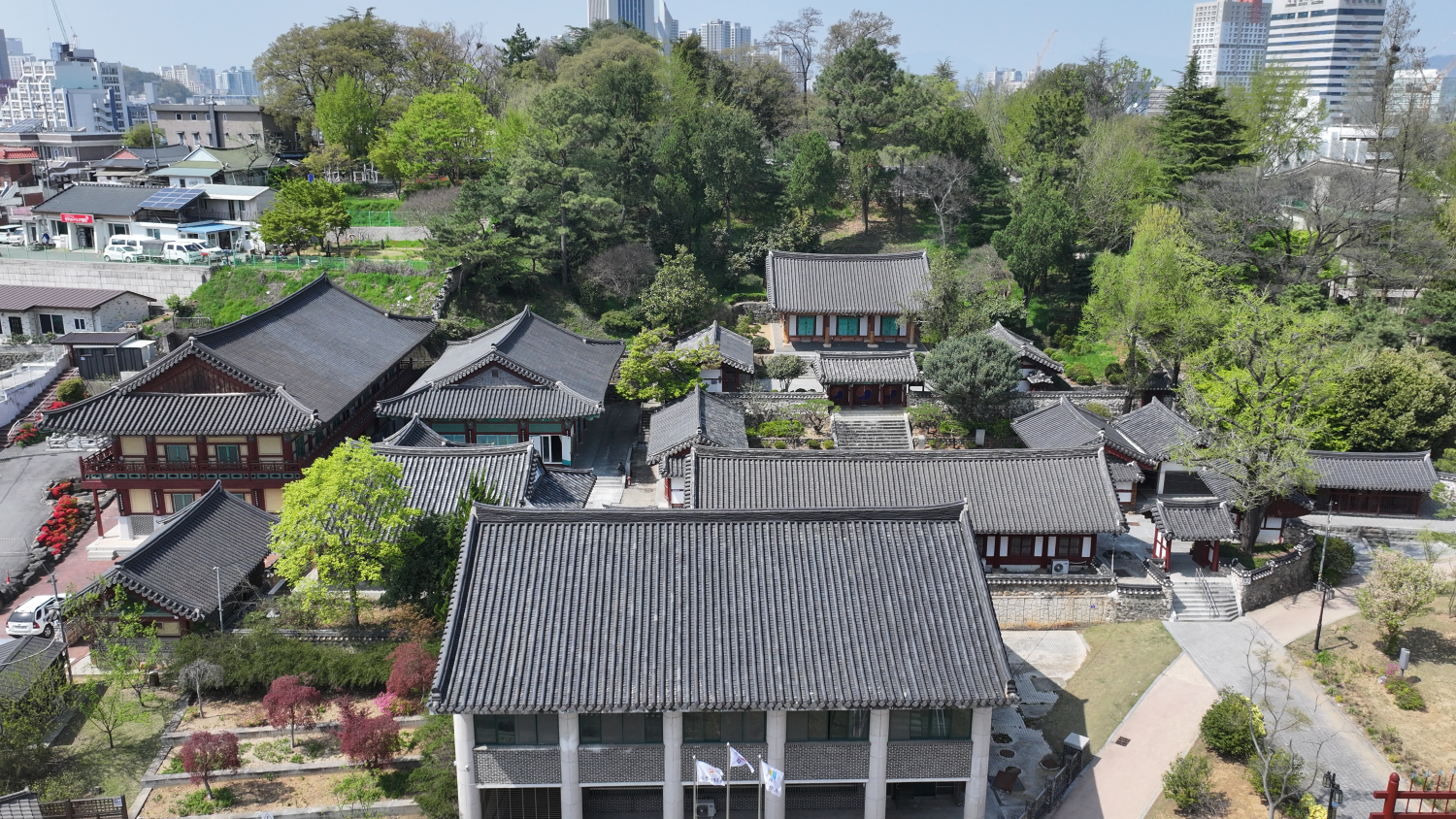
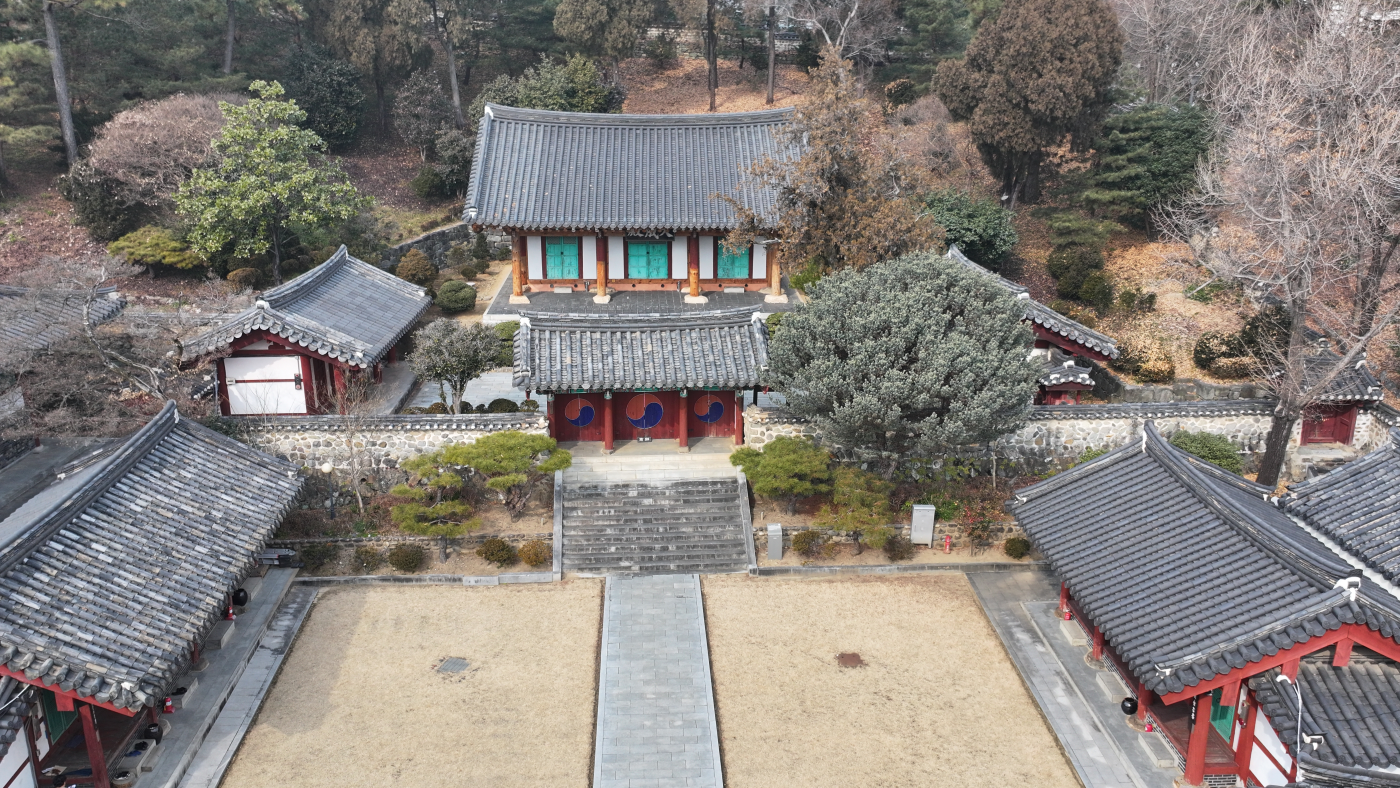
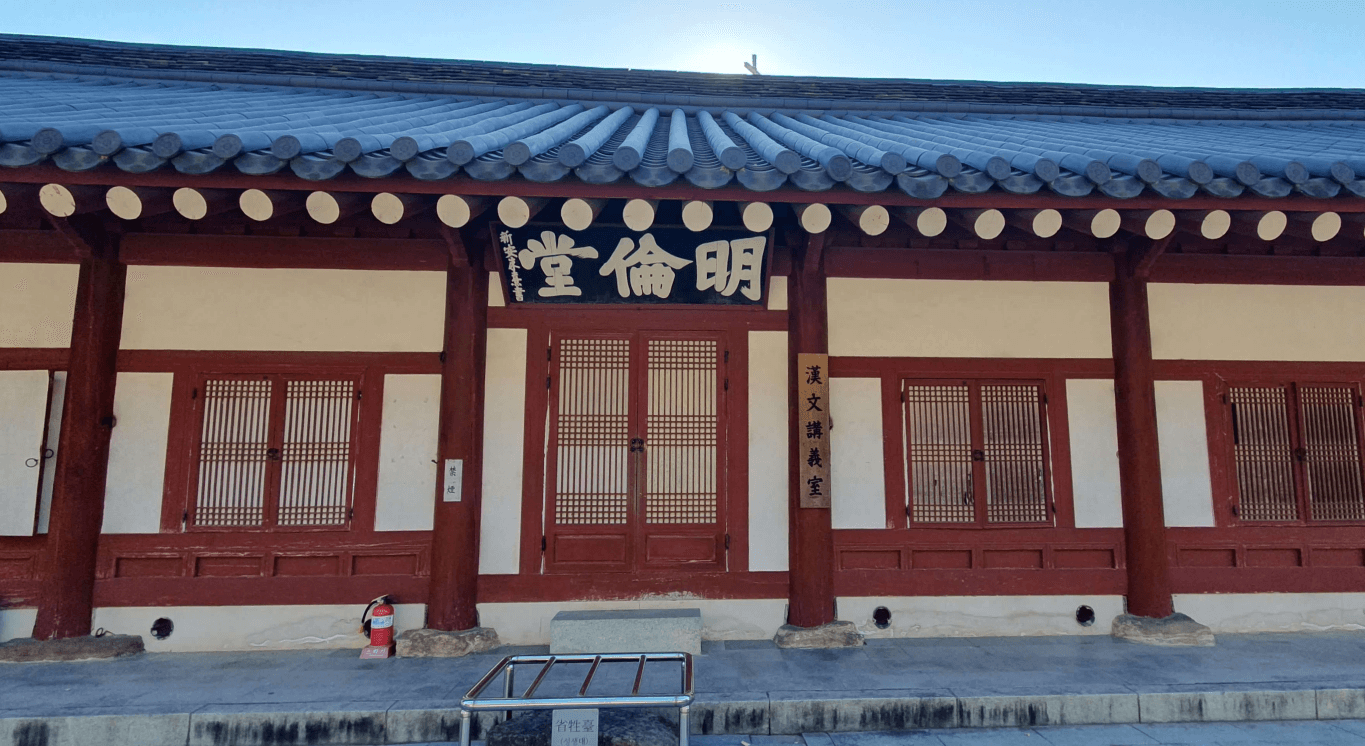
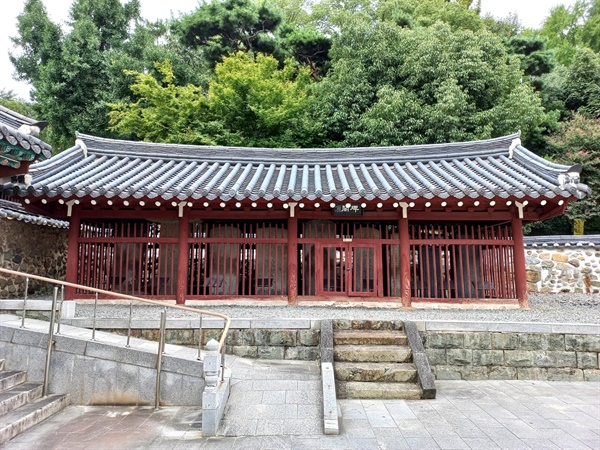
The complex is arranged from front to back as Myeongnyundang, the lecture hall; Dongjae and Seojae, the students’ dormitories; the inner three-door gate; Dongmu and Seomu; and Daeseongjeon, the shrine. Beside the main gate, the stele pavilion contains nine steles commemorating construction, relocation, and repairs. The site is classified as a Joseon-period historic structure, educational culture property, educational institution, and hyanggyo, and was designated Gwangju Metropolitan City Tangible Cultural Heritage No. 9 on February 25, 1985.
A 15-Minute Walk from Exit 1 of Geumnam-ro 4-ga Station
Travelers visiting Gwangju for the first time can use Exit 1 of Geumnam-ro 4-ga Station on the Gwangju Metro as their starting point. The official guide to Gwangju Hyanggyo describes it as a 15-minute walk from Exit 1. When setting out from the station, entering “5 Jungang-ro 107beon-gil, Nam-gu, Gwangju” as the destination can help avoid confusion with the other address format provided.
According to the official guide, the trunk bus routes are Suwan 12 and Jiwon 45, while the branch routes are Songam 74 and Daechon 170. The express bus routes are Maewol 06 and Jinwol 07. Actual waiting times may vary by route and time of day, so it is best to check the next vehicle on the stop’s electronic display.
- Subway starting point: Exit 1 of Geumnam-ro 4-ga Station
- Walking directions: Approximately 15 minutes
- Trunk buses: Suwan 12, Jiwon 45
- Branch buses: Songam 74, Daechon 170
- Express buses: Maewol 06, Jinwol 07
Free Admission Hours from Monday to Saturday
According to the current official guide, Gwangju Hyanggyo is open Monday through Friday from 09:00 to 17:00 and Saturday from 09:00 to 13:00. Admission is free, and the listed main telephone number is 062-672-7008. The official website is https://www.hyanggyo.co.kr/, which can be used to check opening hours and events before setting out.
The official page lists hours only for Monday through Saturday and does not provide opening hours for Sunday. Therefore, rather than stating definitively that Sunday is a regular closing day, Sunday visits should be regarded as unconfirmed until checked by telephone. The total visiting time for general visitors, the usual extent of public access inside the buildings, whether photography is prohibited, and the availability of English information or an audio guide are also not confirmed in the publicly available official information.
- Monday–Friday: 09:00–17:00
- Saturday: 09:00–13:00
- Admission: Free
- Telephone: 062-672-7008
What to See from the Outer Three-Door Gate to Daeseongjeon
The surviving buildings are Daeseongjeon, Myeongnyundang, Yangsajae, the stele pavilion, Dongmu, Seomu, Dongjae, Seojae, the inner three-door gate, and the outer three-door gate. After passing through the outer three-door gate, visitors can follow the front-to-back layout through Myeongnyundang, Dongjae and Seojae, the inner three-door gate, Dongmu and Seomu, and Daeseongjeon. The key is to understand the sequence of educational and ritual spaces rather than looking only for the shrine immediately after entering.
Daeseongjeon is a building with a gabled roof, three bays across the front and three bays along the side. It enshrines the memorial tablets of the Five Sages, six Neo-Confucian scholars of the Song dynasty, and 18 Korean sages. Gwangju Hyanggyo also houses 306 books in 189 categories, including Confucian classics and literary collections. However, this does not mean that all of the holdings are open to general visitors, so those wishing to view the books directly should inquire in advance.
A Venue for the Spring and Autumn Seokjeon Rituals and Incense Offerings on the First Day of the Lunar Month
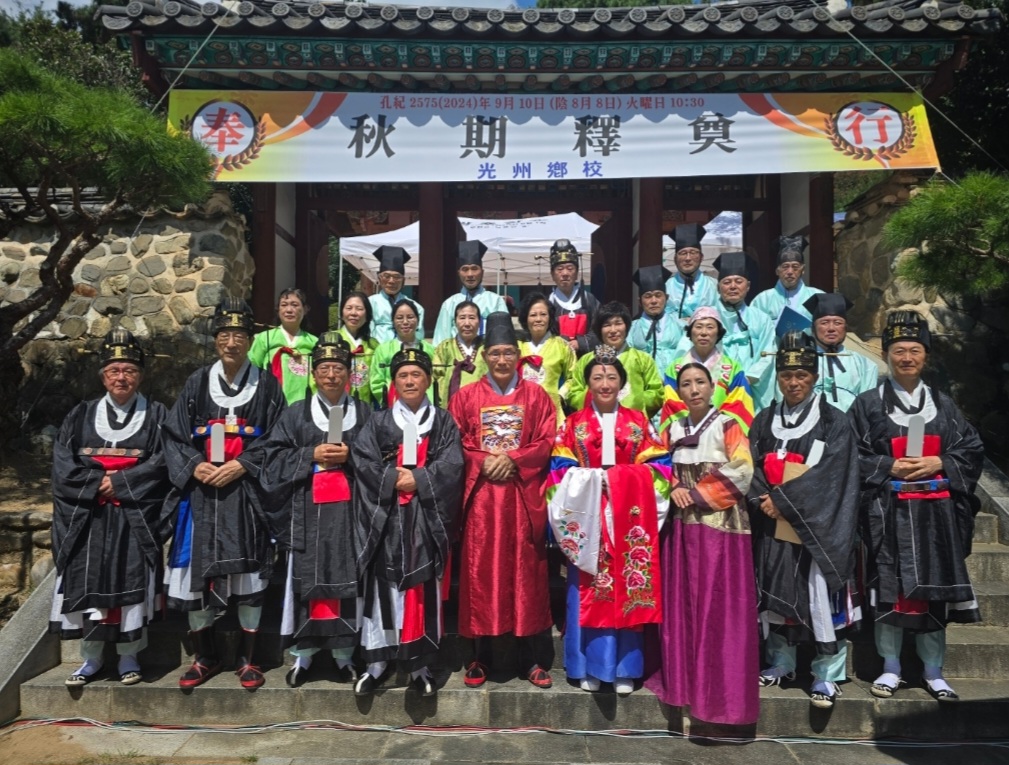
Gwangju Hyanggyo holds Seokjeon ceremonies every spring and autumn. The spring Seokjeon ceremony takes place on the first jeong day of the second lunar month, while the autumn ceremony takes place on the first jeong day of the eighth lunar month. Visitors should therefore check the lunar calendar for the relevant year rather than relying on a single Gregorian date.
Incense-offering rites are held at 10:00 a.m. in Daeseongjeon on the first and fifteenth days of every lunar month. Major events, such as inauguration and retirement ceremonies for the head of the hyanggyo or leaders of affiliated organizations, include a gorye rite. Traditional weddings follow Confucian wedding customs with some adaptations for modern use. On event days, the ceremony and visitor flow may take priority over the normally quiet sightseeing experience.
Gwangju Confucian University and Character-Education Experiences from 09:00 to 17:00
Gwangju Hyanggyo continues to serve an educational function today. Gwangju Confucian University was founded in 1997 to train Confucian scholars who could connect the Confucian virtues of benevolence, righteousness, propriety, wisdom, and trust with traditional culture and modern society. It began as a one-year program and now operates as a two-year program, offering lectures on the Analects, Mencius, Doctrine of the Mean, Gyeokmongyogyeol, Myeongsim Bogam, and classical Chinese poetry.
According to the 2026 guide, elementary Chinese characters are taught Tuesday and Thursday from 09:30 to 12:30; the intermediate class meets Monday and Wednesday from 09:30 to 12:30; and the advanced Book of Changes class meets Monday, Wednesday, and Friday from 10:00 to 12:00. First-year Confucian University classes meet Monday and Wednesday, second-year classes Tuesday and Thursday from 14:00 to 16:00, and the calligraphy class from 13:00 to 17:00. Character-education experiences for students, office workers, and general groups are available year-round and are listed as running from 09:00 to 17:00, excluding lunchtime.
Planning Around the Public Parking Lot and a One-Hour Experience
The official guide lists the Gwangju Hyanggyo public parking lot as the parking location, at 154 Seodong, Nam-gu, Gwangju Metropolitan City. Drivers are instructed to turn right at the first alley after passing the hyanggyo. The number of available spaces and parking fees are not provided in the published official information. If you plan to park for an extended period, public transportation may therefore be more predictable.
The Chung·Hyo·Ye Experience Education Center sightseeing program is recorded as taking one hour and being free of charge. However, the total visiting time for general visitors and wheelchair and stroller accessibility have not been confirmed, and the extent of access restrictions inside buildings such as Daeseongjeon has not been publicly provided. If thresholds and courtyard movement are a concern, or if you wish to enter Daeseongjeon for worship, calling 062-672-7008 in advance is the most practical way to prepare.
- Public parking lot: 154 Seodong, Nam-gu, Gwangju Metropolitan City
- Driving directions: Turn right at the first alley after passing the hyanggyo
- Experience Education Center program: Recorded duration of one hour; free
- Wheelchair and stroller information: Not confirmed in the official guide
Before You Go
- Address
- 5 Jungang-ro 107beon-gil, Nam-gu, Gwangju
- Hours
- Monday–Friday 09:00–17:00 / Saturday 09:00–13:00
- Closed
- Sunday (official opening hours are listed only for Monday–Saturday)
- Admission
- Free
- Phone
- 062-672-7008
- Official site
- https://www.hyanggyo.co.kr/
- Transport
- 15-minute walk from Exit 1 of Geumnam-ro 4-ga Station / trunk routes Suwan 12 and Jiwon 45 / branch routes Songam 74 and Daechon 170 / express routes Maewol 06 and Jinwol 07
- Parking
- Gwangju Hyanggyo public parking lot: 154 Seodong, Nam-gu, Gwangju Metropolitan City. Turn right at the first alley after passing the hyanggyo
- Time needed
- Recorded duration of one hour for the Chung·Hyo·Ye Experience Education Center program
The information above is accurate as of the time of writing. Check the official guide again before visiting.

Places
Nearby Attractions 1
-
 1
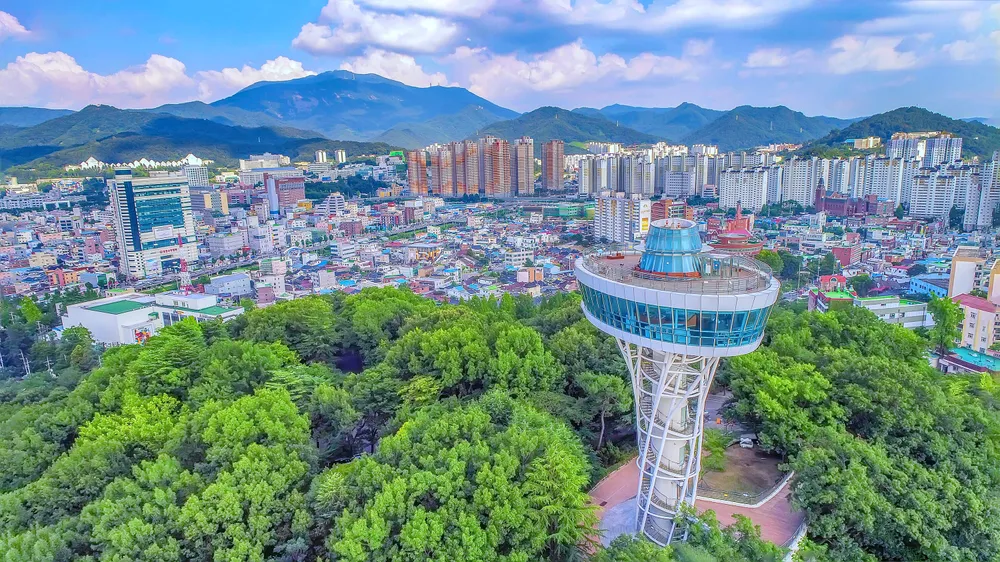
Sajik ParkAn urban park where you can stroll while viewing Sajikdan Altar and an observation deck.
1
Sajik ParkAn urban park where you can stroll while viewing Sajikdan Altar and an observation deck.
Food & Dining 1
-
 2
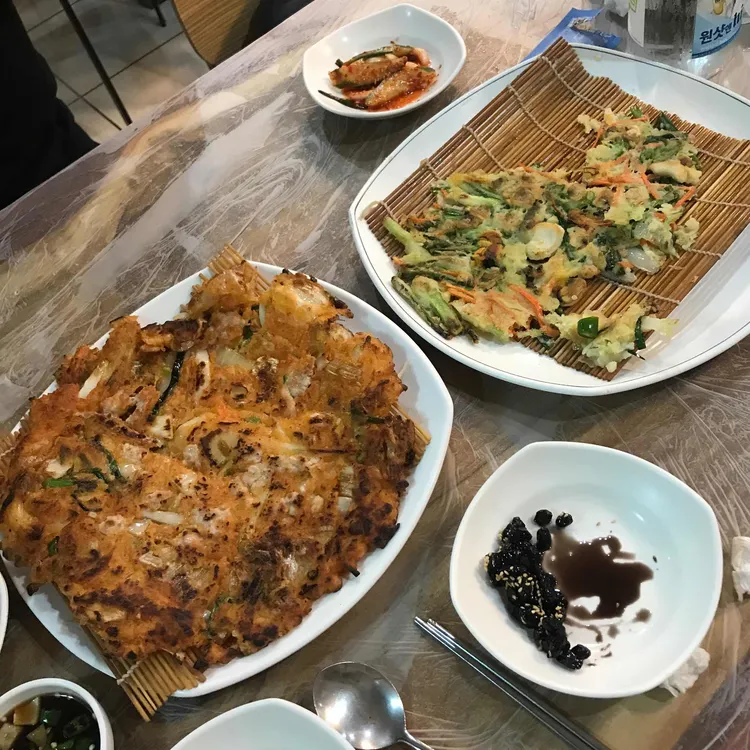
Gwangju Gukbap JeonjipA Korean restaurant serving assorted gukbap, Korean pancakes, boiled pork, and more.
2
Gwangju Gukbap JeonjipA Korean restaurant serving assorted gukbap, Korean pancakes, boiled pork, and more.
Events in This Area

Festivals in This Area


More Travel Guides in This Area
 Travel Guide
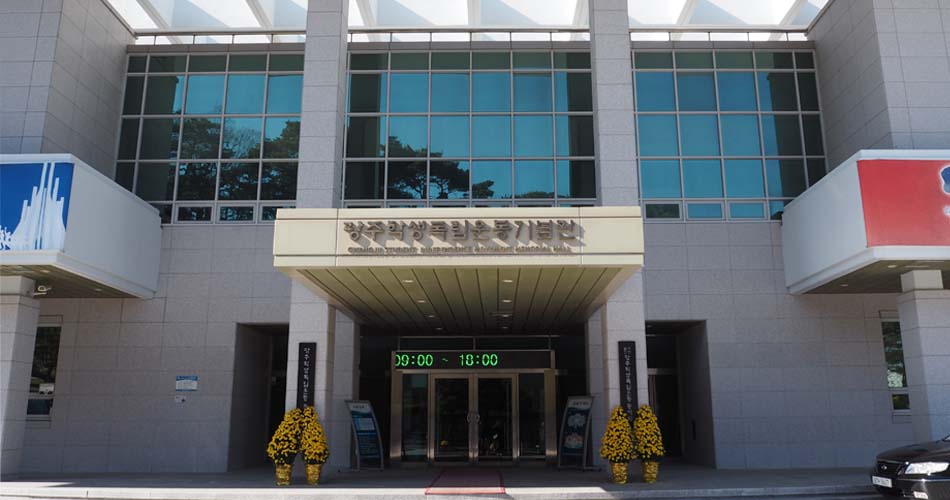
How to Follow the 1929 Nationwide Student Resistance Movement at the Gwangju Student Independence Movement Memorial Hall
 Travel Guide
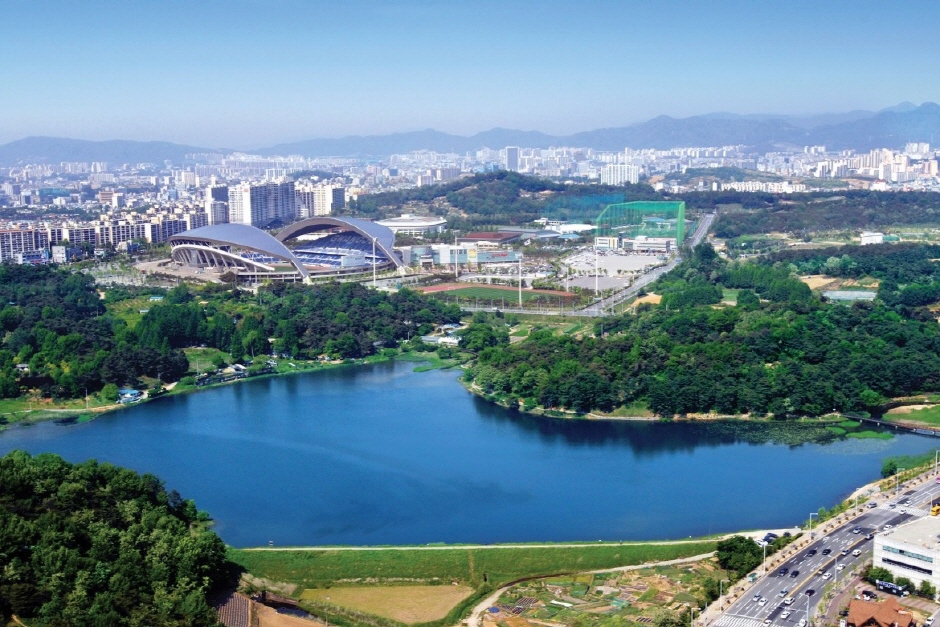
From a 1956 Reservoir to a Rose Garden with 140 Varieties: Pungam Lake Park
 Travel Guide
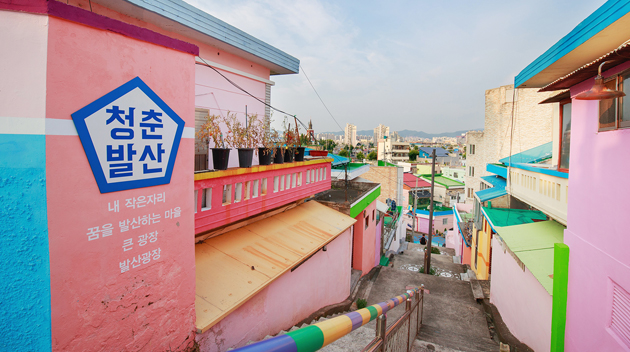
Cheongchun Balsan Village: From a Hillside Neighborhood for Chonnam Textile Mill Workers to an Art Alley with 108 Steps
 Travel Guide
Encountering the Boundary Between Art and Technology at G.MAP Next to Gwangju Park
Korea News
 News
News
TWS heightens comeback excitement with kitschy charm… Anticipation for “plot twist” rises
 News
News
BTS, Six Months After Its Release… ‘Arirang’ Climbs the U.S. Billboard 200
 News
News
'The Nation's Girl Group' RESCENE, Five Girls Transformed into Guardians… Additional Concept Photos for Their 4th Mini Album Revealed
 News
News