26,000 Marine Specimens at the End of the Forest Trail in Geumgang Park
Opened in 1994, the Busan Marine Natural History Museum was Korea’s first museum specializing in marine natural history. Its two exhibition halls at the foot of Geumgang Park showcase shells, fossils, sharks, and tropical reptiles. Admission is free, and Bus 1-1 from Oncheonjang Station takes you directly to the museum stop.
I’ve been here?
Your check-in helps the next traveler.
19 people viewed this week Be the first
One tap — no writing needed
A Marine Specimen Collection That Began in Exhibition Hall 2 in 1994 and Expanded into Exhibition Hall 1 in 2003
The Busan Marine Natural History Museum established its current two-building exhibition system when Exhibition Hall 2 opened in June 1994 and Exhibition Hall 1 opened in April 2003. The site covers 12,618㎡, while the total floor area of the buildings is 8,920㎡; both buildings have four above-ground floors.
The museum's setting in Geumgang Park behind Dongnae Oncheonjang is also significant. Busan grew as a port city, serving as a forward base for deep-sea fishing and a landing site for nearshore fisheries, and the museum operates to collect, preserve, exhibit, and provide education about marine natural history materials that are gradually disappearing.
According to the official information, visitors can see exhibitions centered on marine life and natural history specimens from around the world and from Korea's waterways. If you are planning a quick overview of the exhibitions, allow one hour; if you also want to read the specimen descriptions and see the live tropical animal exhibits, one and a half hours is more appropriate.
From 9:00 a.m. to 6:00 p.m., and Why Entry Must Be Completed Before 5:00 p.m.
Visiting hours are 09:00–18:00 from Tuesday through Sunday, and entry to the exhibition rooms closes at 17:00. Admission has been free since September 4, 2010, so visitors can enter without a separate ticketing procedure and with plenty of time.
The museum is closed every Monday and on January 1. If Monday is a public holiday, the museum closes the following day instead, so visitors planning a holiday trip should check the date once more.
The main telephone number is 051-553-4944, and 051-553-4945 is also used as an information contact. The official website is https://www.busan.go.kr/sea, and it is safest to check this address before departure for information that may change, such as exhibition and education schedules.
What to See First in Exhibition Hall 1, Covering 5,210㎡, and Exhibition Hall 2, Covering 3,710㎡
Exhibition Hall 1 covers 5,210㎡ and features exhibitions on corals, waterfowl and marine birds, marine-life handicrafts, cephalopods and echinoderms, reptiles, Korean shellfish, fossils, sharks, large fish, and rays. For visitors who want to start with large biological specimens, Exhibition Hall 1 is the more efficient starting point.
Exhibition Hall 2 covers 3,710㎡ and includes galleries for shellfish, crustaceans, ornamental fish, visitors with visual impairments, coral resources, fish, Korean aquatic resources, and fossils. If you want to compare shell shapes and aquatic life from Korea's domestic waterways, it is better to spend more time in Exhibition Hall 2.
The Tropical Life Exhibition Room covers 1,057㎡ and displays live tropical reptiles, including snakes, lizards, and turtles. For visitors expecting only specimen exhibits, this space changes the pace of the visit, so when traveling with children, it works well as a key focus point toward the latter part of the itinerary.
1 km from Oncheonjang Station Exits 1 and 5; Village Bus 1-1 Stops in Front of the Museum
The address is 175 Ujangchun-ro, Dongnae-gu, Busan (Oncheon-dong). From Exit 1 or Exit 5 of Oncheonjang Station on Metro Line 1, it is about 1 km along Geumgang-ro 124beon-gil and Geumgang-ro 131beon-gil, taking approximately 20 minutes on foot.
To reduce the walking distance, take Village Bus 1-1 from the Oncheonjang Station stop and get off at the Busan Marine Natural History Museum stop. For city buses, take routes 100-1 or 80, get off at Oncheonjang Station or SK Hub Sky, and walk approximately 1 km; routes 110 and 77 require getting off at Oncheon Market, followed by a walk of about 700 m.
Routes 100, 110-1, 121, 131, and 51 also allow access on foot after getting off near Oncheonjang Station or CGV Dongnae. If departing from Airport Station on the Busan–Gimhae Light Rail Transit, the official directions recommend transferring to Line 3 at Daejeo Station and then to Line 1 at Yeonsan Station before continuing to Oncheonjang Station.
No Parking Spaces at the Museum: Calculate the Fees at Geumgang Park Public Parking Lot
There is no parking area inside the museum. Visitors arriving by car must use a nearby public parking lot; the contact number listed in the official information for the public parking lot is 051-555-4882.
Small passenger cars are charged 200 won per 10 minutes, with a daily maximum of 4,700 won. Medium-sized buses with up to 30 seats are charged 400 won per 10 minutes, with a daily maximum of 9,400 won; large 45-seat buses are charged 600 won per 10 minutes, with a daily maximum of 14,100 won.
Parking fees accrue for a maximum of four hours per day. Compact cars, vehicles registered to households with multiple children, and vehicles participating in the weekday vehicle restriction program are eligible for a 50% discount, so confirm the required documentation or eligibility conditions with the parking lot.
Visit Preparation Including the First-Floor Tablet AR Service and the Gallery for Visitors with Visual Impairments
The museum operates an AR viewing service using tablets borrowed at the first-floor entrance. Since this is not a system that requires downloading an app to a personal phone, it is best to ask the information desk immediately after entering whether tablets are available and which areas support the service.
The official information does not confirm whether foreign-language exhibition explanations are provided regularly. However, Visit Busan information lists science and culture interpreters on duty and rental of automatic audio guides for exhibition explanations, so visitors who need explanations in Korean can ask the information desk whether the service is operating that day.
Accessibility facilities include a gallery for visitors with visual impairments, tactile paving, wheelchair rentals, an accessible elevator, and accessible restrooms. Accessible parking is based at the paid Geumgang Park public parking lot rather than inside the museum, so visitors should adjust their vehicle route before arrival.
How to Combine the Geumgang Park Cable Car and the Imjin Dongnae Martyrs' Shrine in One Half-Day
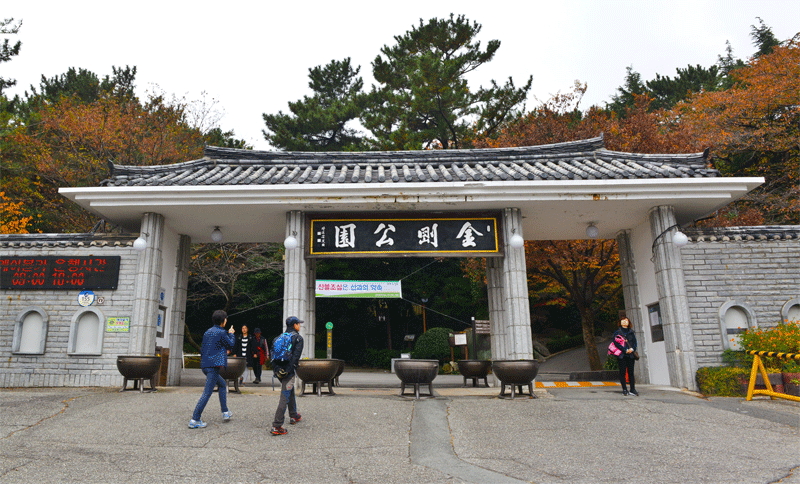
The museum is located inside Geumgang Park at the foot of Geumjeongsan, making it easy to connect an indoor exhibition visit with a forest trail. Geumgang Park began as a private garden during the Japanese colonial period, opened to the public in 1931, and reopened in 1965 after liberation under the name “Geumgang Park.”
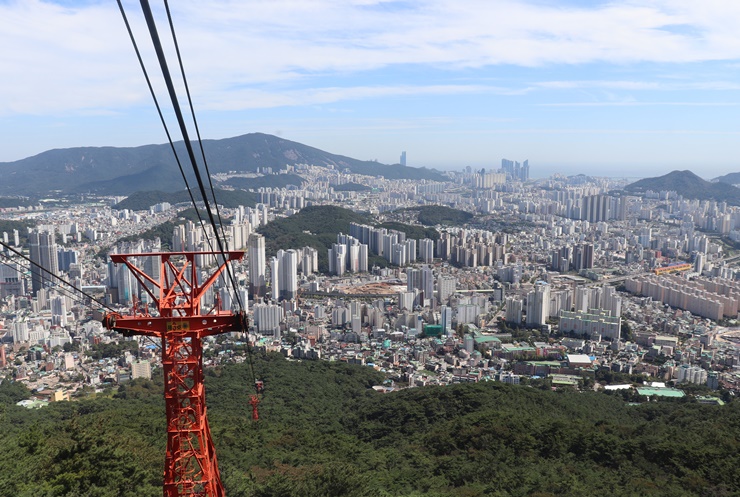
The Geumgang Park Cable Car opened in 1966 and is an option for visitors who want to enjoy mountain ridge views after visiting the museum. However, because cable-car travel and waiting time must be added separately to the one to one-and-a-half hours needed for the museum, it is better to visit the museum first in order to meet the 5:00 p.m. admission deadline.
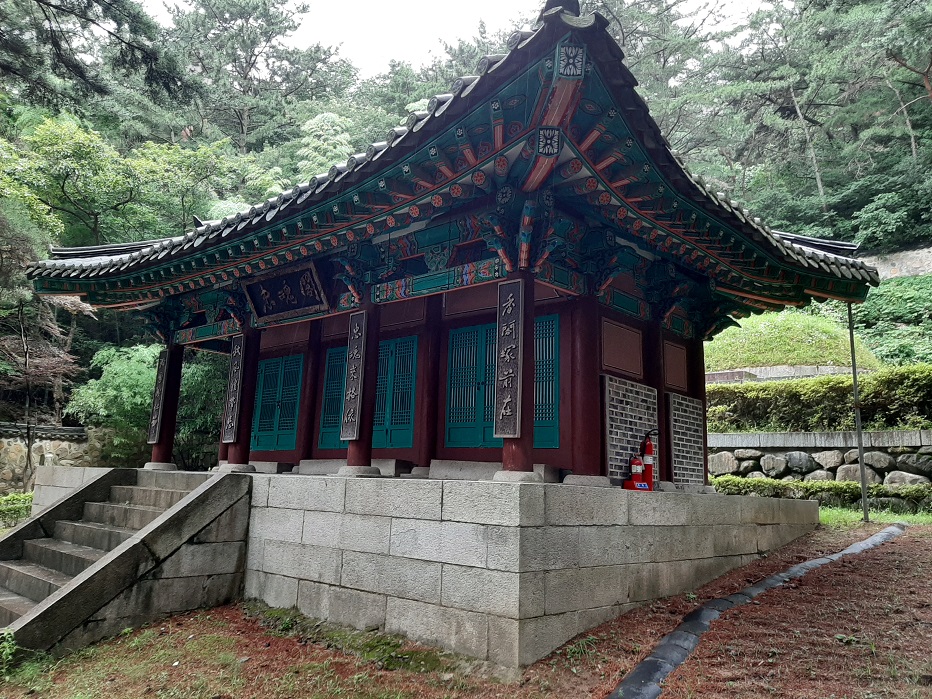
Further into the park from the museum is the Imjin Dongnae Martyrs' Shrine. It commemorates the remains of soldiers, officials, and civilians who died defending Dongnae Fortress alongside General Song Sang-hyeon during the Imjin War. Its history dates to 1731, when Jeong Eon-seop, the magistrate of Dongnae, discovered bones, arrowheads, and other remains at the site of the old South Gate and established the shrine.
Before You Go
- Address
- 175 Ujangchun-ro, Dongnae-gu, Busan (Oncheon-dong)
- Hours
- Tue–Sun 09:00–18:00 (admission closes at 17:00)
- Closed
- Every Monday and January 1 (if Monday is a public holiday, closed the following day)
- Admission
- Free
- Phone
- 051-553-4944, 051-553-4945
- Official site
- https://www.busan.go.kr/sea
- Transport
- About 1 km and approximately 20 minutes on foot from Exits 1 and 5 of Oncheonjang Station on Metro Line 1. Take Village Bus 1-1 from the Oncheonjang Station stop and get off at the Busan Marine Natural History Museum stop.
- Parking
- No parking lot inside the museum. Use a nearby public parking lot. Small passenger cars: 200 won per 10 minutes, daily maximum 4,700 won.
- Time needed
- 1 to 1.5 hours
- Accessibility
- Gallery for visitors with visual impairments, tactile paving, wheelchair rentals, accessible elevator and restroom information. Confirm whether foreign-language assistance is provided regularly.
The information above is based on conditions at the time of writing. Check the official information again before visiting.

Places
Nearby Attractions 3
-
 1
1
-
 2
Geumgang Park Cable CarA cable car that ascends to the ridge of Geumjeongsan Mountain, offering panoramic views of Busan.
2
Geumgang Park Cable CarA cable car that ascends to the ridge of Geumjeongsan Mountain, offering panoramic views of Busan. -
 3
Imjin Dongnae UichongA mass burial site containing the remains of Dongnae soldiers, officials, and civilians who died as martyrs during the Imjin War.
3
Imjin Dongnae UichongA mass burial site containing the remains of Dongnae soldiers, officials, and civilians who died as martyrs during the Imjin War.
Food & Dining 2
-
 4
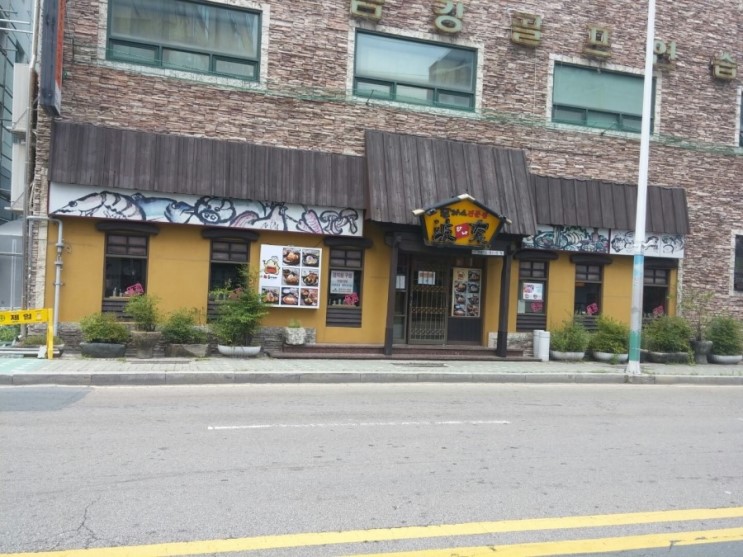
Hana Donkatsu Oncheon BranchA tonkatsu specialty restaurant serving loin pork cutlets, cheese roll cutlets, and more.
4
Hana Donkatsu Oncheon BranchA tonkatsu specialty restaurant serving loin pork cutlets, cheese roll cutlets, and more. -
 5
5
Events in This Area



Festivals in This Area


More Travel Guides in This Area
 Travel Guide
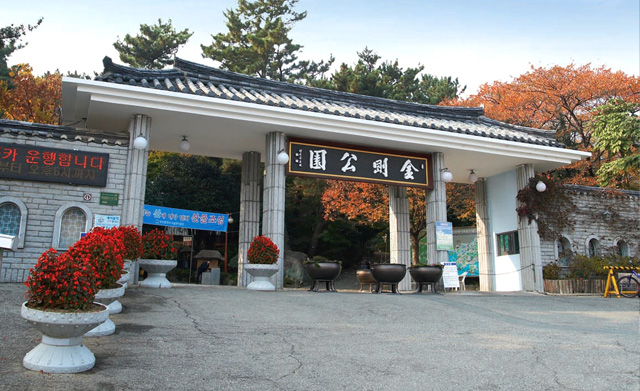
Geumgang Park Cable Car, Ascending to the 540 m Ridge of Geumjeongsan on a Route Dating to 1966
 Travel Guide
Busan’s Bugok Commercial Market, Established in 1978 as Part of a Mixed-Use Residential Complex
 Travel Guide
Busan’s Seodong Miro Market, with 391 shops lining a 1.5 km alley
 Travel Guide
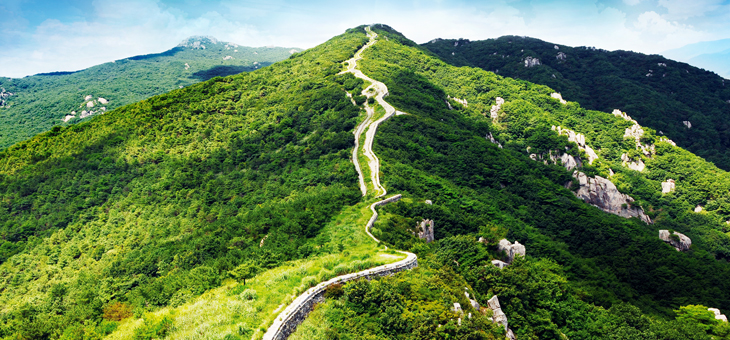
A Busan hike along Geumjeongsanseong Fortress’s four gates and 18,845 m of walls
Korea News
 News
News
‘NewJeans Expulsion’ Danielle Releases Her First YouTube Video… “We Don’t Know What Will Happen Next”
![aespa’s North American Tour Has Remaining Seats Despite ‘$49’ Bargain Prices… A Stark Popularity Gap with KATSEYE [TEN Starfield]](https://kotourlive-images.s3.ap-northeast-1.amazonaws.com/news/1788485037424_a59b1932_naver_rank_thumb_0000774618_1788485037424.jpg) News
News
aespa’s North American Tour Has Remaining Seats Despite ‘$49’ Bargain Prices… A Stark Popularity Gap with KATSEYE [TEN Starfield]
![[Photo] TWICE’s Dahyun attends a film festival red carpet as an actress](https://kotourlive-images.s3.ap-northeast-1.amazonaws.com/news/1788485316508_edd43ecd_news_870a60a6-6f11-4d73-aa7c-48d91318a0f7.jpg) News
News
[Photo] TWICE’s Dahyun attends a film festival red carpet as an actress
![[On-Site Video] “We’re Departing Separately Together”… BIGBANG Begins ‘COSMOS’ World Tour](https://kotourlive-images.s3.ap-northeast-1.amazonaws.com/news/1788485226518_c5719641_news_fdd4764a-0f4e-4968-8e4e-e98a02872f88.jpg) News
News