The Best Order for Actually Seeing Seocheon National Institute of Ecology’s Ecoplex and Five Climate Zones
The National Institute of Ecology is an ecology research and exhibition space located within a five-minute walk from Janghang Station to the West Gate ticket office. To tour the Ecoplex from the Tropical Hall to the Polar Hall, allow at least two hours, taking into account the 4:30 p.m. ticketing cutoff and the 20-minute walk from the main gate to the exhibition halls.
I’ve been here?
Your check-in helps the next traveler.
No one has checked in yet Be the first
One tap — no writing needed
A national ecological research and exhibition space at 1210 Geumgang-ro
The National Institute of Ecology is located at 1210 Geumgang-ro, Maseo-myeon, Seocheon-gun, Chungcheongnam-do, and is an institution that addresses the sustainability of the nation’s natural ecosystems. Rather than being a place where visitors see only one building like at a typical tourist attraction, it is composed of Ecorium, the Geumguri Zone, Hadaram Zone, Ancient Continent Zone, Najeo-eo Zone, Eco Care Center, Research and Education Zone, and CITES Animal Protection Facility.
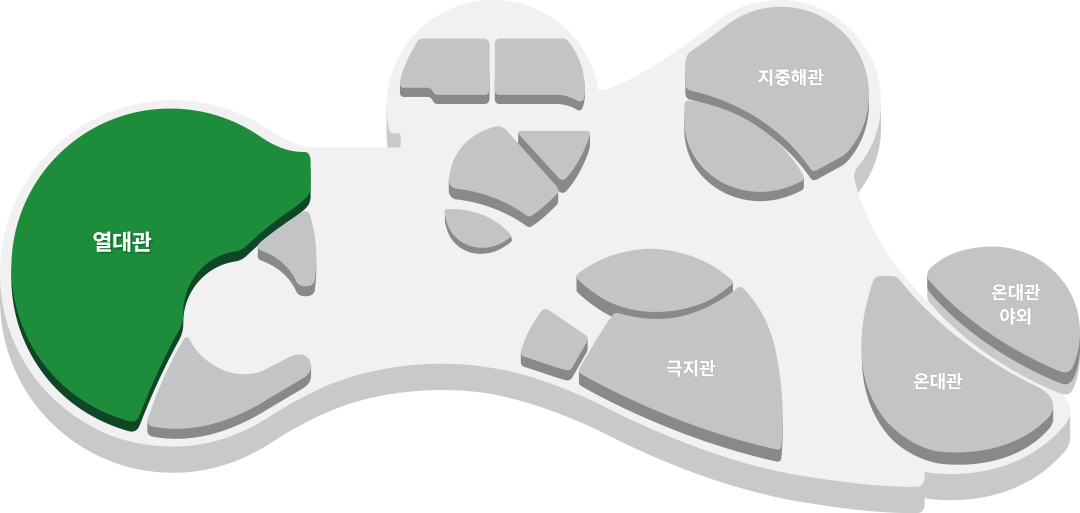
The first destination most visitors should aim for is Ecorium. Inside this building are five climate halls—Tropical, Desert, Mediterranean, Temperate, and Polar—allowing visitors to compare ecological environments from different climate zones in a single visit.
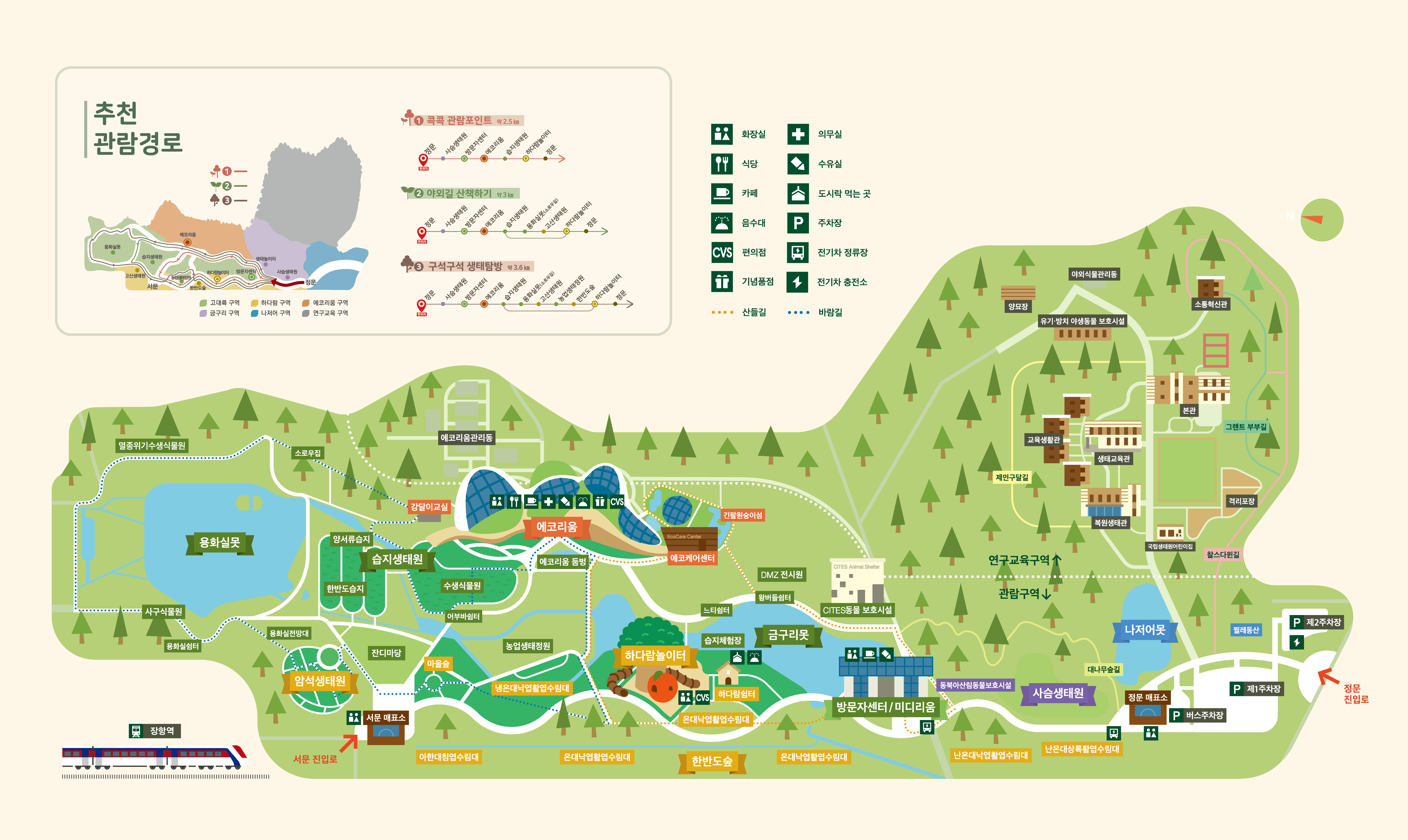
Less than five minutes from Janghang Station to the West Gate Ticket Office
Foreign travelers arriving by train can get off at Janghang Station and set the National Institute of Ecology West Gate Ticket Office as their destination. The institute’s official guidance describes the walk from Janghang Station to the West Gate Ticket Office as taking less than five minutes, so there is no need to transfer to another bus from the station.
If you use an intercity bus, you can take local bus 72 or a taxi from Seocheon Intercity Bus Terminal. From Gunsan Intercity Bus Terminal, the guidance says to walk about 145 m to the Palma Plaza·Terminal bus stop and then take local bus 72, so do not assume you can board directly at the terminal.
By car, enter through the main gate from the Seocheon Interchange on the West Coast Expressway via National Route 4 toward Gunsan, Songnae Intersection, and National Route 21. From the Seocheon–Gongju Expressway, approach the main gate via East Seocheon Interchange, National Route 29, a right turn at the Geumgang Estuary Dam, and National Route 21, in that order.
Open from 09:30 to 17:30, with ticket sales ending at 16:30
As of August 31, 2026, the official main guidance lists visiting hours as 09:30–17:30, with ticket sales ending at 16:30. Since it is difficult to see both the outdoor zones and Ecorium if you arrive late in the afternoon, and the guidance notes that walking from the main gate to the exhibition halls may take 20 minutes, you should reach the ticket office before 16:30.
The institute is closed every Monday. If Monday is a public holiday, it closes on the first weekday instead. Under the same policy, admission is 5,000 won for adults, 3,000 won for teenagers, and 2,000 won for children. Groups of 20 or more paying visitors receive a 1,000-won discount.
The main telephone number is 041-950-5300, and the official website is https://www.nie.re.kr/. This guide does not confirm the card and cash payment methods for general admission, photography restrictions, or detailed seasonal operating hours, so no definitive statement is made about them here.
The 3,232-square-meter humidity encountered first in the Tropical Hall on Ecorium’s first floor
The Tropical Hall is on the first floor of Ecorium and, according to the official description, recreates a tropical rainforest in a greenhouse measuring approximately 3,000 square meters. Detailed figures list an area of 3,232 square meters and a maximum height of 35 m. Temperatures are maintained at 35°C or below in summer and 22°C or above in winter, with humidity kept at 60–90%.
Visitors entering in winter coats may therefore find the interior hot and humid. The Tropical Hall is organized by continent, focusing on Asian tropical rainforests along with tropical rainforests of Central and South America and Africa; Asian tropical rainforest accounts for approximately 70% of the area.
The exhibition includes 13 animal enclosures and 19 aquariums. It features nine amphibian and reptile species, 25 invertebrate species, more than 140 fish species, and more than 700 plant species, making it better suited to visitors who want to observe plants and aquatic life together than to those looking only for large mammals.
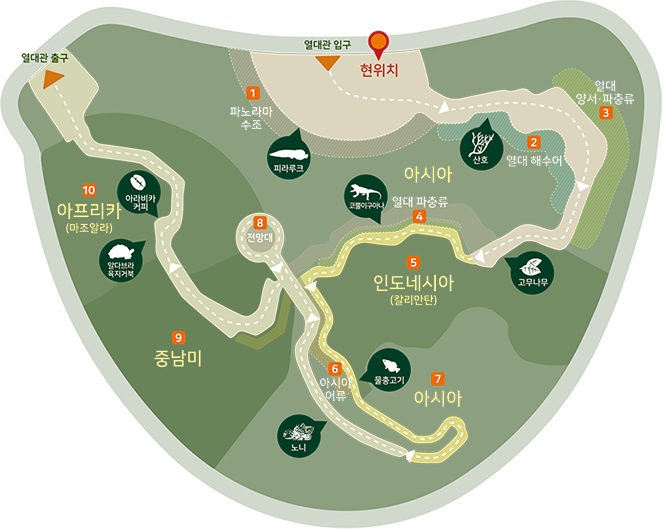
A tropical-hall route ranging from arapaima to Arabica coffee
The official viewing route in the Tropical Hall proceeds through the Panorama Aquarium, Tropical Marine Fish, Tropical Amphibians and Reptiles, Tropical Reptiles, Indonesia, Asian Fish, Asia, Observation Deck, Central and South America, and Africa. Following this order rather than skipping sections at random makes it easier to follow the exhibition’s progression from aquatic tanks to terrestrial ecosystems.
Featured highlights include arapaima, coral, rubber trees, rhinoceros iguanas, archerfish, noni, Aldabra giant tortoises, and Arabica coffee. Because visitors see fish and plants in the same space, it is more effective to compare the environmental differences between the continental zones than simply to take a single photograph and move on.
A separate Tropical Hall viewing map is provided, and interior photographs and the route can be checked in the official guide images before visiting. Since it has not been confirmed whether photography is prohibited or how far glass barriers and access controls extend for individual exhibits, avoid touching the animals or plants and crossing any restricted lines.
Twenty minutes from the main gate to the exhibition halls; allow separate time for the outdoor zones
Official materials state that the viewing time is at least two hours, including a 20-minute walk from the main gate to the exhibition halls. Although the walk from Janghang Station to the West Gate Ticket Office takes less than five minutes, do not plan your entire visit too tightly based only on the time between the station and ticket office.
The Geumguri Zone includes Geumguri Pond, the Wetland Experience Center, Aquatic Plant Garden, Wetland Ecology Center, Yonghwasil Observatory, and Sand Dune Plant Garden. The Hadaram Zone includes the warm-temperate evergreen broad-leaved forest belt, warm-temperate deciduous broad-leaved forest belt, Korean Peninsula Forest, Hadaram Playground, and Hadaram Ecological Education Center, creating outdoor ecological spaces distinct from Ecorium’s indoor exhibitions.
On rainy or hot days, it is more realistic to prioritize Ecorium rather than walk through every outdoor zone, then add Geumguri Pond and the Wetland Ecology Center or the Hadaram Zone when the weather is stable. Wheelchair and stroller routes and access-control limits for each outdoor zone have not been confirmed.
The 60-minute ecology tour can be booked online or on site
The Ecorium ecology tour of the five climate halls follows a course through the Tropical, Desert, Mediterranean, Temperate, and Polar Halls and lasts 60 minutes. Since it has not been confirmed whether the exhibition commentary is available in English or whether foreign-language audio guides are offered, it is safer not to assume language support.
This tour can be booked either online or on site. Online reservations are available until two days before the date of the ecology tour. If you want to include the tour in your itinerary, ask about remaining spaces on site immediately after admission or complete the online application at least two days before your visit.
The self-guided program “Ecorium in My Hands” operates year-round but accepts applications only on site on the day of the visit and takes the form of an ecology-tour Q&A inside Ecorium. Separately, VR commentary operates on weekends from April through November, 10:00–16:00, and 140 VR cardboard viewers are distributed each weekend day on a first-come, first-served basis.
Full’Staurant with 230 seats and two nursing rooms
Meals are available at Full’Staurant on Ecorium’s second floor, which has 230 seats. In 2026, its operating hours are 10:40 a.m. to 4:50 p.m., and the inquiry number is 070-7542-5250. Do not assume that the restaurant operates until 5:30 p.m. simply because visiting hours end at 17:30.
For visitors with young children, nursing rooms are located on Ecorium’s first floor and on the second floor of the Visitor Center. They operate from 10:00 a.m. until the end of visiting hours, so they are available from 10:00 onward rather than immediately at opening.
Souvenirs can be purchased at the Hadaram Gift Shop on Ecorium’s first floor. It operates from 10:00 a.m. until the end of visiting hours, and its telephone number is 070-7576-3398. The parking lot can accommodate a total of 1,000 vehicles, including 978 small vehicles and 22 buses, but parking fees have not been confirmed.
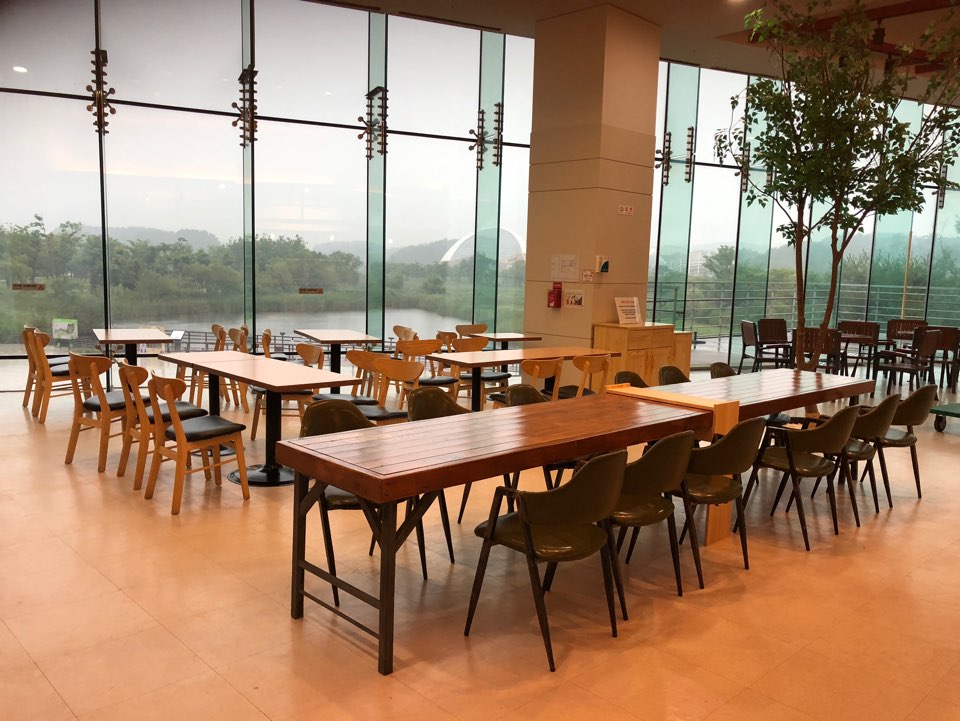
Two hours for an Ecorium-focused visit; include the outdoors for a full-day itinerary
To quickly compare only Ecorium’s five climate halls, center your visit on the 60-minute ecology tour or self-guided viewing, while allowing a separate 20 minutes to walk from the main gate to the exhibition halls. Since official materials list the minimum viewing time as at least two hours, it is better to avoid an itinerary that schedules transport immediately after arriving at Janghang Station.
The recommended order is arrival at the West Gate Ticket Office, transfer to Ecorium, the Tropical Hall on the first floor, the Desert, Mediterranean, Temperate, and Polar Halls, followed by either the Geumguri Zone or Hadaram Zone. Depending on the weather and your energy level, choose between visiting Geumguri Pond and the Wetland Ecology Center outdoors or visiting Hadaram Playground and Korean Peninsula Forest.
The National Institute of Ecology may feel too spread out for visitors seeking a small indoor exhibition where they can briefly see animals and leave. Conversely, for travelers wanting to compare five climate halls, the 3,232-square-meter Tropical Hall, wetlands, and forests in one place, there is a clear reason to allocate at least half a day in Seocheon.
Before You Go
- Address
- 1210 Geumgang-ro, Maseo-myeon, Seocheon-gun, Chungcheongnam-do
- Hours
- According to the current official main guide: 09:30–17:30, with ticket sales ending at 16:30. Seasonal operating hours must be checked separately on the official detailed page.
- Closed
- Closed every Monday. If Monday is a public holiday, closed on the first weekday.
- Admission
- Adults 5,000 won / Teenagers 3,000 won / Children 2,000 won / Paying groups of 20 or more receive a 1,000-won discount.
- Phone
- 041-950-5300
- Official site
- https://www.nie.re.kr/
- Transport
- After getting off at Janghang Station, walk less than five minutes to the National Institute of Ecology West Gate Ticket Office. Local bus 72 is available from Seocheon Intercity Bus Terminal or Gunsan Intercity Bus Terminal. From Gunsan Intercity Bus Terminal, walk approximately 145 m to the Palma Plaza·Terminal bus stop.
- Parking
- Capacity for 1,000 vehicles in total, including 978 small vehicles and 22 buses. Parking fees require official confirmation.
- Time needed
- At least two hours according to official guidance. The ecology tour of the five climate halls lasts 60 minutes.
The information above is based on the time of writing. Check the official guidance again before visiting.

Places
Nearby Attractions 3
-
 1
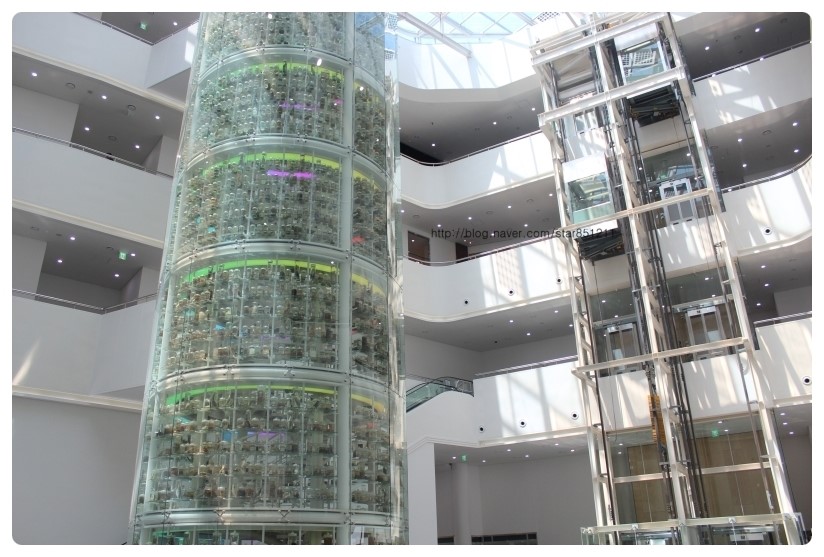
National Marine Biodiversity Institute of KoreaLearn about marine ecosystems by viewing marine life specimens and exhibits.
1
National Marine Biodiversity Institute of KoreaLearn about marine ecosystems by viewing marine life specimens and exhibits. -
 2
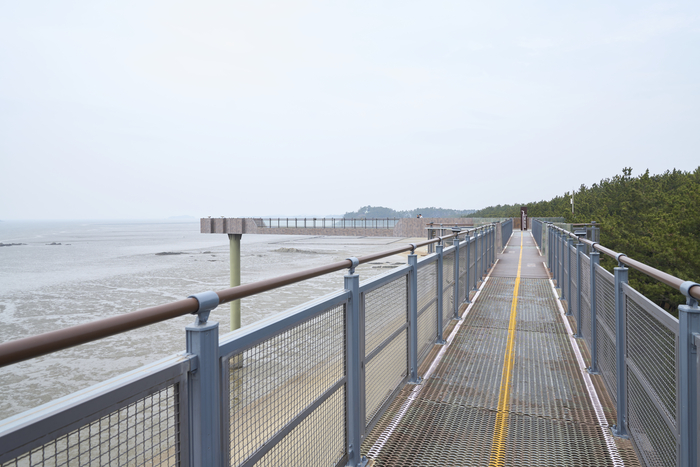
Janghang SkywalkWalk along the pine forest and coast while enjoying views of the Gibeolpo area.
2
Janghang SkywalkWalk along the pine forest and coast while enjoying views of the Gibeolpo area. -
 3
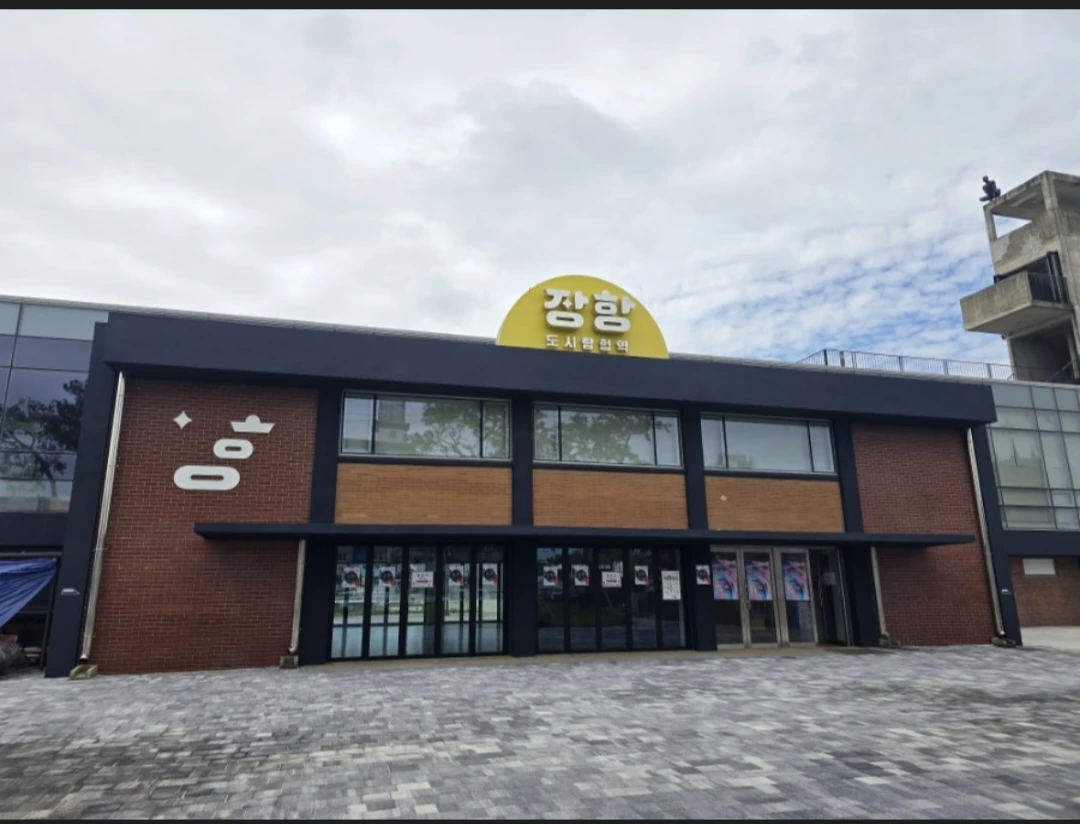
Janghang Urban Exploration StationExplore exhibitions and an observation deck housed in the former Janghang Station.
3
Janghang Urban Exploration StationExplore exhibitions and an observation deck housed in the former Janghang Station.
Food & Dining 2
-
 4
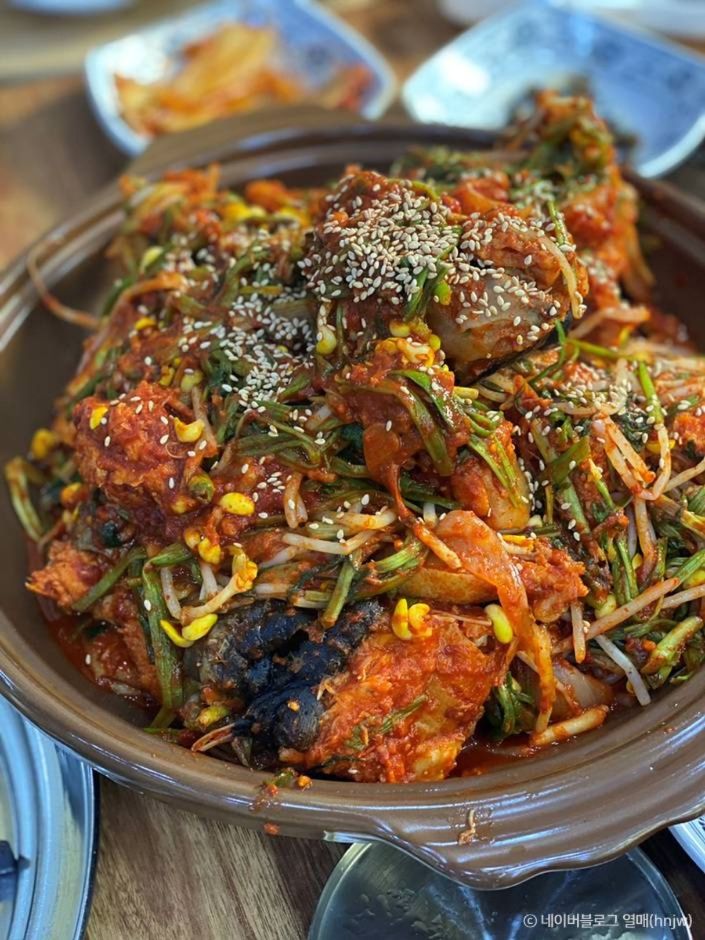
HalmaeonjeongjipEnjoy anglerfish dishes such as spicy braised anglerfish and anglerfish soup.
4
HalmaeonjeongjipEnjoy anglerfish dishes such as spicy braised anglerfish and anglerfish soup. -
 5
5
More Travel Guides in This Area
 Travel Guide
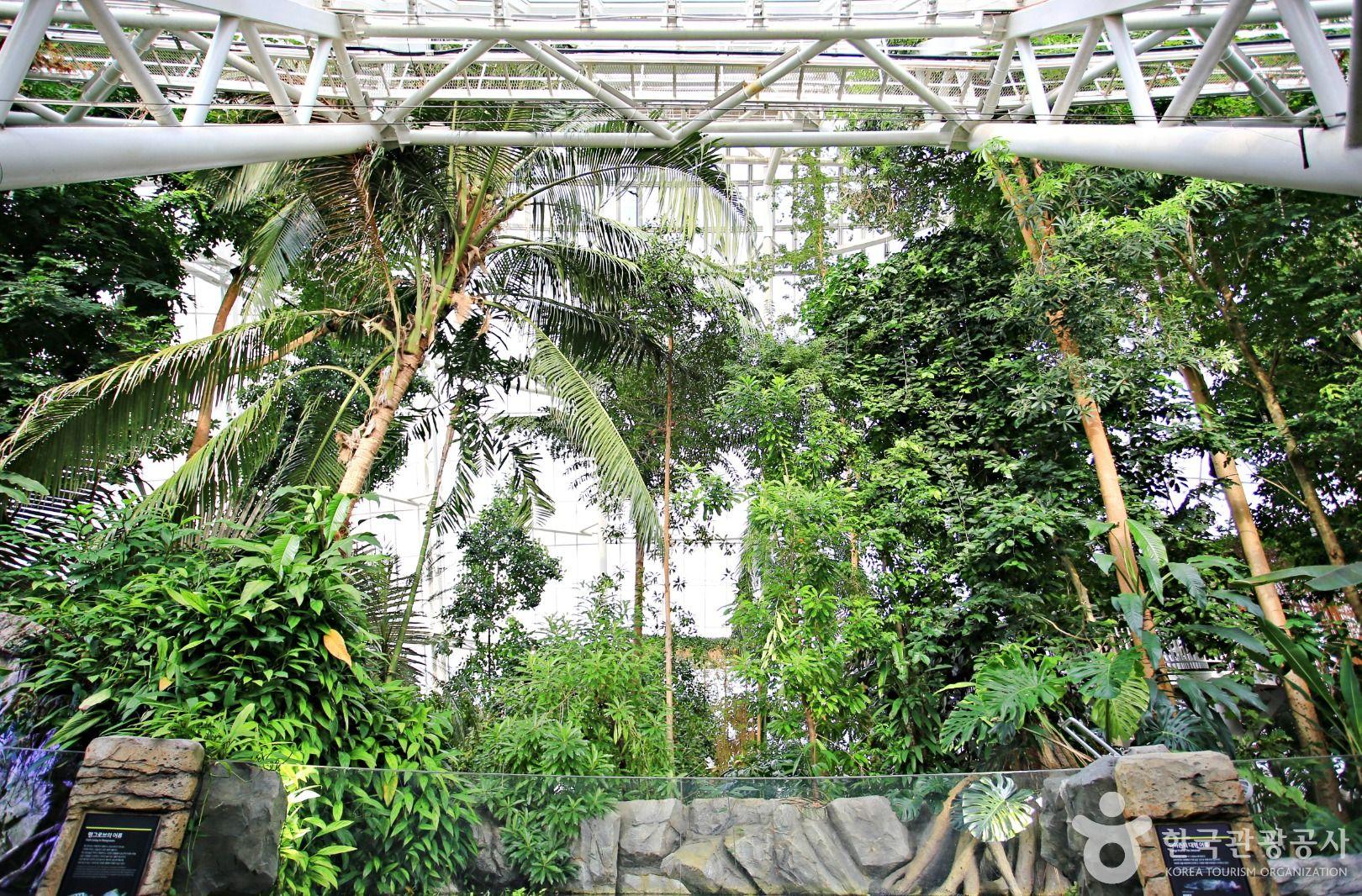
Janghang Skywalk and Gibeolpo Naval Battle Observatory at the End of a 15 m Coastal Pine Forest Trail
 Travel Guide
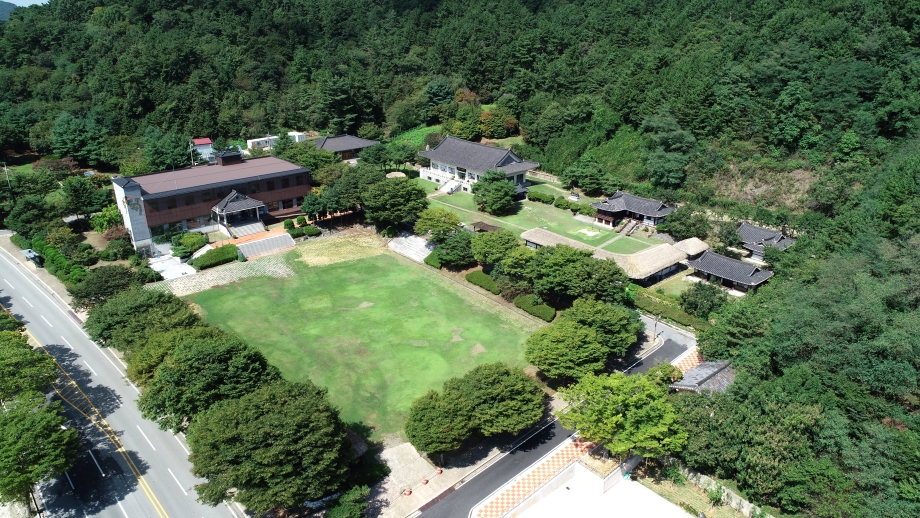
4,000 Touches of Craft at the Foot of Geonji Mountain: Hansan Mosi Museum
 Travel Guide
Muchangpo Beach: When the Sea Road Opens and How to Visit
 Travel Guide
Walking the Waterways of Buyeo Gungnamji, Dating Back to the 35th Year of King Mu
Korea News
 News
News
TWS heightens comeback excitement with kitschy charm… Anticipation for “plot twist” rises
 News
News
BTS, Six Months After Its Release… ‘Arirang’ Climbs the U.S. Billboard 200
 News
News
'The Nation's Girl Group' RESCENE, Five Girls Transformed into Guardians… Additional Concept Photos for Their 4th Mini Album Revealed
 News
News