Why a car stopped on Sejong’s Biam-sa Ghost Road appears to be going uphill
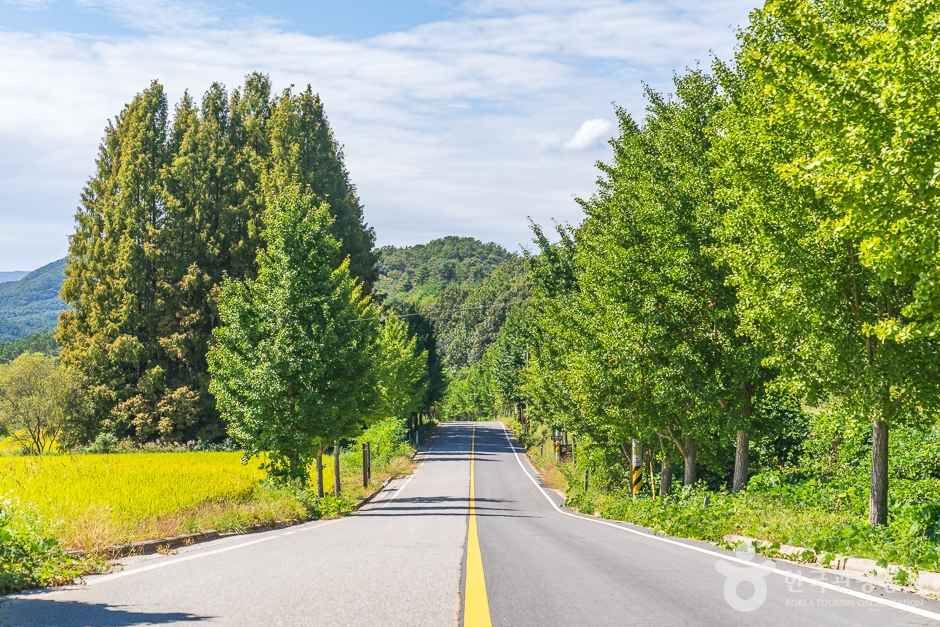
Biam-sa Ghost Road is a 130–150-meter optical illusion section on the mountain road leading to Biam-sa Temple. Although it is actually downhill, the surrounding terrain and scenery make it appear to slope uphill. It can be visited together with nearby Biam-sa Temple.

I’ve been here?
Your check-in helps the next traveler.
15 people viewed this week Be the first
One tap — no writing needed
A 130–150 m optical illusion section beginning at 137 Biamsagil
Biamsa Goblin Road is located at 137 Biamsagil, Jeonui-myeon, Sejong Special Self-Governing City, along the mountain road leading to Biamsa. Sejong City Council materials include one source describing this section as 130 m and another describing it as approximately 150 m, so it is most accurate to understand it as an approximately 130–150 m section in visitor information.
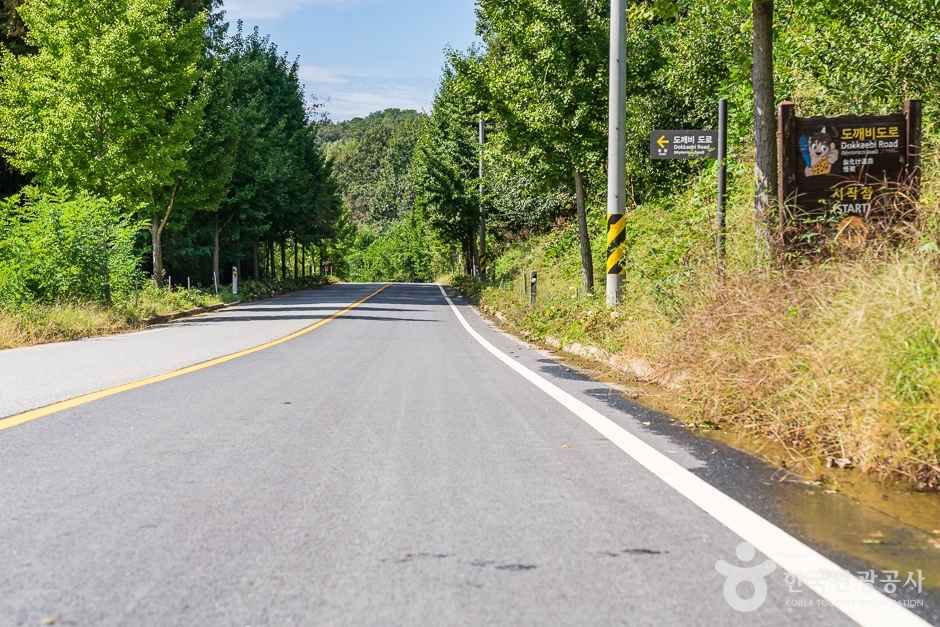
The Goblin Road lies midway along the approximately 1.3 km mountain road ascending to Biamsa. Signs marking the starting and ending points have been installed, and visitor reviews report that it takes about 10 minutes to reach the Goblin Road from the entrance to Biamsa.
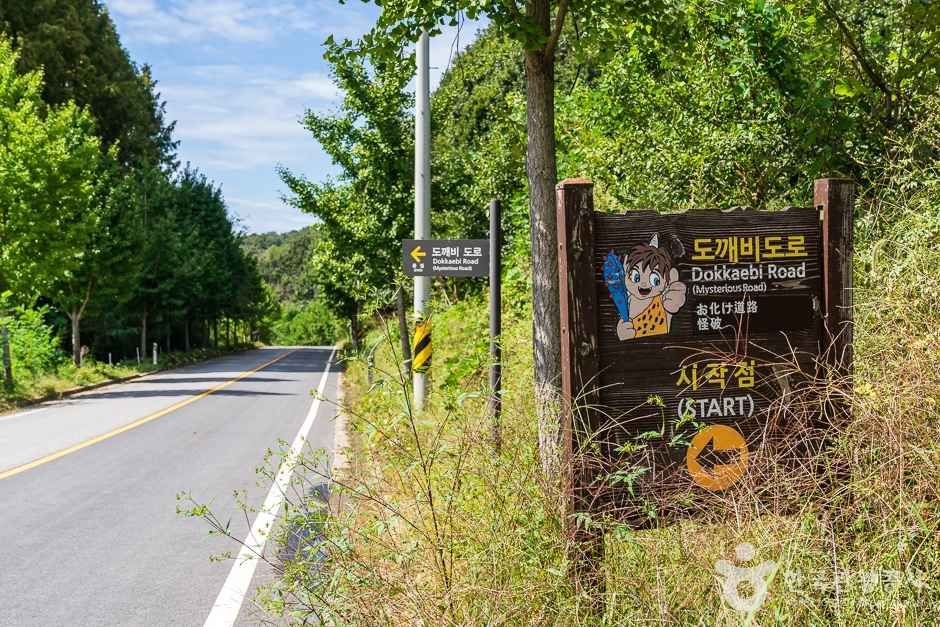
Biamsa Goblin Road discovered during paving work in November 2007
The road became known as a tourist attraction in November 2007. KBS materials state that the Goblin Road was discovered during widening and paving work on the access road to Biamsa, and also explain that it was a roughly 150 m section, longer than Jeju Island’s Goblin Road at the time.
The road itself was not constructed as a special facility; rather, its surrounding environment and perception of the slope make it appear different from the actual terrain. In 2014, reports described plans to develop the Goblin Road at the entrance to Biamsa in Dabang-ri, Jeonui-myeon, Sejong City, as a tourism product and connect it to an experiential tourism course linking Biamsa, Gobok Reservoir, Sejong Municipal Folk Museum, and Geumiseong Fortress.
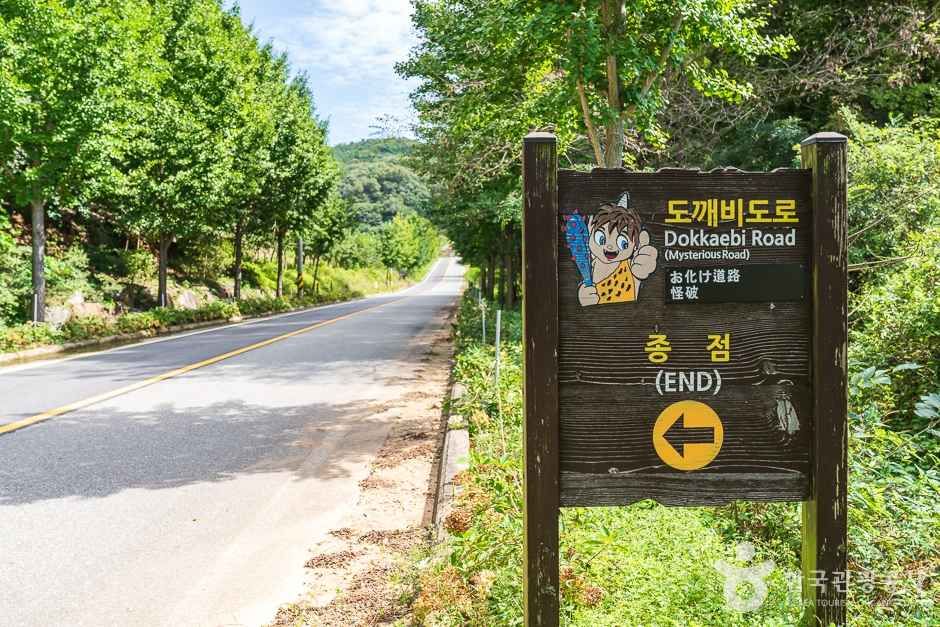
Why a downhill slope looks like an uphill when a car is stopped
The key feature of Goblin Road is that the actual slope feels opposite to the slope visible to the eye. According to Sejong City Council materials, the road is actually downhill, but its surroundings create an optical illusion that makes it appear uphill.
Visitors are introduced to this phenomenon by stopping a vehicle on the road and checking whether it moves by itself. However, when conducting the test on the road, visitors must not obstruct other traffic, and it is best to observe the phenomenon between the starting and ending points indicated by the signs.
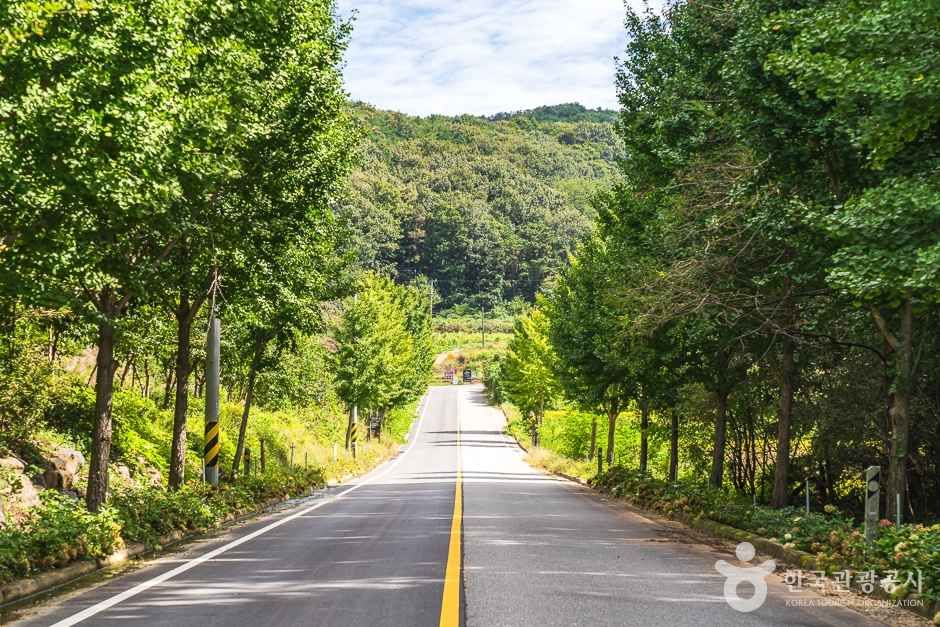
Listed as open year-round and every day, but free admission information varies
Some tourism information lists the site as open at all times and every day of the year (whether this remains current requires reconfirmation). No information has been confirmed regarding a separate ticket office or admission procedure for viewing the road section. Some sources list it as free, but the current official admission fee requires separate confirmation.
However, the statement that admission is free comes from tourism information, not from confirmed admission-fee information on a current official page. Because Goblin Road is an outdoor road, on-site traffic conditions affected by rain, snow, or ice and the extent of access inside the temple are separate considerations. Information on photography restrictions, English guidance, and the availability of an audio guide has not been confirmed.
Travel from Cheonan Station and Jochiwon Station to Jeonui-myeon
For access from outside the area by public transportation, the confirmed guidance is to take city bus routes 700 or 701 from Cheonan Station or Cheonan Bus Terminal, get off in Jeonui, and transfer to a bus bound for Biamsa. Information from April 2014 indicates that a Biamsa-bound bus departed from Jeonui approximately once every two hours (current service requires reconfirmation).
Another route is to take a bus bound for Jeonui from in front of Jochiwon Station and transfer in Jeonui to a Biamsa-bound bus. The route number, interval, and station exit number for currently operating Biamsa-bound buses have not been confirmed, so it is difficult to determine the same-day timetable based solely on this information. One source mentions the nearby stop “Dabang-ri Biamsa Entrance (37-016.”
Leave your car at the Biamsa parking lot and explore the 1.3 km mountain road
Tourism information states that the Biamsa parking lot is available and introduces the entrance to Biamsa as having a large-vehicle parking area. The road to the entrance of Biamsa is paved and accessible by car, but Goblin Road lies midway along the approximately 1.3 km mountain road ascending to Biamsa.
The exact starting point and endpoint of Goblin Road, parking fees, and parking capacity have not been confirmed. Information states that stroller rentals are unavailable, and hiking trails have been established nearby. Therefore, travelers using strollers or seeking a flat walking route may find it better to plan separately for vehicle access and the temple and mountain-road sections. Tourism information states that pets are not permitted.
The 673 stone Buddha stele and the cultural heritage Biamsa preserves today
Following Goblin Road leads to Biamsa. Biamsa is a temple on Unjusan Mountain in Dabang-ri, Jeonui-myeon, Sejong Special Self-Governing City. It is introduced as a branch temple of Magoksa, the headquarters temple of the Sixth District of the Jogye Order of Korean Buddhism, and as Sejong Special Self-Governing City’s Traditional Temple No. 1.
The exact founding year and the temple’s name at the time of its founding are unclear due to insufficient sources. However, inscriptions on the stone Buddha steles record “the Year of the Rooster and Dharma Master Haemyeong,” suggesting that the temple had already been founded by at least 673. Artifacts excavated at Biamsa include the National Treasure Gyerumyeong Jeonssi Amitabha Buddha Stele, estimated to have been made in 673, and the Treasure Gichukmyeong Amitabha Buddha Stele, estimated to have been made in 689.
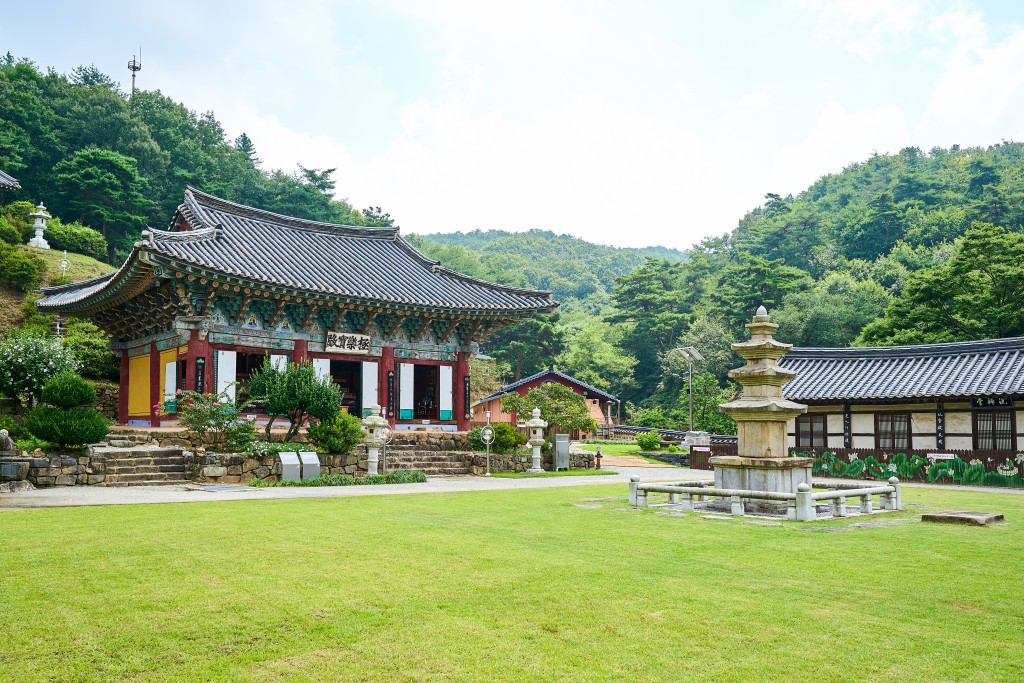
Geungnakbojeon Hall, the Three-Story Stone Pagoda, and the Baekje Grand Rite on April 15
The grounds of Biamsa contain Daeungjeon Hall, Myeongbujeon Hall, Geungnakbojeon Hall, Sansingak Shrine, Hyangjeokdang Hall, Beomjonggak Pavilion, and a three-story stone pagoda. Geungnakbojeon Hall is Treasure No. 2119, and the Jeonui Three-Story Stone Pagoda is Sejong Special Self-Governing City Tangible Cultural Heritage No. 3. The Yeongsanhoe Buddhist Banner Painting is introduced as Sejong Special Self-Governing City Tangible Cultural Heritage No. 12, while the Seated Clay Amitabha Buddha is No. 13.
Biamsa is described as a temple preserving one National Treasure, two Treasures, and four tangible cultural heritage items. The Baekje Grand Rite is held every year on April 15, and this ritual event is introduced as an annual April event held at the Unjusanseong Fortress plaza. The Baekje Grand Rite is said to have begun on April 15, 1983, in the name of all Koreans, transcending religious sects.
An itinerary linking 0.1 km from Biamsa to 7.0 km from Bear Tree Park
The distance marked from Goblin Road to Biamsa is 0.1 km. Nearby linked destinations include Ray Castle CC at 0.8 km, Sejong Municipal Folk Museum at 1.9 km, Sejong Children’s Observatory at 2.3 km, and Ssangnyu Grape Garden Cooperative at 2.3 km.
Traveling a little farther, Gobok Natural Park is listed as 3.4 km away, Bear Tree Park as 7.0 km away, and Dwieungbak Village as 9.4 km away. To see the old forest and natural woodland at the entrance to Biamsa, along with the surrounding hiking trails, it is more suitable to combine the temple grounds and nearby destinations than to make only a brief stop at Goblin Road.
What to ask at 044-300-5814 and 044-863-0230
Some sources provide the contact details for the Sejong City Tourism and Cultural Heritage Division, 044-300-5814, and the Biamsa information line, 044-863-0230 (whether these remain current requires reconfirmation). Biamsa’s website is listed as the following Daum Café: cafe.daum.net/bas0230, but its current operating status has not been confirmed.
When making inquiries, it is advisable to ask specifically about the same-day bus schedule from Jeonui-myeon to Biamsa, whether the Biamsa parking lot is available, the areas of the temple grounds open to visitors, and the event schedule. The address is Biamsa, 137 Biamsagil, Jeonui-myeon, Sejong Special Self-Governing City. The exact starting point and endpoint of the Goblin Road section and the current admission fee have not been confirmed.
Before You Go
- Address
- Biamsa, 137 Biamsagil, Jeonui-myeon, Sejong Special Self-Governing City
- Hours
- Some sources list it as open at all times and every day of the year (whether this remains current requires reconfirmation)
- Closed
- Some sources list it as open at all times and every day of the year (whether this remains current requires reconfirmation)
- Admission
- Some sources list admission as free, but the current official fee requires separate confirmation
- Phone
- Sejong City Tourism and Cultural Heritage Division: 044-300-5814; Biamsa information line: 044-863-0230 (whether these remain current requires reconfirmation)
- Official site
- http://cafe.daum.net/bas0230
- Transport
- Take bus 700 or 701 from Cheonan Station or Cheonan Bus Terminal, get off in Jeonui, and transfer to a Biamsa-bound bus. Guidance also mentions taking a Jeonui-bound bus from Jochiwon Station and transferring to a Biamsa-bound bus, but this information dates from 2014
- Parking
- Available (use the Biamsa parking lot); a large-vehicle parking area is provided at the entrance
- Accessibility
- No stroller rentals; hiking trails have been established nearby
The information above is current as of the time of writing. Check official guidance again before visiting.

Places
Nearby Attractions 3
-
 1
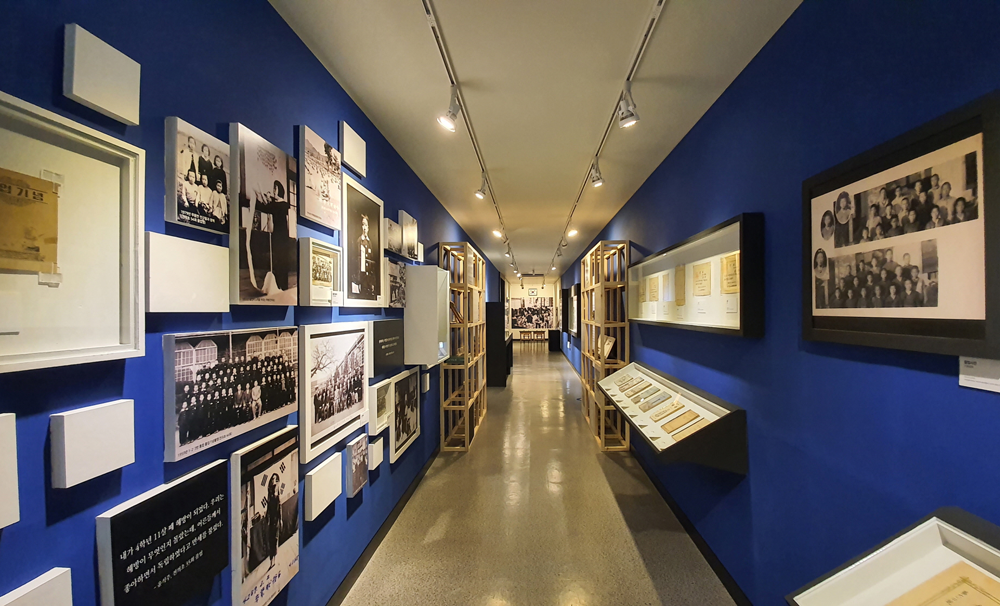
Sejong Municipal Folk MuseumA museum that exhibits materials from past daily life and offers traditional folk games and hands-on activities.
1
Sejong Municipal Folk MuseumA museum that exhibits materials from past daily life and offers traditional folk games and hands-on activities. -
 2
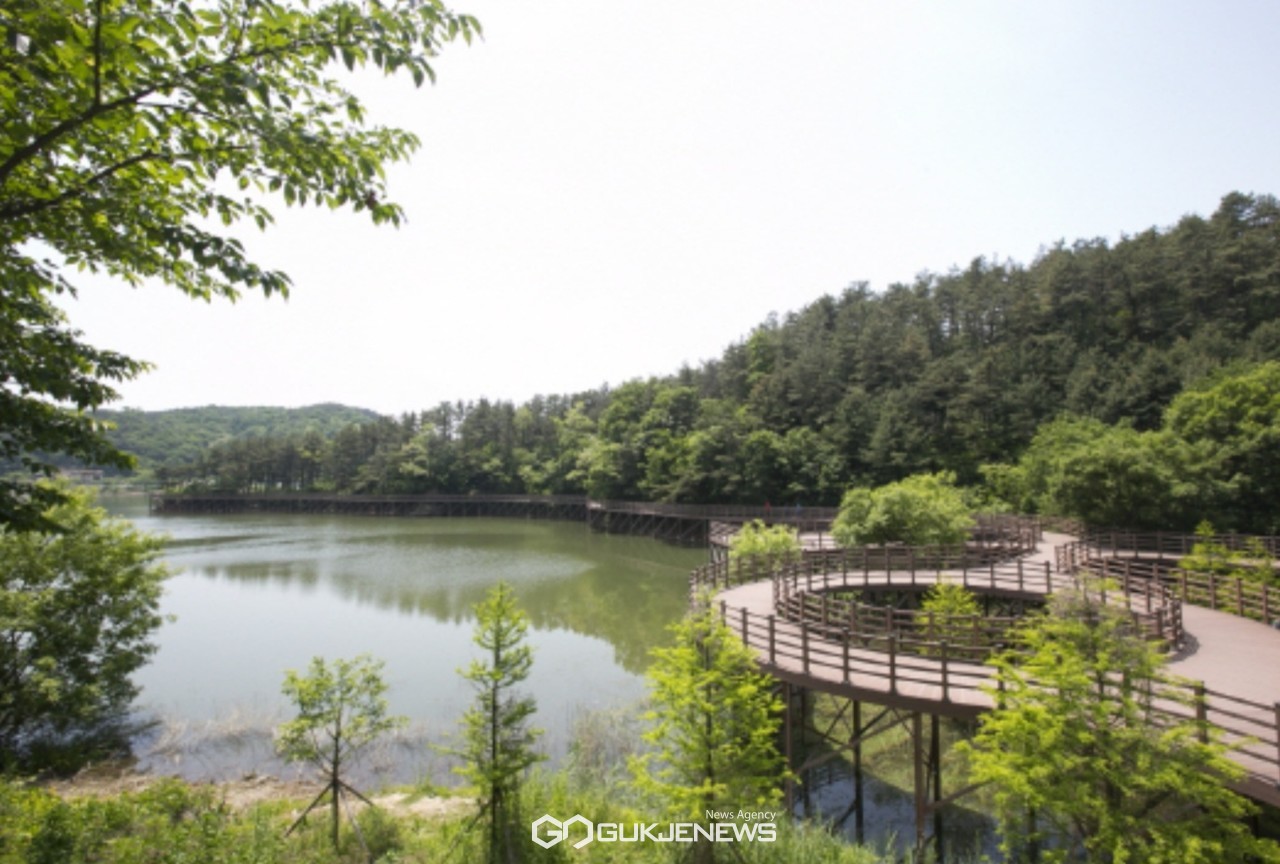
Gobok Natural ParkA park where you can enjoy the lake and natural scenery while walking along the Gobok Reservoir waterside observation trail.
2
Gobok Natural ParkA park where you can enjoy the lake and natural scenery while walking along the Gobok Reservoir waterside observation trail. -
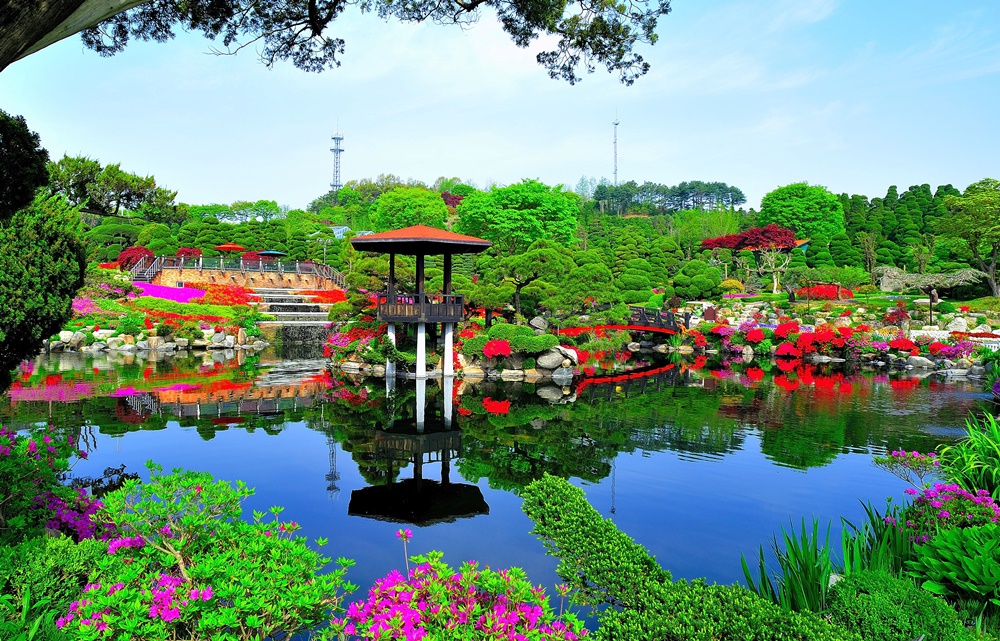 3
Bear Tree ParkA place where you can explore a botanical garden and zoo together while observing bears and a variety of plants.
3
Bear Tree ParkA place where you can explore a botanical garden and zoo together while observing bears and a variety of plants.
Food & Dining 3
-
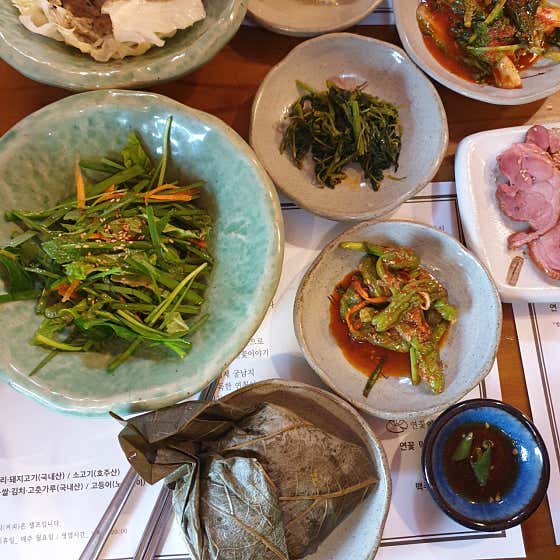 4
SanchewonA restaurant serving Korean dishes centered on wild greens, including gondre rice and a cheonggukjang set meal.
4
SanchewonA restaurant serving Korean dishes centered on wild greens, including gondre rice and a cheonggukjang set meal. -
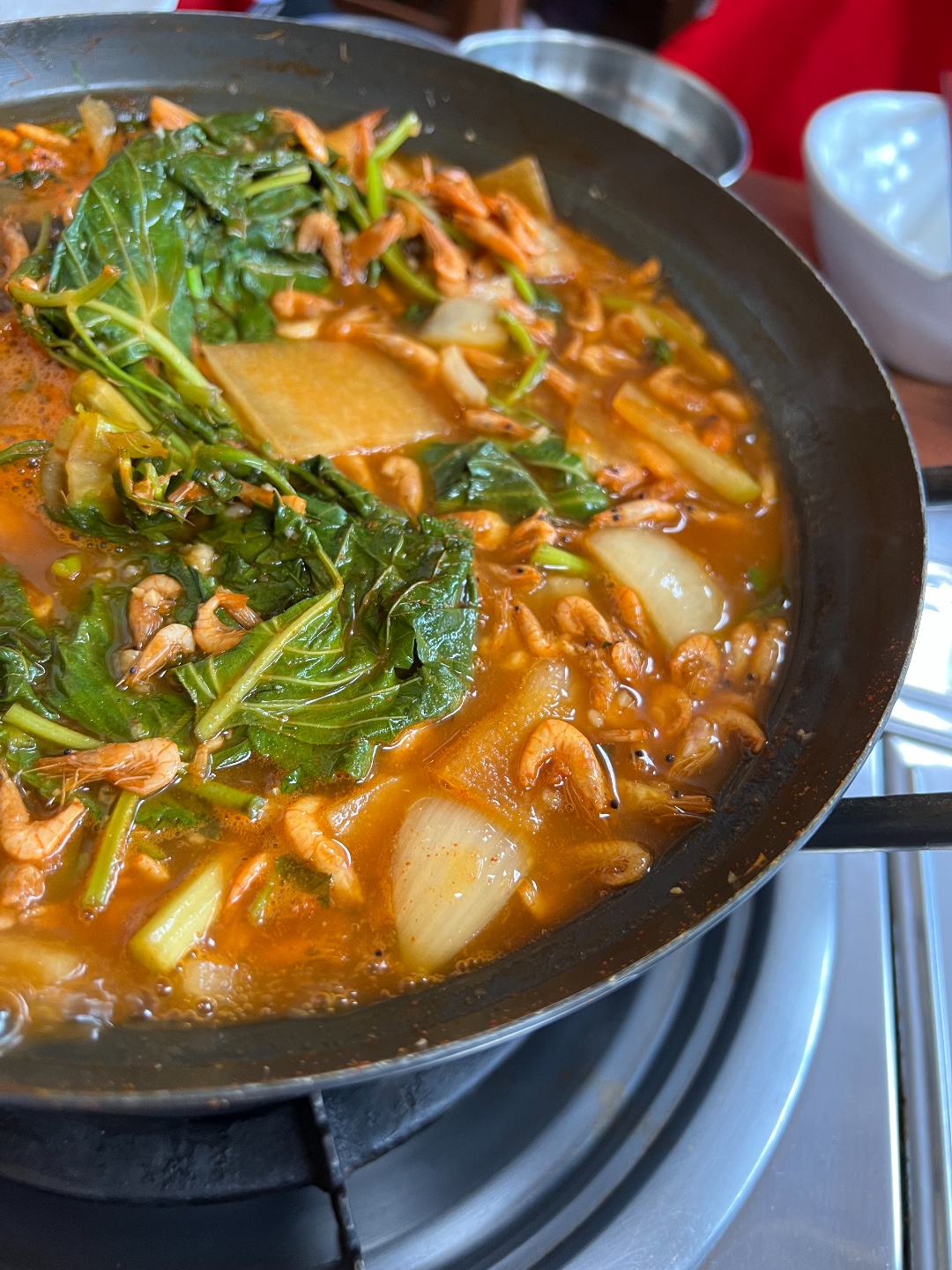 5
Dogane MaeuntangA restaurant near Gobok Reservoir serving spicy freshwater fish stew made with catfish, Chinese mitten crabs, shrimp, and more.
5
Dogane MaeuntangA restaurant near Gobok Reservoir serving spicy freshwater fish stew made with catfish, Chinese mitten crabs, shrimp, and more. -
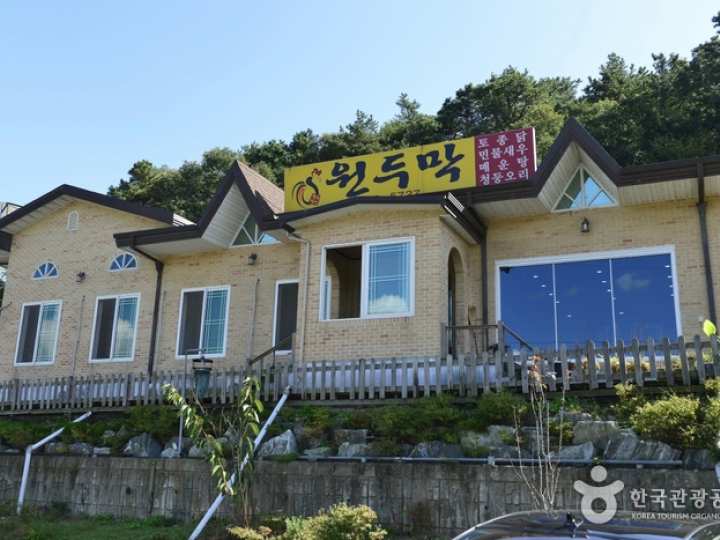 6
WondumakA restaurant near Gobok Reservoir serving freshwater shrimp stew, spicy catfish stew, and Korean herbal chicken soup.
6
WondumakA restaurant near Gobok Reservoir serving freshwater shrimp stew, spicy catfish stew, and Korean herbal chicken soup.
More Travel Guides in This Area
 Travel Guide
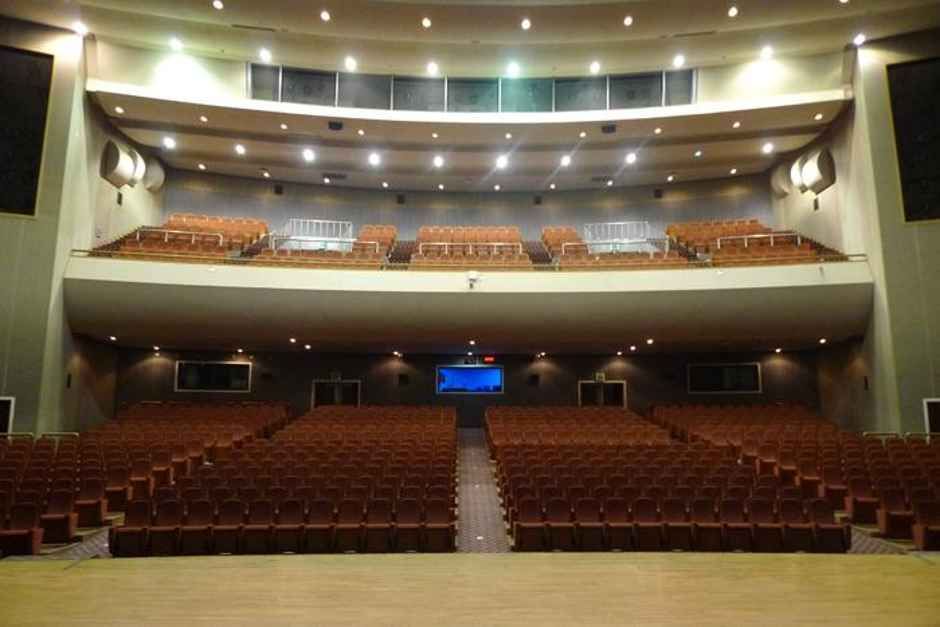
How to See a Performance at Sejong Culture and Arts Center, 22 Munyehoegwan-gil, Jochiwon
 Travel Guide
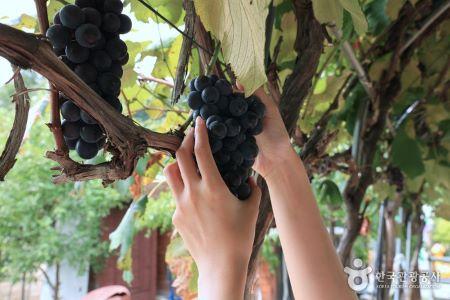
How to Book Seasonal Experiences at the Ssangnyu Grape Garden Cooperative
 Travel Guide
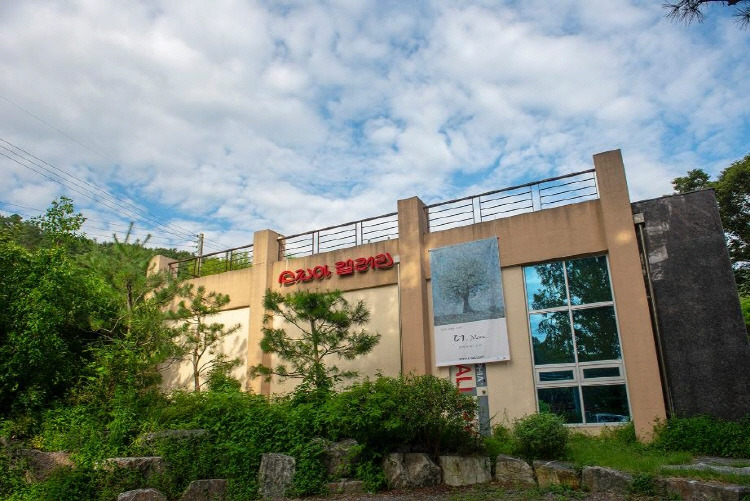
Exhibitions and Pasta at 50-5 Donam 2-gil: Sophia Gallery
 Travel Guide
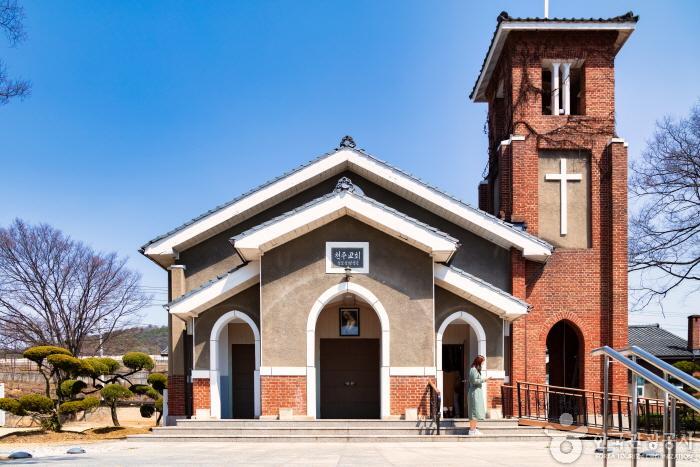
A Historical Experience Connecting 14 Places in Bugang: The Sambodeul Cooperative
Korea News
 News
News
‘NewJeans Expulsion’ Danielle Releases Her First YouTube Video… “We Don’t Know What Will Happen Next”
![aespa’s North American Tour Has Remaining Seats Despite ‘$49’ Bargain Prices… A Stark Popularity Gap with KATSEYE [TEN Starfield]](https://kotourlive-images.s3.ap-northeast-1.amazonaws.com/news/1788485037424_a59b1932_naver_rank_thumb_0000774618_1788485037424.jpg) News
News
aespa’s North American Tour Has Remaining Seats Despite ‘$49’ Bargain Prices… A Stark Popularity Gap with KATSEYE [TEN Starfield]
![[Photo] TWICE’s Dahyun attends a film festival red carpet as an actress](https://kotourlive-images.s3.ap-northeast-1.amazonaws.com/news/1788485316508_edd43ecd_news_870a60a6-6f11-4d73-aa7c-48d91318a0f7.jpg) News
News
[Photo] TWICE’s Dahyun attends a film festival red carpet as an actress
![[On-Site Video] “We’re Departing Separately Together”… BIGBANG Begins ‘COSMOS’ World Tour](https://kotourlive-images.s3.ap-northeast-1.amazonaws.com/news/1788485226518_c5719641_news_fdd4764a-0f4e-4968-8e4e-e98a02872f88.jpg) News
News