Japanese Houses and Pohang’s Memories Along a 470 m Alley in Guryongpo
Guryongpo Modern History and Culture Street preserves a roughly 470 m alley that was once a Japanese fishermen’s settlement during the Japanese colonial period, along with traditional Japanese-style houses. Visitors can explore the outdoor alleys free of charge, but the Modern History Museum is closed on Mondays, and access to the second floor and wheelchair entry is limited.
I’ve been here?
Your check-in helps the next traveler.
No one has checked in yet Be the first
One tap — no writing needed
How the fishing settlement that began around 1880 formed the alleys of Guryongpo
Japanese fishermen began fishing off the coast of Joseon around 1880, and after the Japan–Joseon Treaty of 1883, Japanese fishermen began fishing in the waters of Joseon in search of broader fishing grounds. More than 1,000 people came to Guryongpo from Kagawa and Okayama Prefectures in Japan, working in fishing, shipping, and canned-food processing factories.
During the Japanese colonial period, Guryongpo Port served as the largest fishing outpost on the East Sea, and the Japanese population reached 300 households in 1932. After liberation, an alley approximately 500 m long and around 80 Japanese-style houses remained where the Japanese had lived. Today, the street is preserved as a mixture of Japanese-style and Korean-style houses.
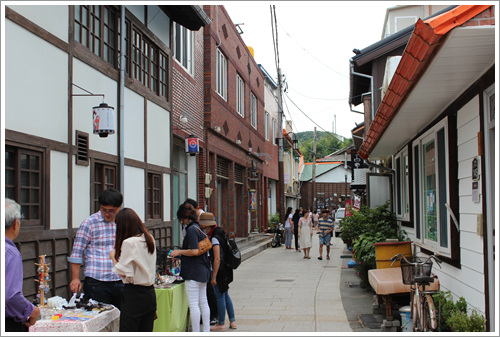
A 470 m alley renovated with 8.5 billion won from 2010 to 2013
Pohang City began the development project in March 2010 to preserve the colonial history of the past and leave it as a lesson for future generations. The project continued from 2010 to 2013, with 8.5 billion won invested to renovate and restore an alley approximately 470 m long and 28 former Japanese residences.
The outer alleys of the street are indicated as open at all times, and photographs from the Japanese colonial period are displayed throughout the area, allowing visitors to compare the present scenery with the past. However, not every house is an open viewing space, so it is safer to focus on the alleys with posted photographs and the facilities open to visitors.
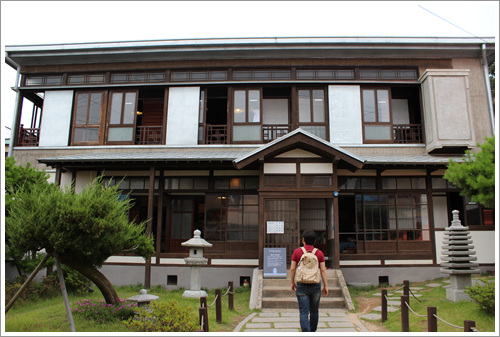
Everyday life seen through Hashimoto Zenkichi’s house from the 1920s
Guryongpo Modern History Museum is a two-story Japanese-style wooden residence built in the 1920s by Hashimoto Zenkichi, who came from Kagawa Prefecture. He succeeded in the fresh-fish transport business in Guryongpo and built the house by transporting construction materials directly from Japan.
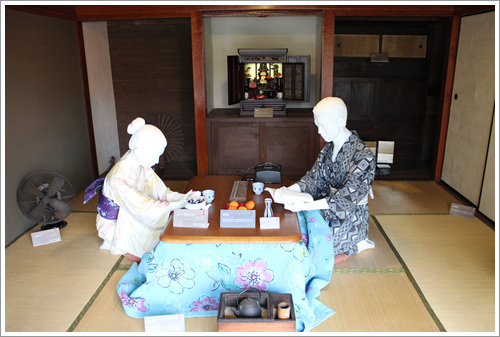
Pohang City purchased and restored the house in 2010 and opened it as the Modern History Museum in 2012. The first floor presents the settlement process and daily life of Japanese fishermen, with living spaces such as a butsudan, a kotatsu, and a kitchen recreated. Guides state that the second floor contains exhibitions on Pohang independence activists and the March 1st Movement, but other information says that visitors cannot go upstairs, so the actual viewing area is limited.
Remember: open from 10:00 to 17:30, with a limit of 15 visitors
Guryongpo Modern History Museum is listed as open from 10:00 to 17:30 and closed on Mondays. There is a lunch break from 12:00 to 13:00, and admission is free. The street alleys themselves are open at all times, but their availability differs from the museum’s operating hours, so late visitors may only be able to view the exterior.
For visitor safety, simultaneous admission to the Modern History Museum is limited to 15 people. Guided explanations are listed as being offered Tuesday through Sunday at 10:30, 11:30, 14:00, 15:00, and 16:00. If you would like to hear the interior explanation, it is best to visit during one of these times. The inquiry telephone number is 054-276-9605.
Access by bus 200 from Pohang Bus Terminal or bus 210 from KTX Pohang Station
For visitors from outside the area, routes are provided using bus 200 from Pohang Bus Terminal or bus 210 from KTX Pohang Station. Based on review materials, both routes are introduced as direct options without transfers, but current operating times and intervals could not be confirmed on the official transportation page.
Information indicates that buses toward Homigot have long intervals, so you need to plan to finish your visit and return to the bus stop according to the bus schedule. The representative address is 153-1 Guryongpo-gil, Guryongpo-eup, Nam-gu, Pohang-si, Gyeongsangbuk-do. Parking facilities are indicated as available, but the number of spaces and fees could not be confirmed.
- Official Pohang tourism page: https://pohang.go.kr/phtour/wmap/tourInformation/view.do?tour_info_idx=347
- Recommended viewing time for the street: approximately 1–2 hours, based on review materials
Guryongpo Port unfolds beyond the steep stone steps
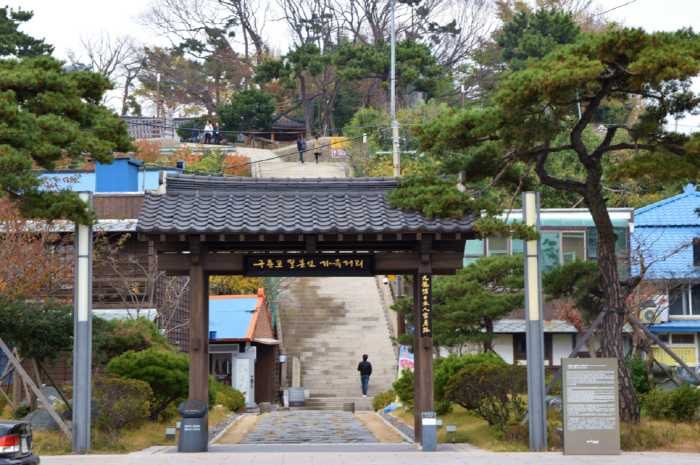
The stone steps leading up to Guryongpo Park are steep. The stone pillars at the entrance to the steps were erected by Japanese residents in 1944; there are 61 on the left and 59 on the right, for a total of 120. The park also has a Patriot Monument honoring the victims of the Korean War.
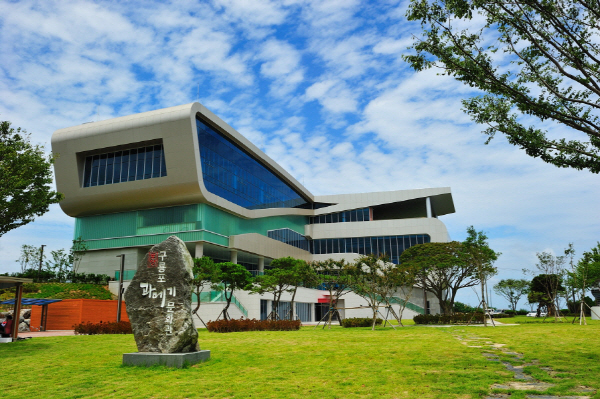
From the park, you can look out over Guryongpo Port and the sea. The steps are also introduced as the seaside viewpoint where Dongbaek and Yong-sik sat in the drama When the Camellia Blooms. From the street to the Guryongpo Gwamegi Culture Museum is approximately 700 m, or 0.9 km according to the course guide. The stone steps toward the Gwamegi Culture Museum are difficult to use with a wheelchair, so visitors must detour to the left or right.
Route for visiting Furusatoya and the drama filming locations together
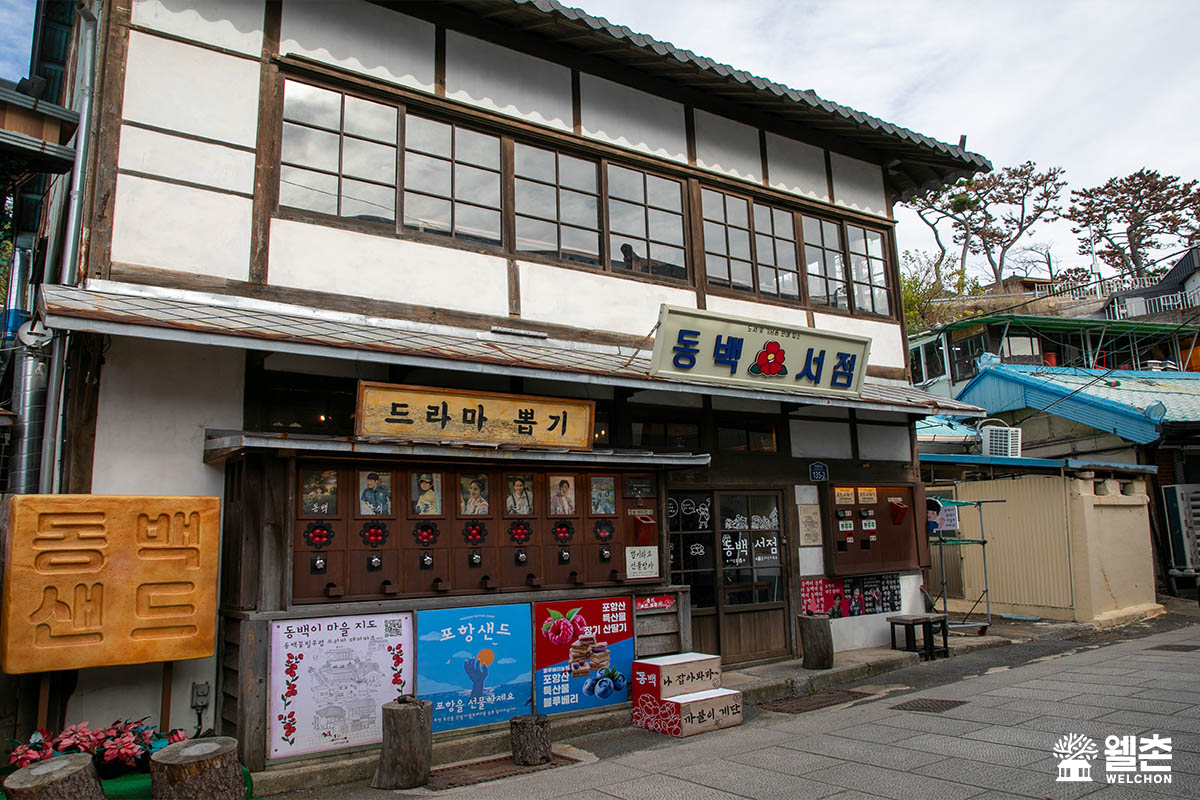
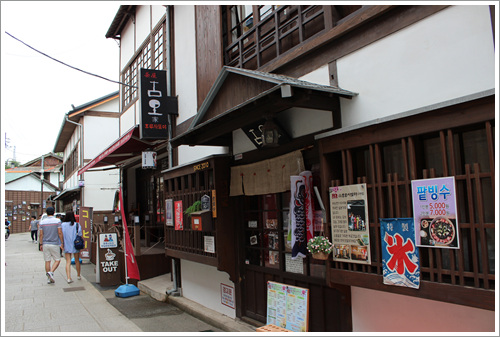
Furusatoya, a Japanese-style wooden building constructed in 1924, means “hometown house.” It was formerly the restaurant Ilsimjeong and has now become a traditional Japanese-style teahouse. The listed menu includes buckwheat tea, roasted green tea, and green tea, and the space is described as having rooms where guests sit on tatami mats. Daedeung Inn, once a representative lodging facility, has now been replaced by the naengmyeon restaurant Hoho Myeonok.
The street has restaurants, yukata experience facilities, and traditional Japanese-style teahouses, as well as filming locations for the 1991 television drama Eyes of Dawn. Camellia from the 2019 drama When the Camellia Blooms is also introduced as a major photo spot, but the current extent of interior access to the filming-location building could not be confirmed.
Limitations for wheelchair users and first-time visitors
Wheelchair access to the interior of the Modern History Museum is difficult, and information states that visitors can look inside from outside the building. The stone steps toward Guryongpo Park are also steep, so the entire course is not suitable for one-time travel by wheelchair or stroller.
Whether photography is prohibited throughout the street, whether payment is cash-only, and whether English information or audio guides are available could not be confirmed. If you want to visit the interior, avoid Mondays and visit between 10:00 and 17:30. Allow extra time before the bus departure, taking into account the 15-person simultaneous admission limit and the 12:00–13:00 lunch break.
- Address: 153-1 Guryongpo-gil, Guryongpo-eup, Nam-gu, Pohang-si, Gyeongsangbuk-do
- Inquiries: 054-276-9605
- Admission: Free
Before You Go
- Address
- 153-1 Guryongpo-gil, Guryongpo-eup, Nam-gu, Pohang-si, Gyeongsangbuk-do
- Hours
- The exterior of the street is listed as open at all times. Guryongpo Modern History Museum: 10:00–17:30
- Closed
- Guryongpo Modern History Museum closed on Mondays
- Admission
- Free
- Phone
- 054-276-9605
- Official site
- https://pohang.go.kr/phtour/wmap/tourInformation/view.do?tour_info_idx=347
- Transport
- Bus 200 from Pohang Bus Terminal and bus 210 from KTX Pohang Station are listed, but routes and times need to be reconfirmed
- Parking
- Parking facilities are indicated as available. Parking fees could not be confirmed
- Time needed
- Approximately 1–2 hours, based on review materials
- Accessibility
- The stone steps toward Guryongpo Park are steep, and the stone steps toward the Gwamegi Culture Museum are difficult for wheelchair users, requiring a detour to the left or right. Wheelchair access to the interior of the Modern History Museum is difficult.
The information above is current as of the time of writing. Check the official information again before visiting.

Events in This Area
Festivals in This Area
More Travel Guides in This Area
 Travel Guide
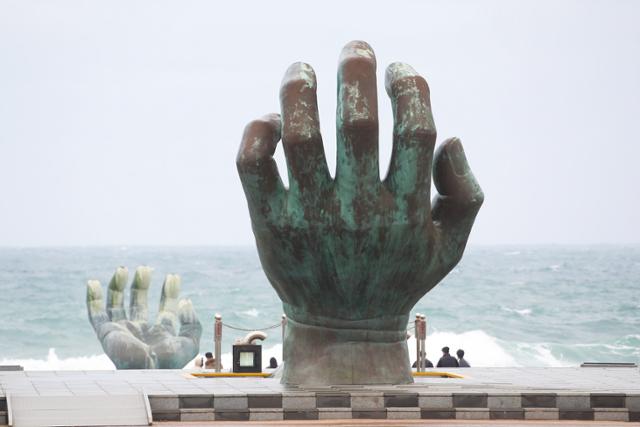
Beyond the Hand of Harmony, Pohang’s Homigot Watched Over by a Lighthouse Since 1908
 Travel Guide
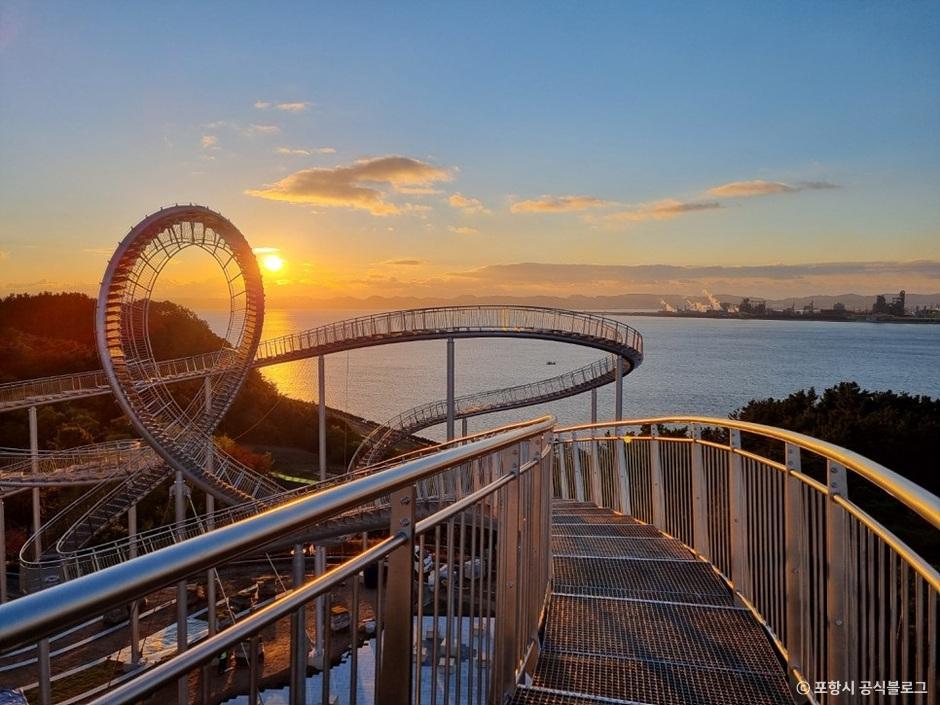
Pohang Hwanho Park Space Walk: Yeongildaegyo and the East Sea from 717 Steps
 Travel Guide
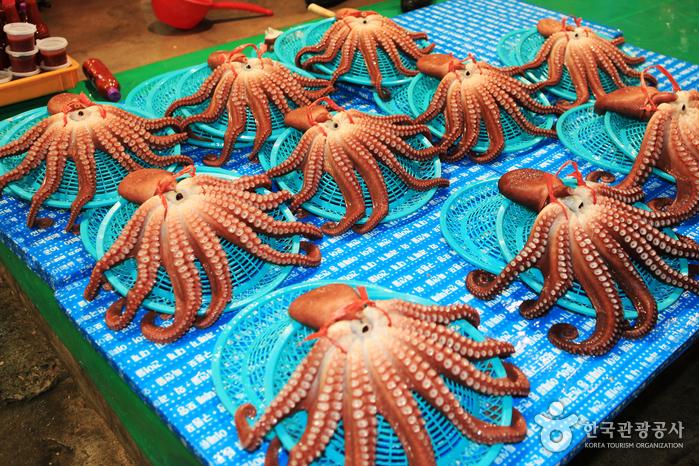
Pohang Jukdo Market’s Early-Morning Seafood Alley, Continuing from the 1954 Nambu Permanent Market
 Travel Guide
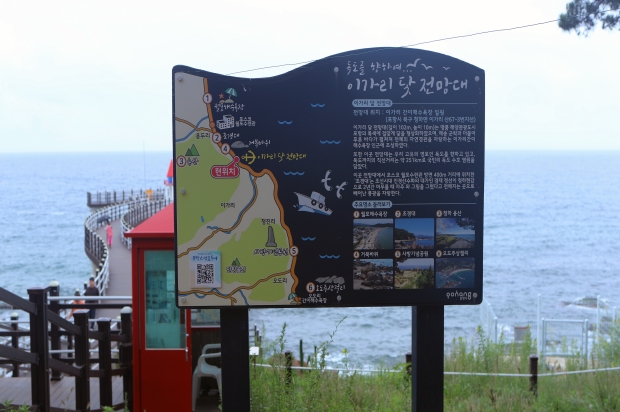
The 102-Meter Anchor Observatory Pointing Toward Dokdo
Korea News
![BLACKPINK’s Lisa Dominates the VMA Red Carpet in a Sheer Corset Dress and Red Fur [Star Issue]](https://kotourlive-images.s3.ap-northeast-1.amazonaws.com/news/1790557894714_010e956a_news_94409db1-fab6-40bf-bc7b-4b985b1fbac7.jpg) News
News
BLACKPINK’s Lisa Dominates the VMA Red Carpet in a Sheer Corset Dress and Red Fur [Star Issue]
![BLACKPINK’s Jisoo Spotted by Surprise with BIGBANG in London… Their Special Loyalty as Labelmates [IS High Cut]](https://kotourlive-images.s3.ap-northeast-1.amazonaws.com/news/1790557854683_6ea979f5_news_caab62e5-8462-43c8-8622-da794f3df9de.png) News
News
BLACKPINK’s Jisoo Spotted by Surprise with BIGBANG in London… Their Special Loyalty as Labelmates [IS High Cut]
 News
News
Tattoos All Over Her Body… AOA’s Jimin Draws Shocked Attention After Kwon Mina’s ‘Bullying’ Allegations
![You’ll Have to Look Twice… Choi Min-a-soo Perfectly Pulls Off Everything from a Daring Illusion Dress at the Awards Ceremony to Long Braided Hair [RE:STAR]](https://kotourlive-images.s3.ap-northeast-1.amazonaws.com/news/1790492384850_1f293dad_news_d834c50e-0685-43ef-9aa5-6995cd6d8848.jpg) News
News