Exhibitions and Entry Procedures at the DMZ Museum Inside the Civilian Control Line
The DMZ Museum is located at 369 Tongil Observatory-ro, Hyeonnae-myeon, Goseong-gun, Gangwon Special Self-Governing Province, north of the Civilian Control Line. Visitors must complete an entry report and an 8-minute security briefing at Tongil Security Park before entering by car, so the key is to meet the entry deadline before focusing on the museum’s visiting hours.
I’ve been here?
Your check-in helps the next traveler.
11 people viewed this week Be the first
One tap — no writing needed
Why Goseong DMZ Museum, opened in 2009, stands at the gateway to Mount Geumgang
The DMZ Museum opened on August 14, 2009, at 369 Tongiljeonmang-daero, Hyeonnae-myeon, Goseong-gun, Gangwon Special Self-Governing Province. It stands at the northernmost point of the east coast, on the route to Mount Geumgang, and covers a site area of 151,242㎡ with a total floor area of 10,759㎡.
The museum was created to address both the history and culture and the natural ecology of the Korean Demilitarized Zone. The exhibition halls, video theater, multipurpose center, and outdoor facilities are designed to present the DMZ not merely as a boundary line of war, but as a space where the history of division and ecology coexist.

How to take a taxi after traveling from Dong Seoul Bus Terminal to Geojin
For access by public transportation, the recommended route is to take a bus from Dong Seoul Bus Terminal to Geojin. Buses operate 11 times a day from 06:49 to 21:10, and the journey to Geojin takes approximately 2 hours and 30 minutes.
Because entry inside the Civilian Control Line is not permitted by means other than a vehicle, visitors must take a taxi from Geojin or Ganseong. The officially listed taxi fare is usually KRW 60,000–70,000, payable by visitors. Tongil Security Park is located approximately 10 km in front of the Tongil Observatory.
The address is 369 Tongiljeonmang-daero, Hyeonnae-myeon, Goseong-gun, Gangwon Special Self-Governing Province. No walking route from the station or regular bus route continuing to the museum is provided, so the most practical plan is to take a bus from Dong Seoul to Geojin, then take a taxi first to the Tongil Security Park entry registration office.
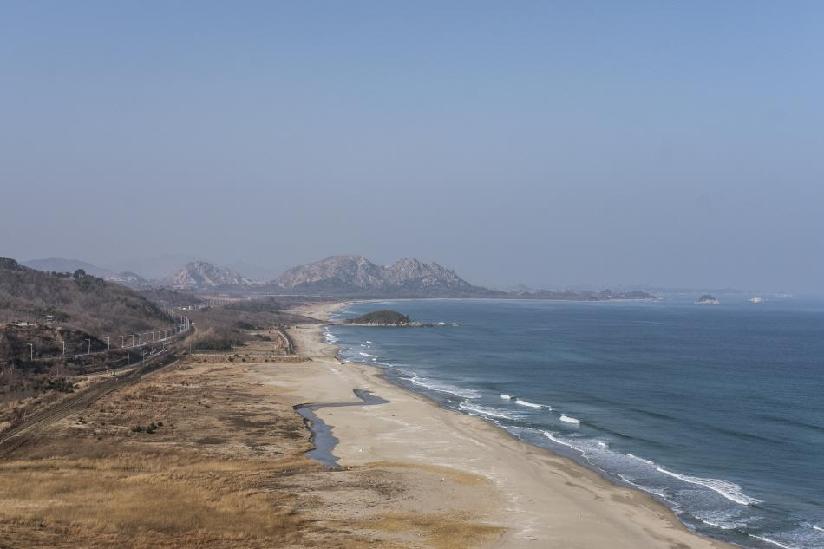
You must complete the eight-minute briefing at Tongil Security Park before entering the Civilian Control Line
Because the museum is north of the Civilian Control Line, visitors cannot go directly to the museum building. They must submit an entry form at the Tongil Security Park entry registration office and complete an eight-minute security briefing. Anyone who has not done so cannot enter.
The initial entry time for general security tourists is 09:00. Since the Civilian Control Line entry procedure is said to take approximately 30 minutes, visitors should not arrive late after calculating only the museum viewing time. After completing registration and the briefing, visitors proceed to the Jejin Checkpoint with their security-education certificate.
Jejin Checkpoint is 5 km from the Tongil Observatory entry registration office. After traveling another 5 km from the checkpoint, the DMZ Museum appears on the left. Motorcycles, bicycles, and other vehicles or modes of transport are not permitted except automobiles; visitors must use a private car or taxi.
Although it opens at 09:00, the final entry time ends earlier depending on the season
Viewing hours from March through October are 09:00–18:00, with ticket sales ending at 17:00. From November through February, hours are 09:00–17:00, with ticket sales ending at 16:00. However, there are separate final entry times for entering the Civilian Control Line, so visitors should not plan solely around the museum’s closing time.
The final entry times are 16:20 from March 1 to July 14, 17:30 from July 15 to August 20, and 16:20 from August 21 to October 31. From November 1 to February 28, the final entry time is 15:50.
The final registration time for general security tourists is listed as 17:50 during the summer season, March through October, and 15:50 during the winter season, November through February. Allow 1.5 to 2 hours to visit both Tongil Observatory and the museum; viewing time inside the Civilian Control Line is listed as no more than 3 hours.
Avoid Mondays and January 1, and visit the museum before Tongil Observatory
The DMZ Museum is free, and since June 1, 2018, visitors have been able to enter the exhibition area without an admission ticket. At the Tongil Observatory entry registration office, however, facility-use fees are listed as KRW 3,000 for adults, KRW 1,500 for elementary, middle, and high school students, and free for preschool children.
The museum is closed on January 1 and every Monday. If Monday is a public holiday, it closes the following day. It may also close outside its regular closure days because of military operations, natural disasters, severe weather, or other circumstances.
If visiting both sites, the official recommendation is to see the DMZ Museum first and Tongil Observatory afterward. If visitors go to the observatory first, they must walk to the parking lot, drive approximately 3–4 minutes, get out again, and then visit the museum.
An itinerary for reading war records and exploring the DMZ ecology on the second and third floors
The exhibition rooms occupy the second and third floors, and the permanent exhibition is divided into four zones. Zone 1 is “An Unblessed Birth,” Zone 2 is “The Legacy of the Cold War Continues,” Zone 3 is “Yet the DMZ Is Alive,” and Zone 4 is “The DMZ, a Land Dreaming Again.”
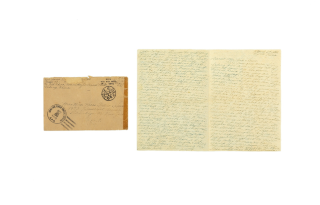
The exhibition presents the period from the beginning of the war through the present and future in a yesterday–today–tomorrow sequence. Materials on display include Korean War veterans’ records, missing-person notification letters, letters from U.S. military prisoners of war, foreign newspaper reports on the Armistice Agreement, a typewriter used by a war correspondent, minutes of Military Armistice Commission meetings, and the Armistice Agreement.
The museum also includes the “Empathy: The History of Division and Reunification” exhibition room, which addresses German reunification. Seasonal special exhibitions present works highlighting war relics and life in North Korea, and the collection comprises 7,743 items.
What to see outdoors, from the Berlin Wall to the Barbed-Wire Fence Walking Experience Center
The outdoor facilities include sections of the Berlin Wall and the East–West German border fence, an exhibition of psychological-warfare equipment aimed at North Korea, tanks, and self-propelled artillery. The space allows visitors to connect the structure of the Cold War presented indoors with actual equipment and fence installations.
There are also the Wings of Peace sculpture, an observation shelter, an ecological pond, the Barbed-Wire Fence Walking Experience Center, and an observation deck. The DMZ Museum addresses natural ecology as well as history and culture because the DMZ area remained an ecological space while human access was restricted.
According to National Institute of Ecology surveys conducted from 2014 to 2017, 47 mammal species inhabit the DMZ area, including six Class I endangered wild mammal species. There are also 1,926 plant species, 17 endangered plant species, 136 freshwater fish species, and 38 amphibian and reptile species.
A timetable that is easy to overlook when using the experience and rest facilities
The five permanent hands-on activities are making a mug, eco bag, T-shirt, military ID chain, and rubber-band gun or wish postcard. Experience programs operate from 10:00 to 15:30 in winter and from 10:00 to 16:30 in summer; they are not available from 11:30 to 13:00 because of lunch.
Making a DMZ ID tag takes approximately 20 minutes and costs KRW 3,000. “Putting the Severed Korean Peninsula Back Together” takes approximately 20 minutes and costs KRW 5,000. T-shirt decorating takes approximately 20 minutes and costs KRW 3,000; making an eco bag takes approximately 40 minutes and costs KRW 4,000; and making a rubber-band gun takes approximately 20 minutes and costs KRW 3,000.
The museum shop opened in August 2011 and includes a display corner for past Korean tourism souvenirs and a war-food experience corner. From the DMZ café and rest facilities, visitors can view the East Sea at the northernmost point of the east coast. A free contactless guide provides photographs and audio about the collection.
On-site preparations, including vehicle parking and wheelchair rental
Parking costs KRW 5,000 for vehicles with nine seats or fewer and KRW 6,000 for buses. This is parking information included in the facility-use fee guidance from the Tongil Observatory entry registration office, not an admission fee charged by the DMZ Museum itself. One electric-vehicle charger is installed in Parking Lot 1.
Wheelchairs and strollers can be rented on the second floor of the exhibition hall, and the third floor has a nursing area with a microwave. The storage facility is in the DMZ Museum office, and the inquiry telephone number is 033-634-8553.
Photography is not permitted in the exhibition rooms without the manager’s permission, and drinking or eating inside the exhibition rooms may be grounds for removal. The main telephone number is 033-681-0625, and the official website is https://dmzmuseum.com/. The available information does not confirm whether English guidance, a separate audio guide, or cash-only payment is provided.
Before You Go
- Address
- 369 Tongiljeonmang-daero, Hyeonnae-myeon, Goseong-gun, Gangwon Special Self-Governing Province
- Hours
- March–October 09:00–18:00, admission closes at 17:00 / November–February 09:00–17:00, admission closes at 16:00. Closed January 1 and every Monday; if Monday is a public holiday, closed the following day.
- Closed
- January 1 and every Monday. If Monday is a public holiday, closed the following day. Temporary closures may occur because of military operations, natural disasters, severe weather, or other circumstances.
- Admission
- DMZ Museum: free. Tongil Observatory admission and parking fees are collected by a separate organization.
- Phone
- 033-681-0625
- Official site
- https://dmzmuseum.com/
- Transport
- After registering and completing the eight-minute security briefing at the Tongil Security Park entry registration office, enter by vehicle. Motorcycles, bicycles, and other non-automobile modes of transport are not permitted.
- Parking
- KRW 5,000 for vehicles with nine seats or fewer; KRW 6,000 for buses. This is the Tongil Observatory parking fee and is unrelated to the museum.
- Time needed
- 1.5–2 hours to visit Tongil Observatory and the DMZ Museum together. Up to 3 hours for viewing inside the Civilian Control Line.
- Accessibility
- Wheelchairs and strollers can be rented on the second floor of the exhibition hall. Non-automobile modes of transport cannot enter the Civilian Control Line.
The information above is accurate as of the time of writing. Check the official guidance again before visiting.

Places
Nearby Attractions 2
-
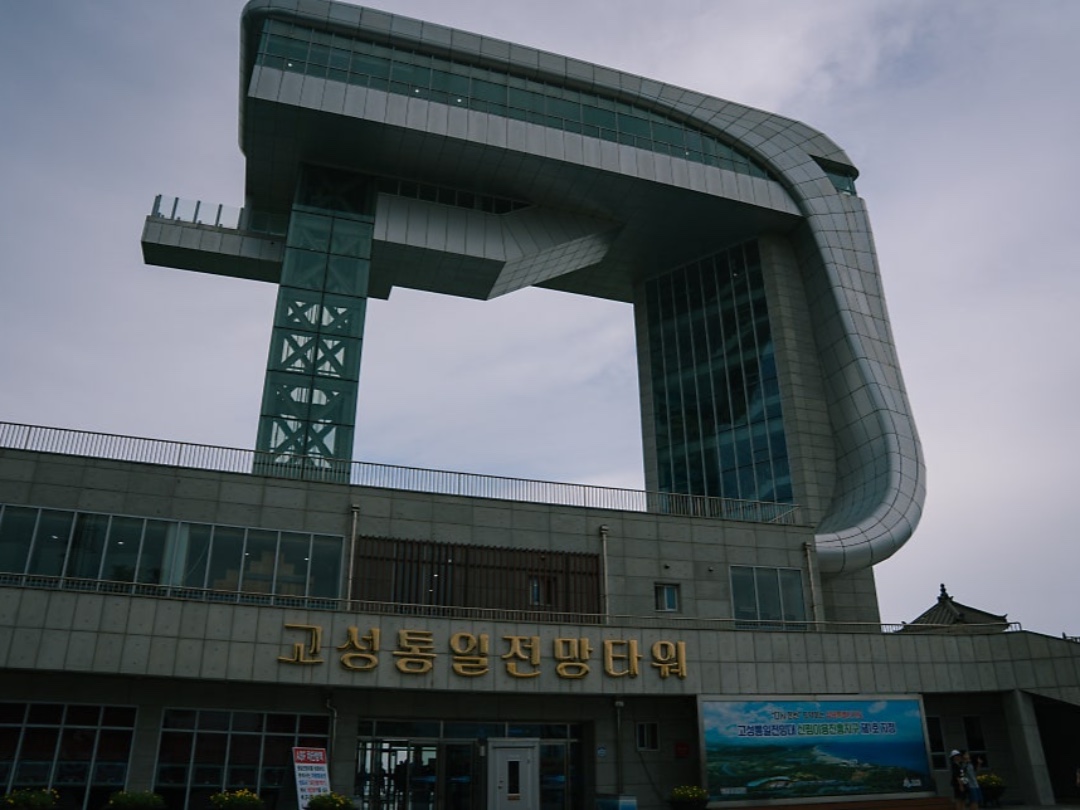 1
Goseong Unification ObservatoryAn observatory where you can view Mount Geumgang and the northern scenery of the East Sea while observing the site of the division of Korea.
1
Goseong Unification ObservatoryAn observatory where you can view Mount Geumgang and the northern scenery of the East Sea while observing the site of the division of Korea. -
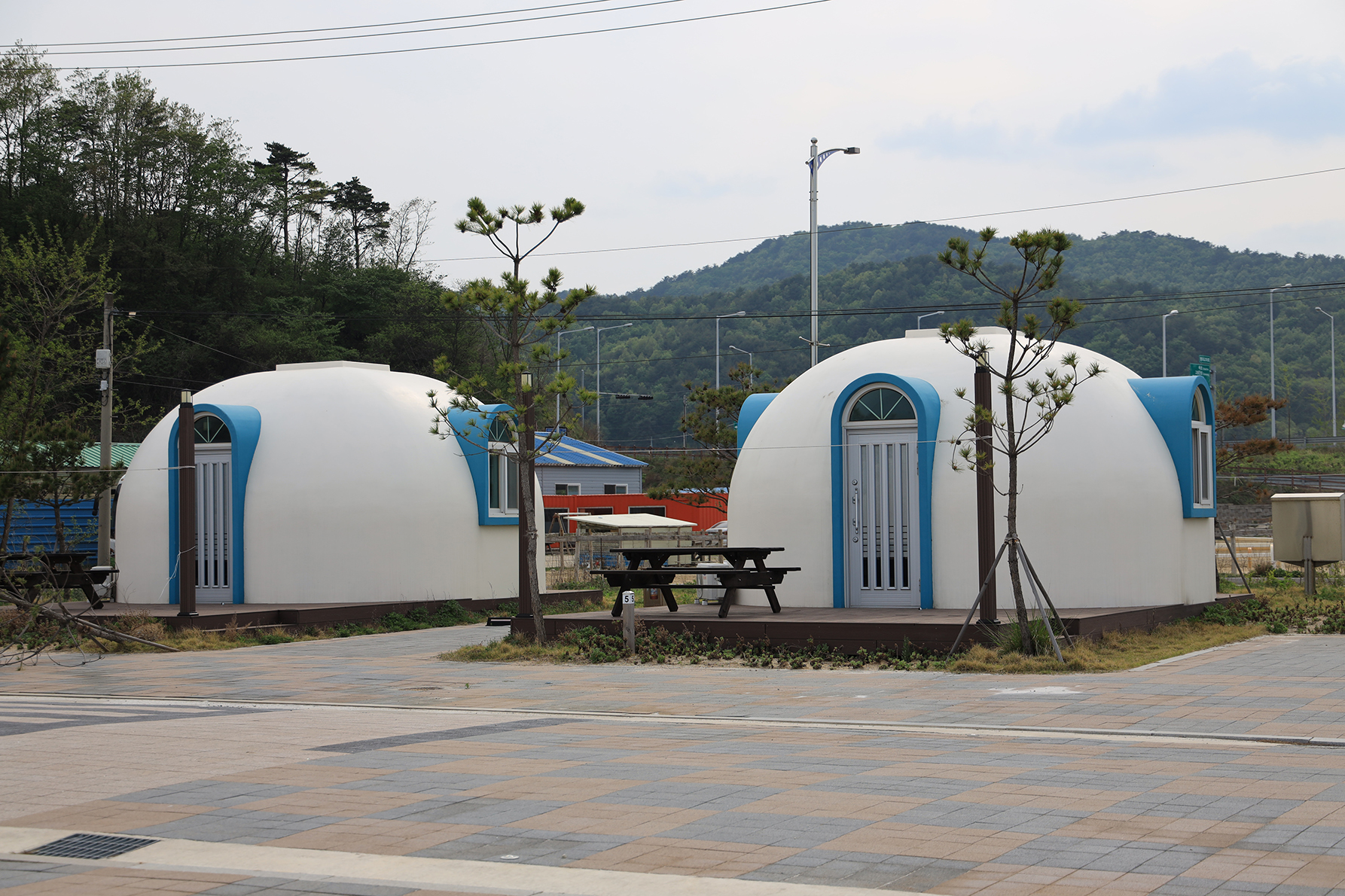 2
Myeongpa BeachEnjoy seascapes and leisurely beach walks on the fine sandy shore at the northernmost end of Korea’s east coast.
2
Myeongpa BeachEnjoy seascapes and leisurely beach walks on the fine sandy shore at the northernmost end of Korea’s east coast.
Food & Dining 3
-
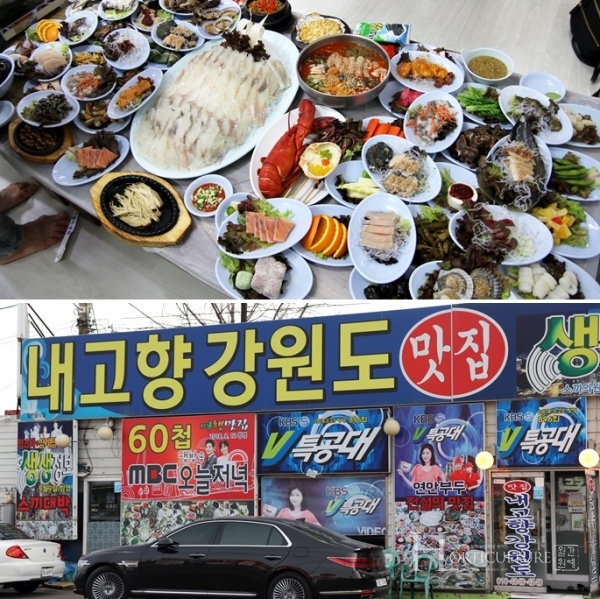 3
Budu RestaurantA restaurant at Daejin Port serving seafood dishes such as grilled fish and pollock stew.
3
Budu RestaurantA restaurant at Daejin Port serving seafood dishes such as grilled fish and pollock stew. -
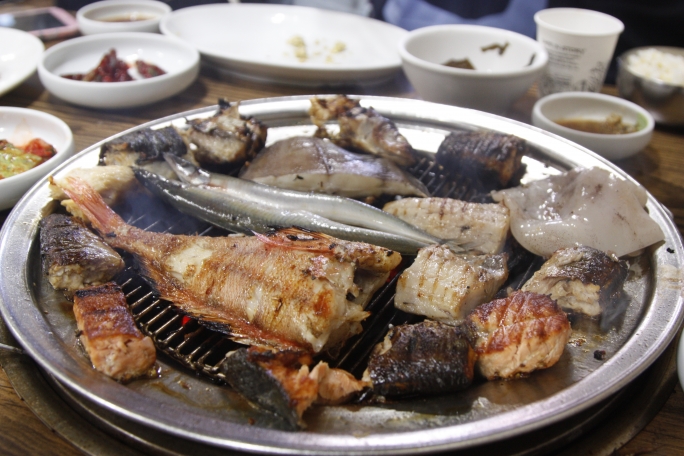 4
Jeodo MatjipA restaurant at Daejin Port serving local specialties from Goseong, including octopus gukbap and seopguk.
4
Jeodo MatjipA restaurant at Daejin Port serving local specialties from Goseong, including octopus gukbap and seopguk. -
 5
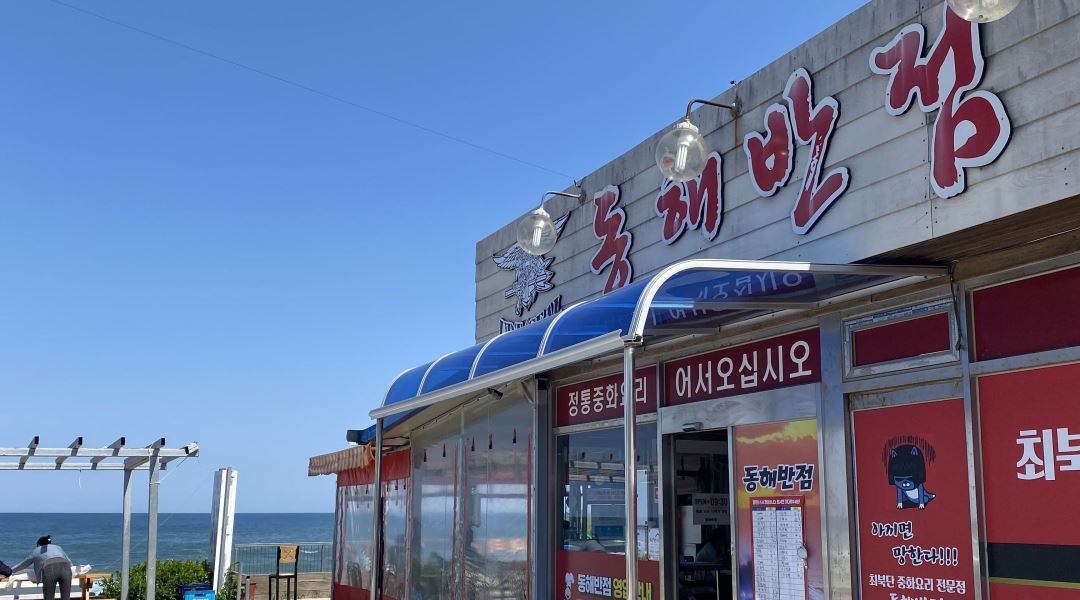
Donghae BanjeomA restaurant in Hyeonnae-myeon serving Chinese dishes such as jjampong and Chinese-style bibim noodles.
5
Donghae BanjeomA restaurant in Hyeonnae-myeon serving Chinese dishes such as jjampong and Chinese-style bibim noodles.
Events in This Area
Festivals in This Area


More Travel Guides in This Area
 Travel Guide
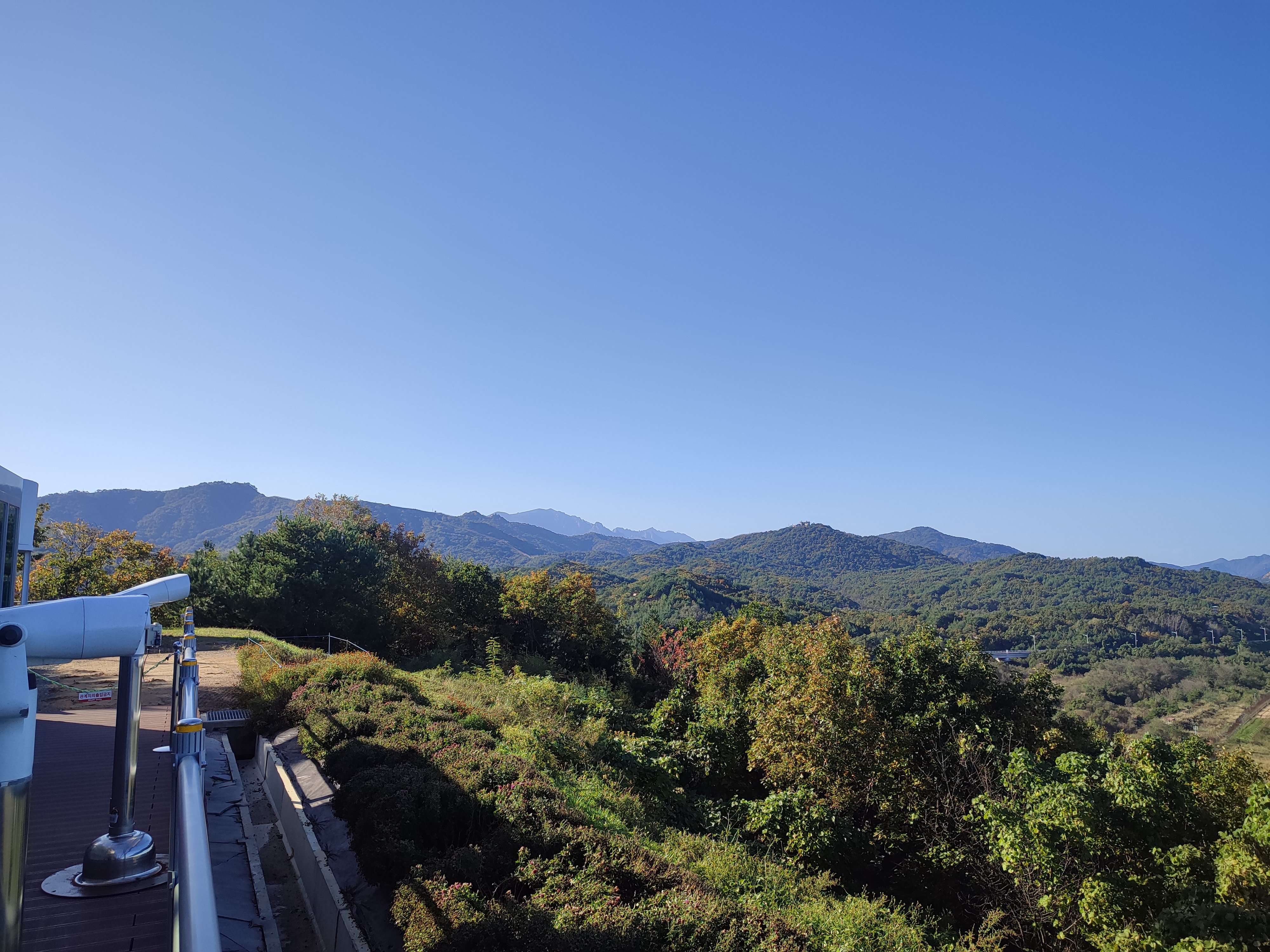
The Northern Sea at Goseong Unification Observatory, After Passing Through 10 km of the Civilian Control Line
 Travel Guide
Meeting Ulsanbawi Rock on a Canvas of Water at Bauzium Sculpture Museum
 Travel Guide
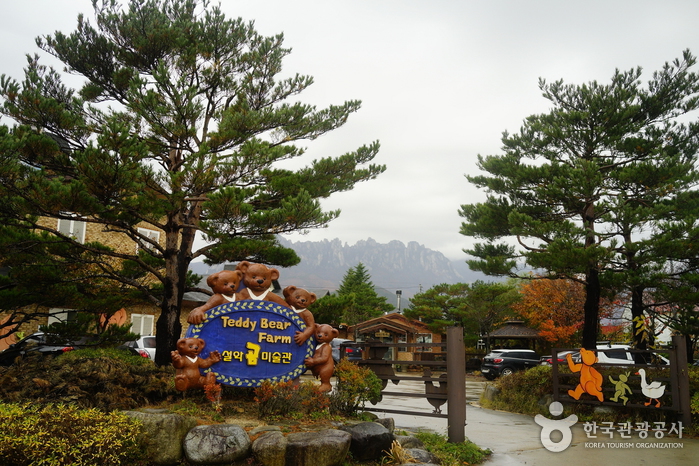
Exhibition and Visit Information for Sokcho Teddy Bear Farm Before Its Fire-Related Closure
 Travel Guide
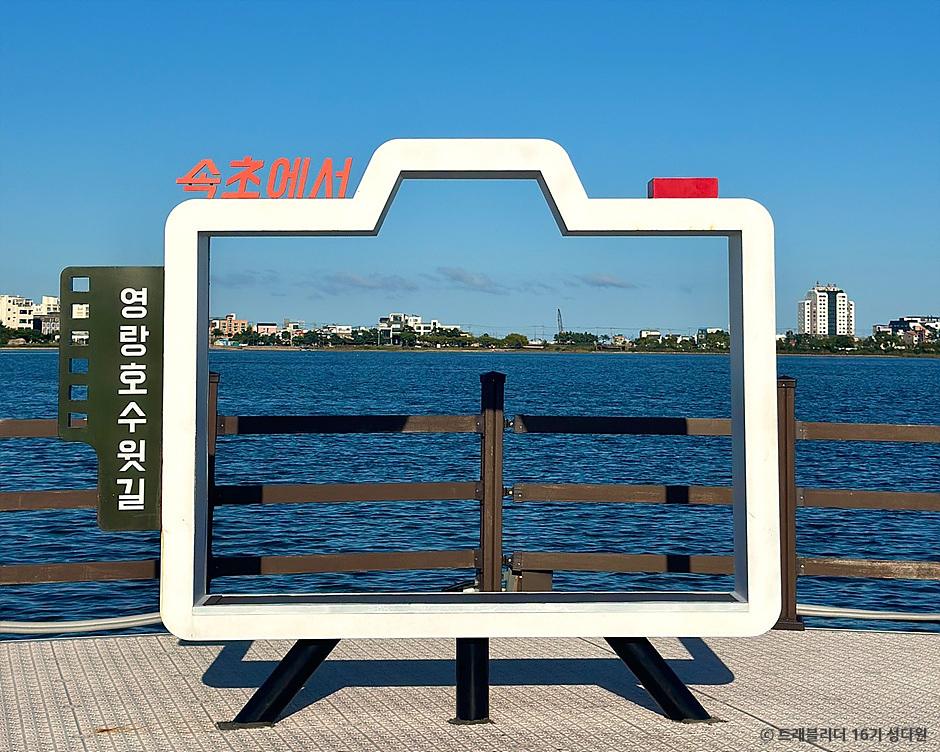
How to Use the 7.8 km Lakeside Trail and Yeongnang Lake Overwater Path
Korea News
![BLACKPINK’s Lisa Dominates the VMA Red Carpet in a Sheer Corset Dress and Red Fur [Star Issue]](https://kotourlive-images.s3.ap-northeast-1.amazonaws.com/news/1790557894714_010e956a_news_94409db1-fab6-40bf-bc7b-4b985b1fbac7.jpg) News
News
BLACKPINK’s Lisa Dominates the VMA Red Carpet in a Sheer Corset Dress and Red Fur [Star Issue]
![BLACKPINK’s Jisoo Spotted by Surprise with BIGBANG in London… Their Special Loyalty as Labelmates [IS High Cut]](https://kotourlive-images.s3.ap-northeast-1.amazonaws.com/news/1790557854683_6ea979f5_news_caab62e5-8462-43c8-8622-da794f3df9de.png) News
News
BLACKPINK’s Jisoo Spotted by Surprise with BIGBANG in London… Their Special Loyalty as Labelmates [IS High Cut]
 News
News
Tattoos All Over Her Body… AOA’s Jimin Draws Shocked Attention After Kwon Mina’s ‘Bullying’ Allegations
![You’ll Have to Look Twice… Choi Min-a-soo Perfectly Pulls Off Everything from a Daring Illusion Dress at the Awards Ceremony to Long Braided Hair [RE:STAR]](https://kotourlive-images.s3.ap-northeast-1.amazonaws.com/news/1790492384850_1f293dad_news_d834c50e-0685-43ef-9aa5-6995cd6d8848.jpg) News
News