Okryeon Seonwon on Baeksan’s Southern Slope: a Rock-Carved Buddha Facing Gwangandaegyo Bridge and a 15 m Maitreya Great Buddha
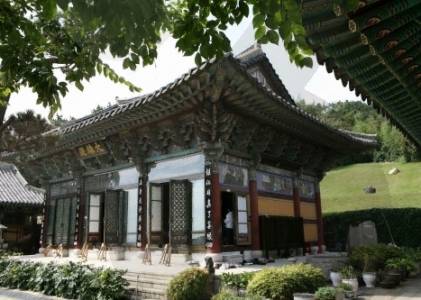
Okryeon Seonwon is a traditional Buddhist temple on the southern foothills of Baeksan in Minrak-dong, Suyeong-gu, Busan. It houses the seated rock-carved Ksitigarbha Bodhisattva, Busan Metropolitan City Cultural Heritage Material No. 7. Although it is close to Gwangalli, the access road is steep, so it is best to allow separate time for footwear and travel when planning to visit the temple and walk around Baeksan together.

I’ve been here?
Your check-in helps the next traveler.
No one has checked in yet Be the first
One tap — no writing needed
The Uphill Road Beginning at 58 Gwangnam-ro 257beon-gil, Beside Minrak Elementary School
Okryeon Seonwon's road-name address is 58 Gwangnam-ro 257beon-gil, Suyeong-gu, Busan Metropolitan City, and its postal code is 48275. The Busan Tourism Archive also classifies this place as a historical, religious, and Buddhist tourism site in Suyeong-gu and lists the same address.
The key point about access is that this is not a flat stroll but a short yet steep approach road to the temple. A 2019 on-site contribution in the Busan City News and a 2020 visit record mention the uphill road beginning near the main gate of Minrak Elementary School, as well as a stone statue of Nam-mu Gwanse-eum Bosal and the temple gate. Shoes with good ankle support are more suitable, and visitors using walking aids or strollers are advised to call 051-757-9066 in advance to ask about the slope and the extent to which vehicles can enter.
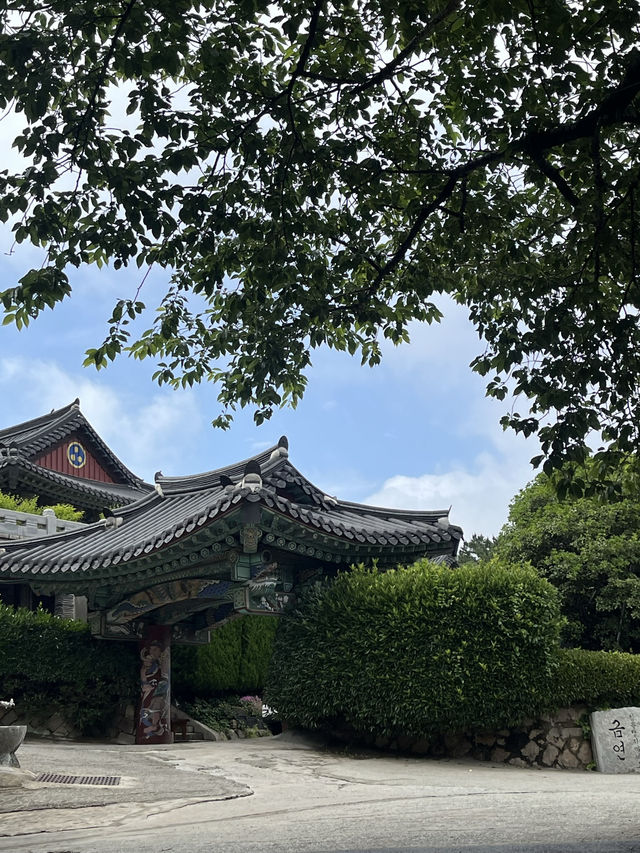
Okryeon Seonwon on October 17, 1998, When It Became Traditional Temple No. 28
The Ministry of Culture, Sports and Tourism's May 2024 status report on traditional temples lists Okryeon Seonwon as a temple located at 372-2 Minrak-dong, Suyeong-gu, Busan. Local guide materials summarize that it was designated Traditional Temple No. 28 on October 17, 1998.
The change in the temple's name is recorded once in 1635, when Haewoon Seonsa changed it to “Okryeonam,” and it is said to have been changed to the current “Okryeon Seonwon” during the rebuilding of Daeungjeon Hall in 1976. However, accounts of Wonhyo's founding of the temple and Choe Chiwon's period of retreat are often based on local traditions. It is therefore more prudent on site to understand the temple as having continued on the long-standing Buddhist heritage site of Baeksan, rather than treating these accounts as confirmed chronology.
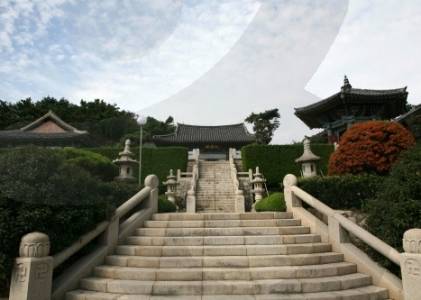
Rock-Cut Seated Ksitigarbha Bodhisattva, Cultural Heritage Material No. 7, Including Signs of Damage
The rock-cut seated Ksitigarbha Bodhisattva statue at Okryeon Seonwon is Busan Metropolitan City Cultural Heritage Material No. 7, designated on May 16, 2001. Suyeong-gu cultural heritage guides and tourism maps introduce the possibility that Baeksansa existed on the present site of Okryeon Seonwon from the Three Kingdoms period and that the rock-carved Buddha in this area may have been made around that time.
However, some cultural heritage materials describe the statue as a rare rock-carved bodhisattva statue in the Busan area dating from the 17th to 18th centuries, so interpretations of its production date differ among sources. Together with the explanation in Suyeong-gu's English tourism map that the carving lines are worn and difficult to read in detail, this is less a place to see a “Buddha statue in perfect form” than a place to examine the traces of faith remaining on the rock surface and the statue's state of preservation.
- Cultural heritage name: Rock-Cut Seated Ksitigarbha Bodhisattva
- Designation: Busan Metropolitan City Cultural Heritage Material No. 7
- Designation date: May 16, 2001
- Visiting etiquette: Around the Buddhist hall and statues, avoid loud voices, setting up tripods, and taking photographs that obstruct passage.
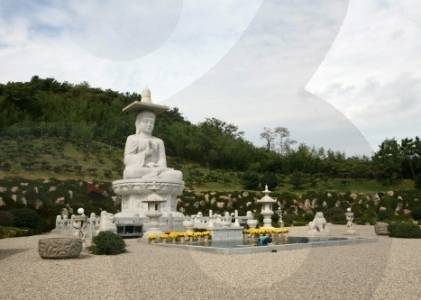
The 50-Cheok Maitreya Buddha Enshrined in 1992 and Baeksan's Sea-Facing View
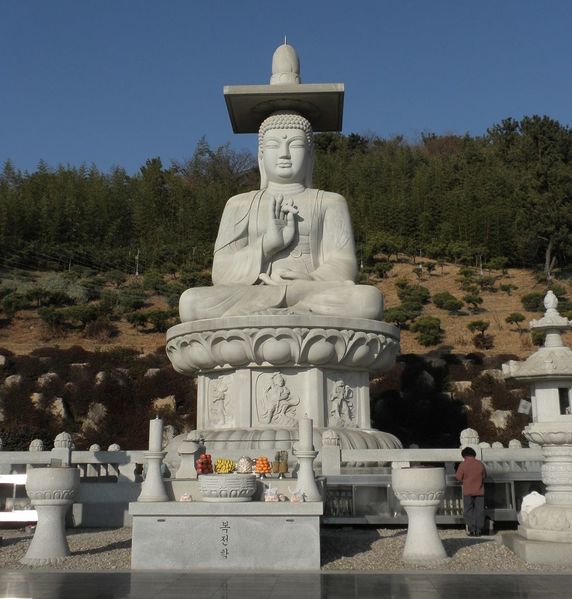
Tourism information materials introduce the 50-cheok-tall Maitreya Buddha, built at Okryeon Seonwon in 1992, while the Busan City News describes the Maitreya Buddha halfway up Baeksan as 15 m tall and weighing 1,500 tons. Although the figures are expressed differently, the sources agree that it is the most noticeable large stone Buddha within the temple grounds.
The temple stands at the southern foot of Baeksan, facing toward Gwanganri and Suyeong Bay. Baeksan is introduced as having an elevation of 127 m, and a 2023 personal visit record says that it takes about 15 minutes to climb the mountain from the temple when adding the Baeksan walking trail. Since this reflects one person's walking pace, 30–45 minutes is realistic for seeing only the temple, while about 1 hour 30 minutes is appropriate if connecting the rock-carved Buddha, Maitreya Buddha, and Baeksan sections.
Open All Year and Free to Visit: Ask About Event Dates First at 051-757-9066
Tourism data-linked information lists Okryeon Seonwon as open year-round at all times, with free admission and parking available; the inquiry telephone number is 051-757-9066. Because this is a religious facility, routes and access to some areas may vary depending on services, Buddha's Birthday celebrations, and internal circumstances, so groups and visitors planning to visit at a specific time are advised to confirm by phone.
As of August 4, 2026, an independent official website for the temple itself could not be confirmed. Instead, the Busan Tourism Archive operated by Busan Metropolitan City has an individual information page for Okryeon Seonwon, where the address and tourism classification can be checked. In May 2026, the Busan Nambu Fire Station announced that it would conduct preventive patrols and fire-safety management at traditional temples in its jurisdiction, including Okryeon Seonwon, around Buddha's Birthday. During periods when lanterns, incense, and candles are present, visitors should be especially careful to follow viewing rules around open flames.
- Hours: Open at all times
- Closed: Open year-round
- Admission: Free
- Inquiries: 051-757-9066
- Parking: Listed as available, but calling to check congestion on event days and weekends is recommended
90 Minutes Linking 127-m Baeksan and Gwanganri Beach in One Route
On Suyeong-gu tourism maps, Okryeon Seonwon is grouped with Gwanganri Beach, Millak Waterfront Park, and Suyeong Historic Park. If the goal is simply to make a round trip from Gwanganri Beach to the temple, allow 60 minutes with the hill road in mind; if continuing on foot toward the direction of Cheomidae on Baeksan, 90–120 minutes is suitable.
Suyeong-gu's English tourism map identifies Gwangan Station or Geumnyeonsan Station on Metro Line 2 as the reference stations for access to Gwanganri. The exit directly in front of Okryeon Seonwon and the walking time could not be confirmed in public transportation materials, so unfamiliar visitors may find it more reliable to combine a taxi from the subway station with a real-time bus route in a map app. Adding the temple's uphill approach after a flat itinerary along Gwanganri Beach can be tiring, so on hot days it is better to divide the visit between the morning and around sunset.
The Place Name Baeksan and Memories of Coastal Defense in Suyeong
A local record in the Busan City News introduces the explanation that the name “Baeksan” came from the mountain appearing white when white cranes gathered in the reed fields below the mountain and mist covered Suyeongcheon and the sea at Gwanganri. This is a local account explaining the origin of the place name and offers a clue to understanding Okryeon Seonwon as a temple on a low mountain slope between the sea and the city.
Historical materials from Suyeong-gu explain that Gyeongsang Jwasuyeong was located in this area during the Joseon period and was responsible for maritime defense on the eastern coast during the Japanese invasions of Korea. The cultural heritage around Cheomidae at the summit of Baeksan and Okryeon Seonwon can therefore be read not simply as a viewpoint but as a place where Suyeong's military and religious landscapes overlap. The monument to the wandering souls of the left naval command of Suyeong from the Japanese invasions of Korea within the temple grounds is also connected to the area's memory of war.
If Visiting for Photography, Prioritize Services and Passage over the Temple Grounds
A Trip.com visitor review published in 2025 introduces tiled roofs, pine trees, and views toward the sea as features of Okryeon Seonwon. In contrast, a 2019 Busan City News contribution and a 2020 blog record repeatedly mention the slope at the entrance. Even if staying for a long time to take photographs, visitors should leave spaces where services or prayers are taking place and keep access routes clear.
A record of a walk on Baeksan mentions that signs prohibiting pets were posted at the temple entrance, so it is advisable to call and reconfirm before bringing an animal. The availability of wheelchair and stroller access, foreign-language materials, and guided explanations could not be confirmed in authoritative current information. Visitors who find stairs and slopes difficult or expect a scheduled guided program may be better suited to a flatter location such as Gwanganri Beach.
Before You Go
- Address
- 58 Gwangnam-ro 257beon-gil, Suyeong-gu, Busan Metropolitan City
- Hours
- Open at all times
- Closed
- Open year-round
- Admission
- Free
- Phone
- 051-757-9066
- Official site
- https://visitbusan.net/archive/dataSearch/view.nm?dataSid=METADATA000944
- Transport
- Use Gwangan Station or Geumnyeonsan Station on Metro Line 2 as the access points for Gwanganri. The station exit and walking time directly in front of Okryeon Seonwon could not be confirmed in the latest public materials; using a taxi from the station or a real-time bus route in a map app is recommended.
- Parking
- Listed as available. Calling 051-757-9066 to check availability and fees on event days and weekends is recommended.
- Time needed
- 30–45 minutes for the temple grounds; 90–120 minutes when combined with a Baeksan walk.
- Accessibility
- The approach has slopes and some stairs, so advance inquiries are recommended for wheelchair and stroller access. The availability of foreign-language information could not be confirmed.
The information above is current as of the time of writing. Check the official information again before visiting.

Places
Nearby Attractions 4
-
 1
1
-
 2
2
-
 3
Taejongdae Resort Park
3
Taejongdae Resort Park -
 4
4
Food & Dining 5
-
 5
5
-
 6
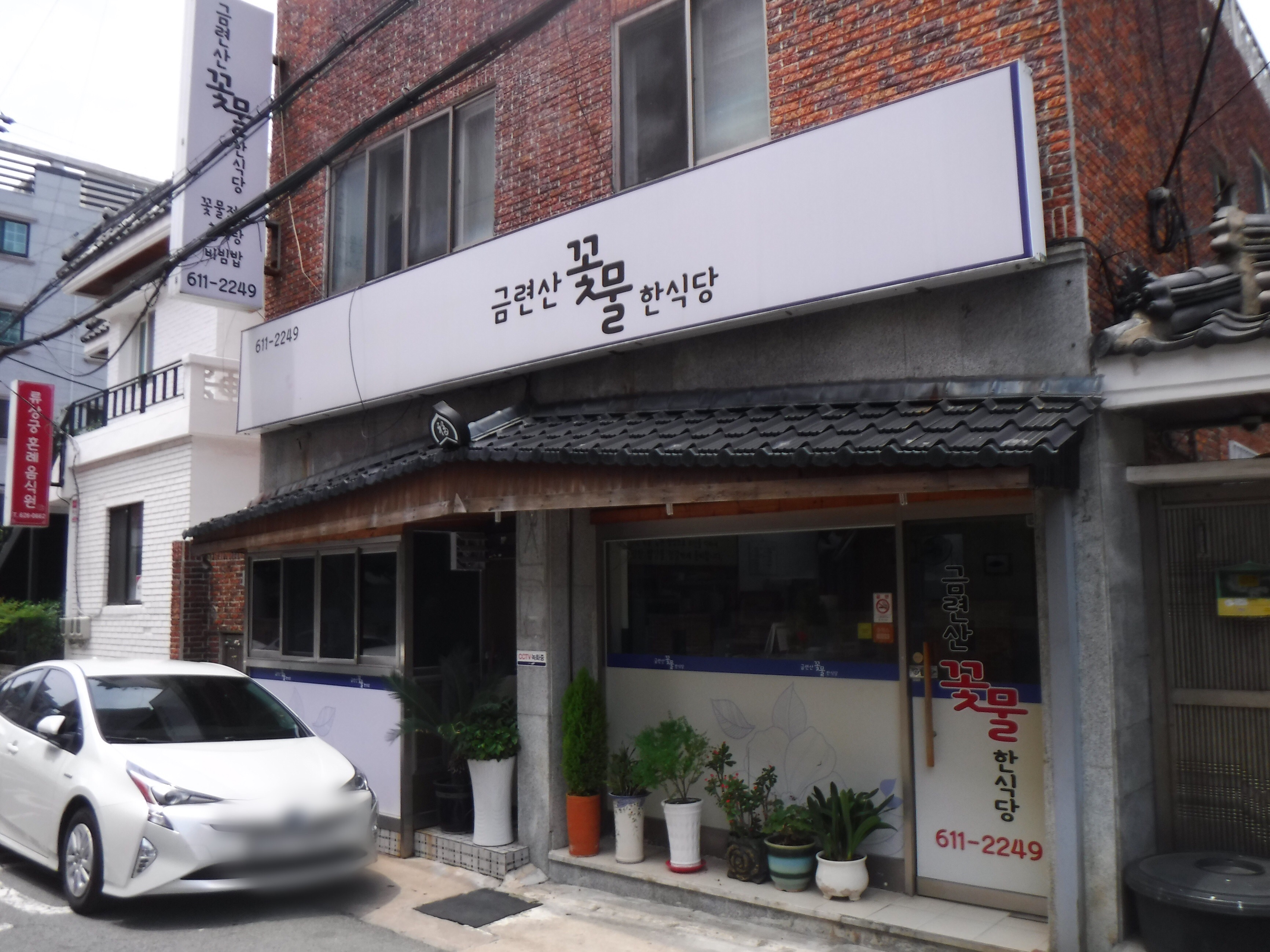
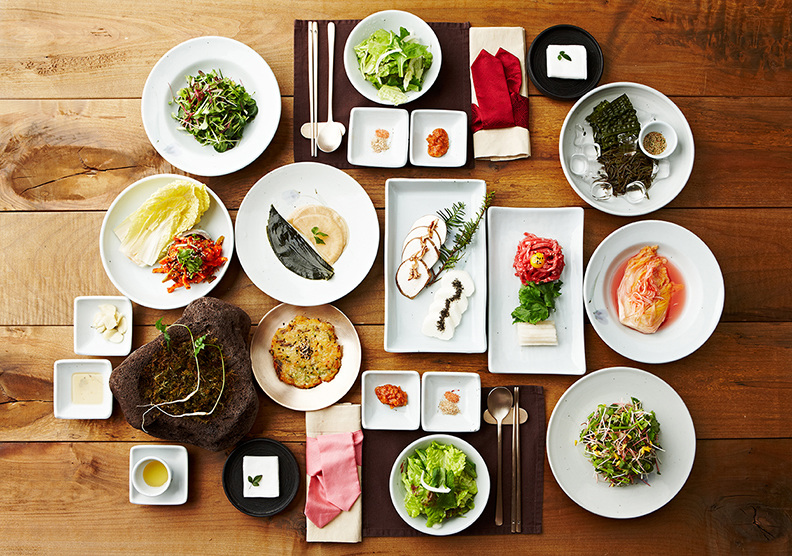
Kkotmul Korean Restaurant
6
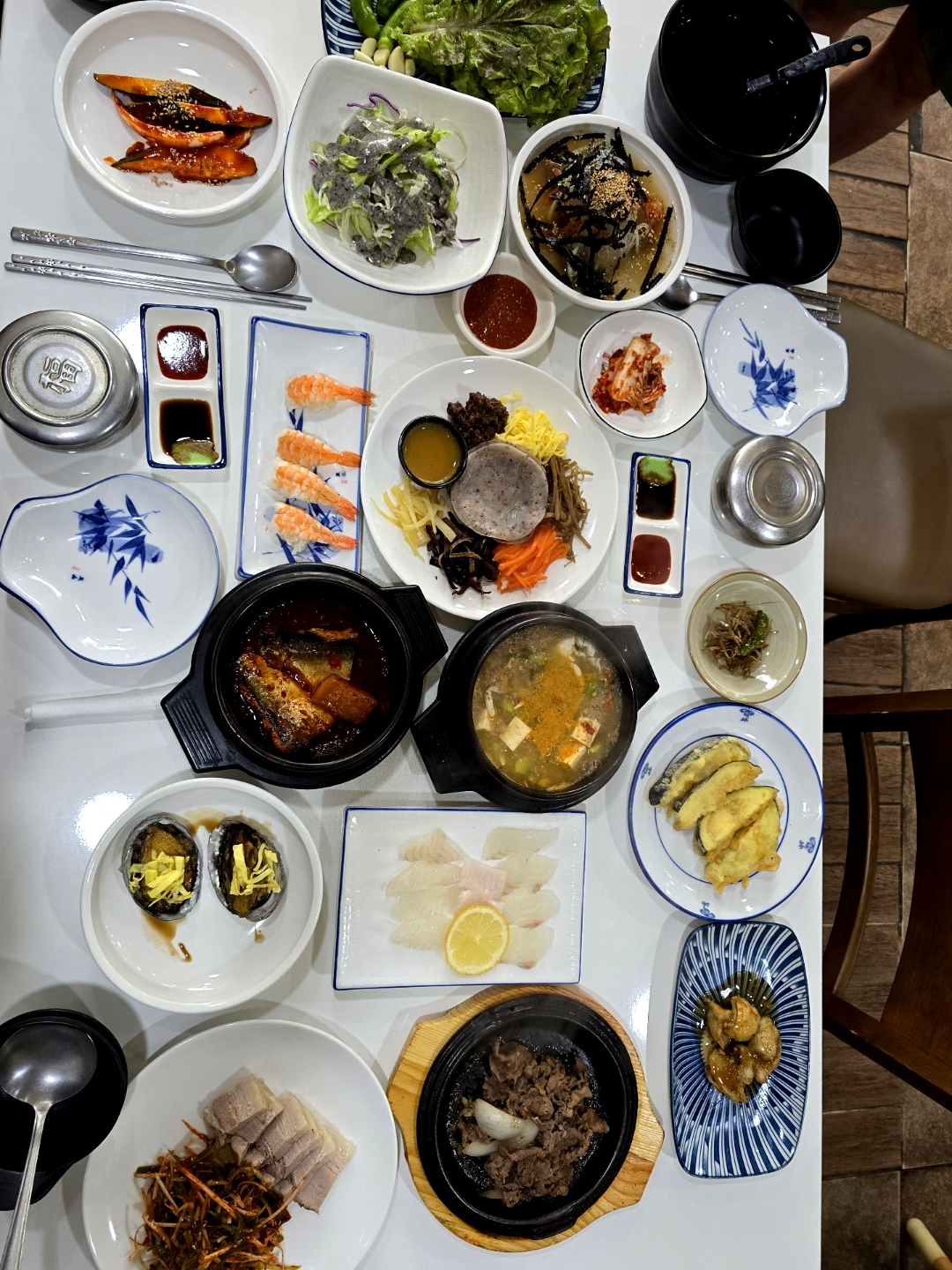
Kkotmul Korean Restaurant -
 7
7
-
 8
8
-
 9
9
Events in This Area


Festivals in This Area

More Travel Guides in This Area
 Travel Guide
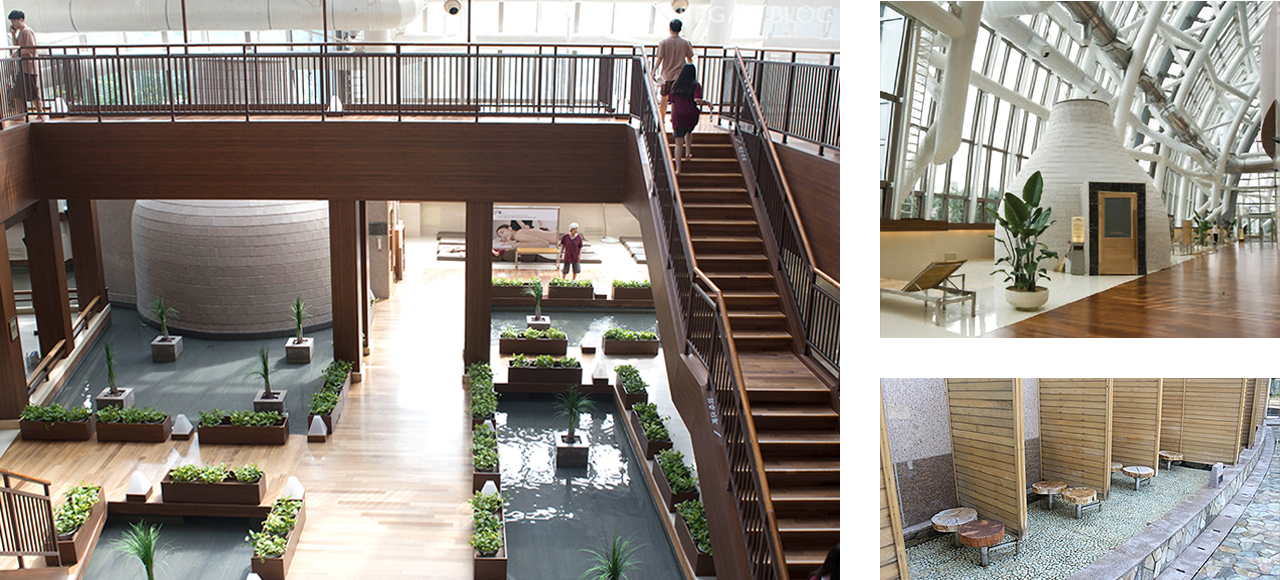
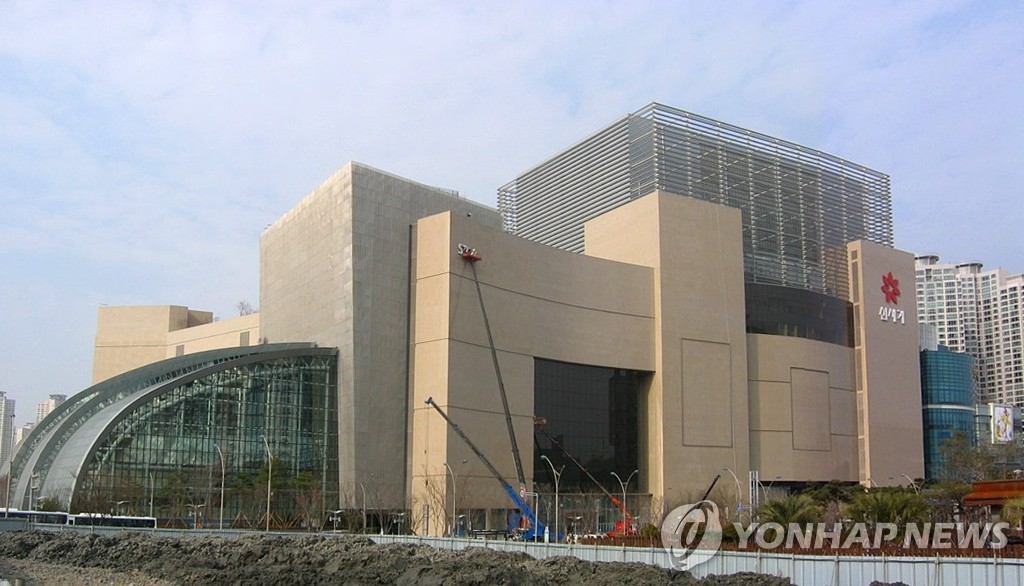
18 Hot Spring Baths and 13 Jjimjil Areas Inside a Centum City Department Store
 Travel Guide
Two Hours of Indoor Skating on the 4th Floor of Shinsegae Centum City
 Travel Guide
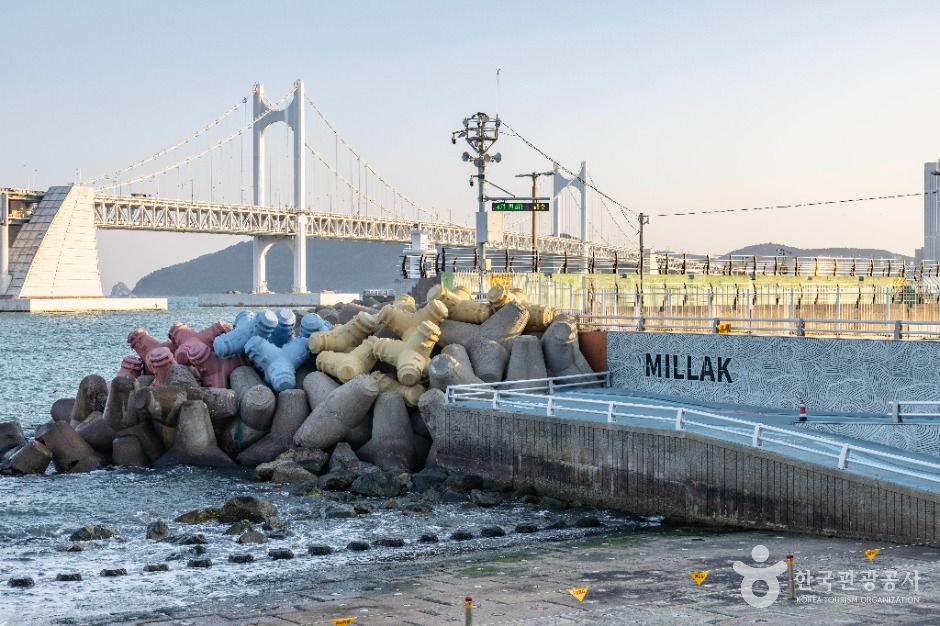
543 m Coastal Promenade and a Drinking-Prohibited Zone: Millak Waterside Park
 Travel Guide
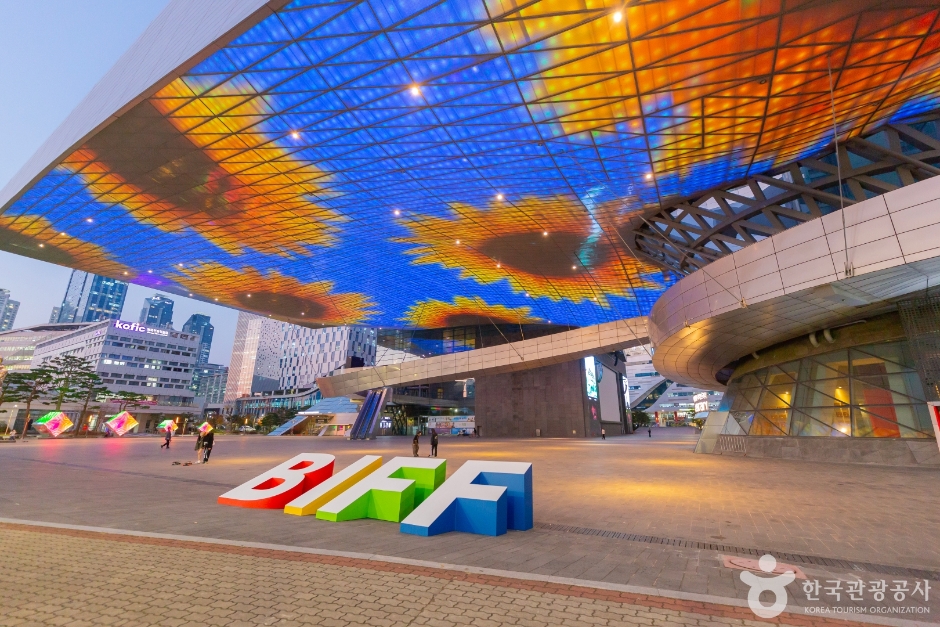
How to Walk Around Busan Cinema Center Beneath Its 163-Meter Cantilevered Roof
Korea News
 News
News
"Overcoming the Getty curse" Jang Wonyoung, with unreal proportions and beauty straight out of a Barbie doll
 News
News
A2O LITE Tops Melon TOP100 Just 29 Hours After Debut, Setting the Fastest Record for a Debut Song
![Billlie's Tsuki 'Makes an Entrance Showing Off Her Beautiful Figure' [MK Photo]](https://kotourlive-images.s3.ap-northeast-1.amazonaws.com/news/1792027947835_957f0cb8_news_5c0023c5-e9a0-4640-9154-cb0b69d810c4.jpg) News
News
Billlie's Tsuki 'Makes an Entrance Showing Off Her Beautiful Figure' [MK Photo]
![ENHYPEN ‘Fighting for the Macau performance too!’ [★Video]](https://kotourlive-images.s3.ap-northeast-1.amazonaws.com/news/1792027887815_5057637d_news_8041e5cd-8b22-4193-bb46-880c65d944f7.jpg) News
News