Korean Beauty Shopping, the Age of the AI Assistant
When you first come to Korea and step into a beauty store, what comes to mind? Many people have experienced spending all their time in front of hundreds of products, wondering, 'Which one will suit my skin?' But things are different now. The more information there is, the harder it becomes to choose — and the Korean beauty industry is solving that paradox precisely with AI assistants.
Major offline and online retailers in Korea are using AI to provide services that go beyond 'personalization' to 'hyper-personalization'. This means that, rather than simply recommending products, they analyze your skin type, personal color, and even lifestyle to present the optimal products — an experience that has already become part of everyday life across Korea.
AI Beauty Curation Apps You Can Meet Online
Open the app and a personalized screen unfolds just for you
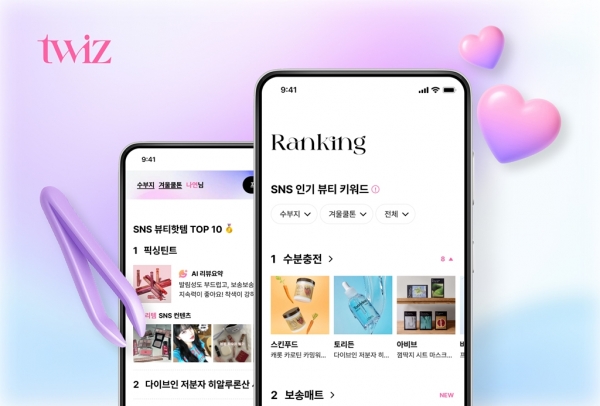
Major e-commerce platforms in Korea launched AI beauty assistants starting last year. In particular, Lotte On's 'twiz' rearranges the entire app for you the moment you set your skin tone and skin type. If you are a spring warm-tone user, the interface shifts to coral colors; if you are a summer cool-tone user, it changes to a light blue background.
Inside the app, AI analyzes SNS trends in real time and suggests beauty content and products that match your interests. For example, when AI detects trends such as glitter shadow or soothing-ingredient serums that are popular on Instagram, it matches them with your skin profile and even gives scores like, 'These products are 90 points suitable for you.' If you are choosing a hand cream to put in your travel bag, it can apply specific filters such as 'a lightweight texture suitable for sensitive skin.'
One-on-one conversations with a conversational AI counselor
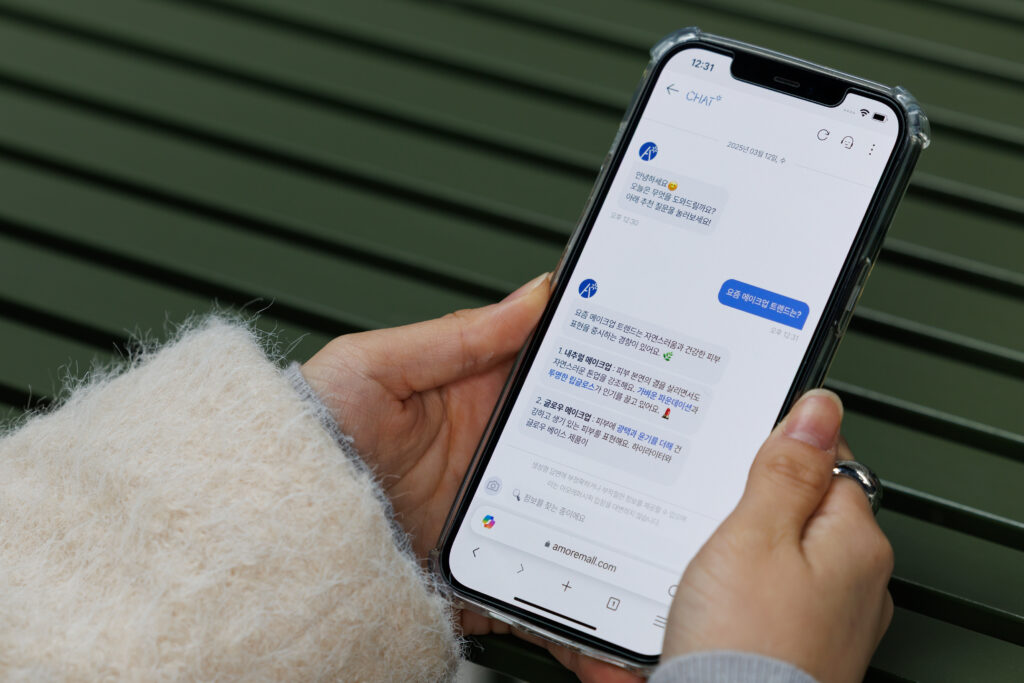
If you need more in-depth consultation, you can use a conversational AI assistant. Ask, 'I have dehydrated oily skin—can you recommend a good cushion foundation?' and the AI responds like a department store beauty manager. It analyzes not only a product's effectiveness but also your past purchase history and reviews of products you have used to make new recommendations. In particular, the AI Beauty Counselor (AIBC) that Amorepacific is developing is scheduled to add a feature that can measure skin condition online starting in late 2025. If you upload a photo through the app, the AI can analyze your skin's oil level, sensitivity, and tone, making more precise product recommendations possible.
Hands-On AI Device Experiences in Offline Stores
Get a skin diagnosis in 30 seconds at a convenience store
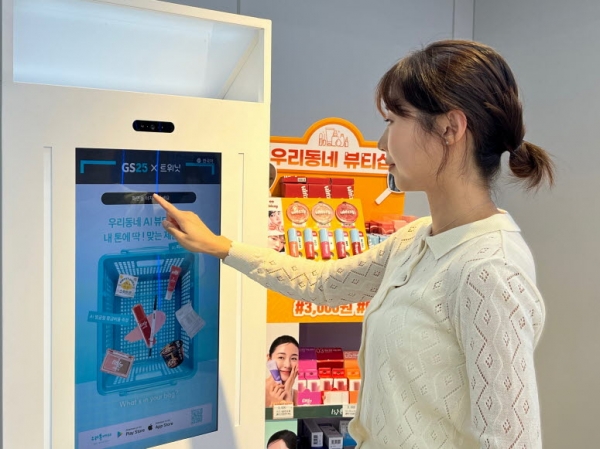
What if your skin suddenly becomes sensitive while traveling? Visit a GS25 convenience store in Korea. Some locations have AI beauty devices installed, and all you need to do is hold your face up to the screen; the camera precisely analyzes facial features such as skin brightness, saturation, and color temperature, along with the eyes, lips, nose, and more. It takes about 30 seconds. The analysis result shows your personal color, and makeup products that suit it are recommended. It was free in August, but after that it costs about 2,000 won per session. The analysis report can be downloaded via QR code, so you can refer to it even after leaving the store.
Customized counseling at department stores and road shops
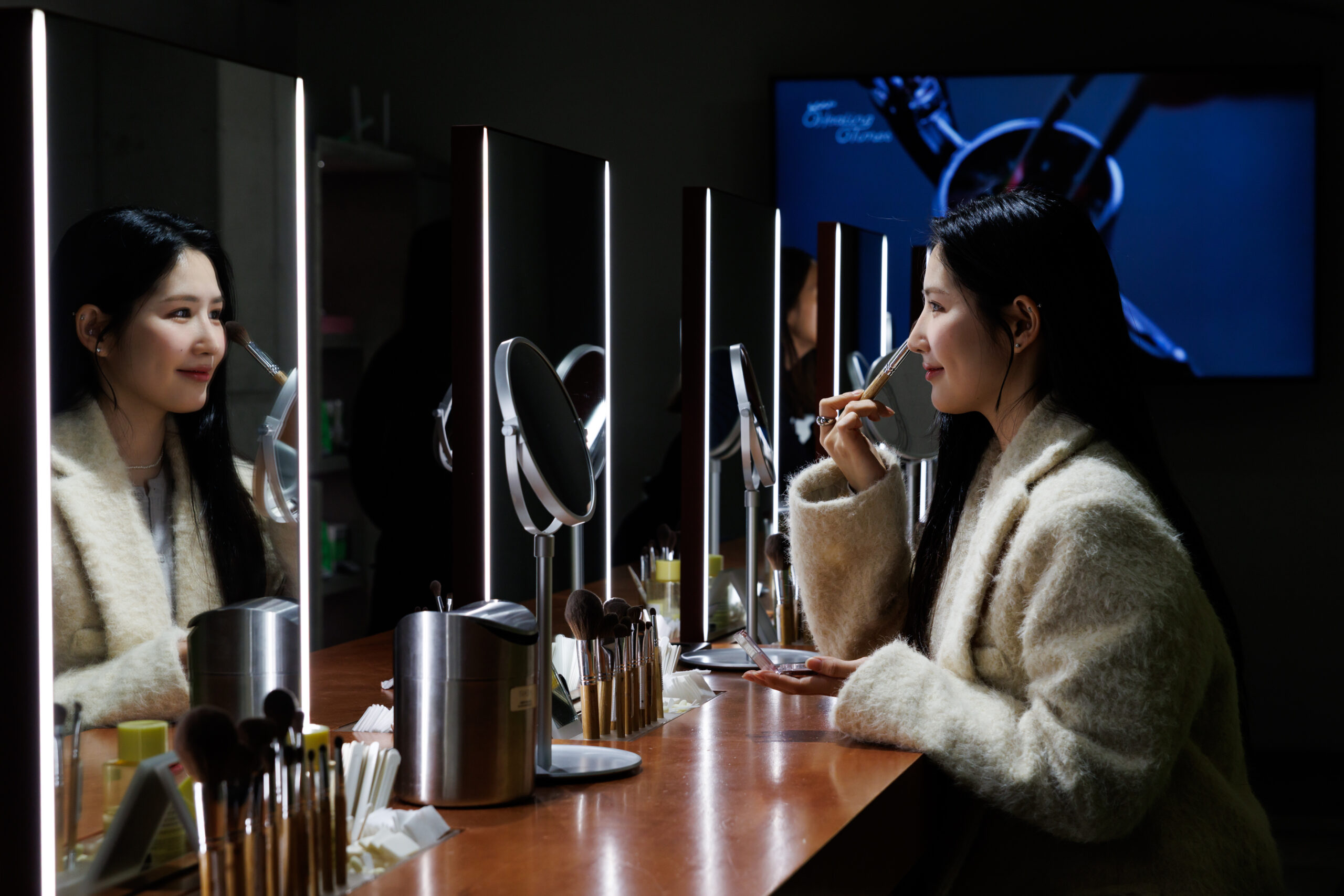
If you want a more luxurious experience, visit a beauty specialty store in a department store. Beauty concept stores such as Shinsegae Department Store's beauty select shop 'Chicor' or premium brand stores run by Amorepacific are equipped with AI diagnostic devices. Here, you can go beyond a simple skin diagnosis and have a professional consultant explain the AI's analysis results. For example, Amorepacific's 'Hera Custom Match' service analyzes your skin tone with AI and then manufactures customized foundation and lip products on the spot using a 3D printer. K-beauty shopping has now evolved from simply buying finished products to experiencing products that are 'made for me.'
Tips to Know When Using an AI Beauty Assistant
The more specific you are in conversation, the more accurate the recommendations
Rather than saying, 'Recommend a good skincare product,' it is important to set a specific situation, such as 'a lightweight but moisturizing serum I can use for a one-week summer vacation.' The more information you provide, the more accurately the AI can recommend products. It is helpful to mention your skin type, concerns (dryness, sensitivity, oiliness, etc.), purpose of use, and budget range.
How to use both online and offline together
It is effective to first narrow down the product range with an online app and then make the final decision after receiving a skin diagnosis in person at a convenience store or store. AI recommendations are based on objective data, but it is still important to experience the actual product's color payoff, scent, and texture yourself.
Pay attention to lighting when uploading photos
When using AI skin diagnosis features, taking photos in a bright environment with natural light is the most accurate. If you shoot under fluorescent lighting or in a place that is too dark, the analysis results may be less accurate. Especially while traveling, find a place with natural light, such as by a hotel window or next to a cafe window, and upload your photo there.
Experience Korea's Unique Hyper-Personalization Now
The Korean beauty industry is no longer just selling 'well-made products.' It has evolved into a service that finds 'the exact products you need' through big data and AI technology. Since this experience is offered in different ways at Amore Mall, Lotte On, convenience stores, and department stores, you can choose according to your travel schedule and preferences. In an age overflowing with information, AI assistants are ready to find the 'real' answer for you.