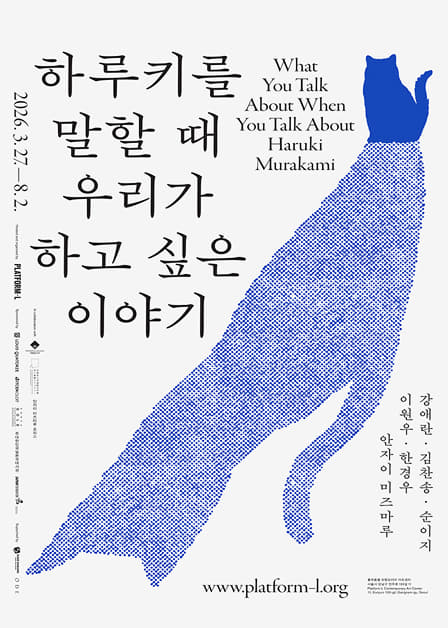
If you have read even one Haruki Murakami novel, you will probably perk up at the idea that his whole world has been moved to the middle of Gangnam. I had worn out my copies of Kafka on the Shore and 1Q84, so I bought a ticket without hesitation. In the end, though, it turned out to be an exhibition that could easily draw in even people who are not "Haruki fans." This large-scale special exhibition commemorates the 10th anniversary of Platform-L Contemporary Art Center and runs from March 27, 2026 to August 2, 2026 at 11 Eonjuro133-gil, Gangnam-gu. It presents not only Murakami Haruki's literary world, but also his tastes and attitude toward life, so even if you have not read his books, you can browse it as if strolling through one person's life.
Walking with cats, one room of Haruki's world after another
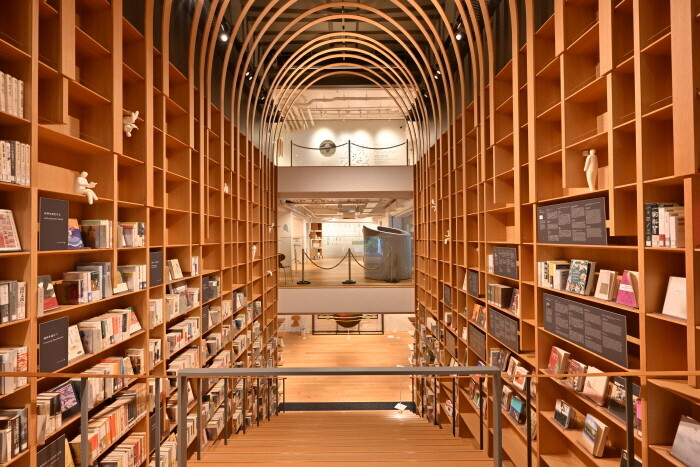
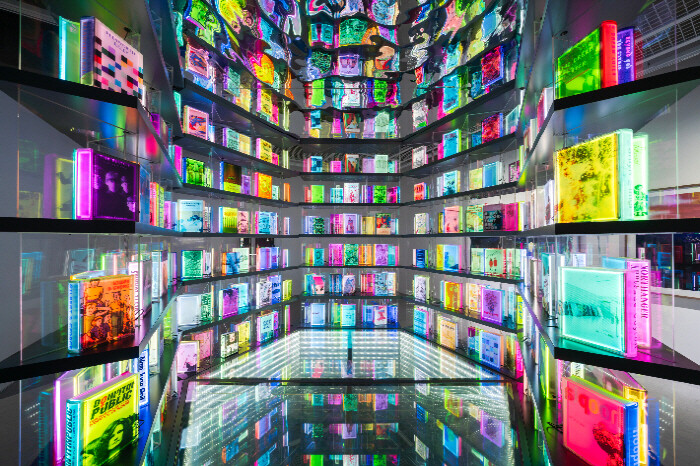
When you enter the exhibition, the first guide you meet is not a person but a cat. A nameless cat leads visitors across the boundary between reality and unreality, and when you remember that cats were always Haruki's companions moving between the inside and outside of life, this setup feels quite meaningful. The most memorable pieces for me were the LPs used at 'Peter Cat,' the jazz cafe Haruki himself ran in 1974, along with his collected items and drawings. In cooperation with the Waseda University International Literature Museum (Murakami Haruki Library), the exhibition is showing for the first time in Korea the items he donated, and it felt strangely moving to see with my own eyes what records had actually produced the jazz that drifted through his writing. More than 200 original works by illustrator Mizumaru Anzai (1942-2014), Haruki's longtime creative partner, were also unveiled in Korea for the first time. Following the pictures and anecdotes exchanged between the two reveals the visual roots of Haruki's world.
From Jang Kiha to chefs, people who love the same writer
This exhibition differs from a simple retrospective of the author in this way. It also unfolds the stories of nine people who each found their own meaning in Haruki. People from various fields, such as musician Jang Kiha, chef Jo Gwanghyo, and whiskey columnist Jeong Boyeon, share their cherished items and handwritten messages to explain what Haruki means to them. Just seeing how these different kinds of affection pile up around the same writer was fun. Works by Korean contemporary artists such as Kang Ae-ran, Kim Chansong, Soon Yi-ji, Lee Won-woo, and Han Gyeong-u reinterpret Haruki's philosophy with a contemporary sensibility, so even though it is a literary exhibition, it had the density of an art museum. In the listening room that recreates Haruki's jazz kissaten, it is also nice to simply sit for a while and listen to the music.
A foreign traveler's day - from booking to heading home
The first thing to do before going is book a ticket. Admission is KRW 20,000 for adults and KRW 16,000 for children and teenagers, and tickets can be reserved on the official Platform-L website and at NOL Ticket. I went on a weekday afternoon, so I could get in without any trouble even on the spot, but weekends and the final stretch can get crowded, so it is more comfortable to buy tickets online in advance. Opening hours are from 11:00 a.m. to 8:00 p.m., and it is closed on Mondays, so be sure to check the day. Payment is usually by card or mobile pay, so there was no major difficulty even with a foreign card.
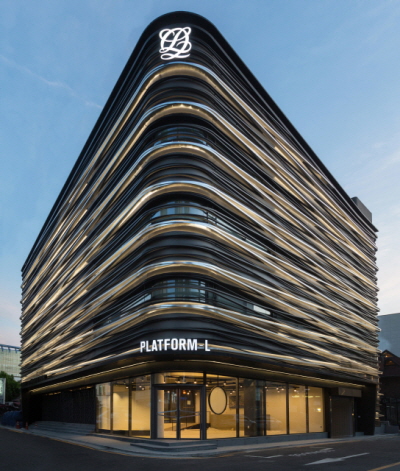
Getting there is not difficult either. If you approach from Hanti Station on the Bundang Line or by subway from the Seolleung and Gangnam area, it is within walking distance, and the most accurate way is to enter the address (11 Eonjuro133-gil) into a map app. Since it is right in the middle of Gangnam, the streets are clean and after seeing the exhibition, there are many nearby cafes and restaurants, so the evening flowed naturally. One useful thing to know is that Platform-L's structure requires you to briefly go outside the building and pass through an inner courtyard when moving between exhibition spaces. It can be a little inconvenient on rainy days, but I actually liked it because that short burst of outdoor air felt like a breather between the exhibits. It would be hard to say that English explanations are attached to every single work without exception, so knowing one or two Haruki titles beforehand will help you enjoy it much more fully.
Things to know in advance
The viewing route is fairly long and there is a lot to read and listen to, so it is best to allow plenty of time. I stayed for nearly two hours, but I still wished I could have spent longer in the listening room. During the four-month exhibition period, programs such as running sessions and related lectures are also being held, so if you are interested, check the schedule on the official page before visiting. To sum up, here is what is good to prepare.
- Tickets: Advance purchase recommended on the official website or NOL Ticket (to avoid weekend and late-period crowds)
- Day: Closed on Mondays, open 11:00-20:00
- Clothing: The route is long and you pass through an inner courtyard between buildings, so wear comfortable shoes and bring an umbrella if it rains
- Time: At least 1 hour 30 minutes to 2 hours, since the listening room and exhibition texts take time
So who is it recommended for?
I strongly recommend it to anyone whose heart has ever been moved by Haruki's sentences, and to anyone who likes exhibitions where music, art, and personal taste are woven into one person's life even if they have not read the books. The kindest thing about this exhibition was that when you leave the venue, what remains may be Haruki's world, or it may be your own story that surfaced in the meantime. If you want to spend a quiet half-day reflecting during a trip to Seoul, put this art center in Gangnam on your itinerary.
| Item | Score | Basis |
|---|---|---|
| Language accessibility | 3.0 | The exhibition has a large amount of text, but the scope of English guidance is limited in the available information; prior knowledge of the works is helpful |
| Transportation access | 4.0 | In central Gangnam, within walking distance of the subway; easy to find when searching the address in a map app |
| Foreign visitor facilities | 3.5 | Card and mobile pay accepted; as an indoor city-center exhibition, the basic facilities are solid |
| Local cultural experience | 4.5 | A rare cultural experience, including the first domestic unveiling of Waseda collection items and original works by Mizumaru Anzai |
| Value for money | 4.0 | For KRW 20,000 for adults, the density is high with collected items, contemporary art, a listening room, and related programs |
| Cleanliness/Safety | 4.5 | An indoor viewing environment is comfortable at this urban art center, which opened in 2016 |
| Food/amenities | 4.0 | In the middle of Gangnam, there are plenty of nearby cafes and restaurants, making it easy to connect the itinerary before and after the visit |
This article was compiled by our editorial team from official announcements and coverage of previous editions; it is not a first-hand visit report. Please confirm the final schedule and fees on the official website.
Festival Details
-
Festival Period3/27/2026 ~ 8/2/2026
-
Festival VenuePLATFORM-L Contemporary Art Center
-
Operating HoursDaily 11:00 - 20:00 (Last admission 19:00)
-
Admission FeeAdults (age 18 and over) 20,000 won Children and Teenagers (age 13 and over) 16,000 won Children under 36 months: Free
-
TagsInterpark Ticket Performance Reservations Haruki Stories (Essays/Discussions) Ticket Information
More Festivals



Popular Concerts
![EXO PLANET #6 - EXhOrizon [dot] -](https://kotourlive-images.s3.ap-northeast-1.amazonaws.com/concerts/1787215796640_ee65f451_thumbnail.jpg)
More Travel Guides in This Area
 Travel Guide
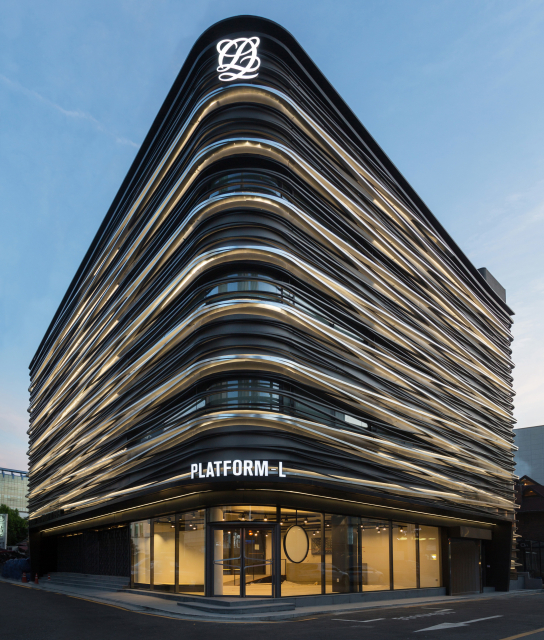
The Diamond-Shaped Exterior and 20-Meter-Deep Underground Live Hall in a Nonhyeon-dong Alley: Platform-L
 Travel Guide
A Spring of Joseon Embroidery in the Ceramic Building on Dosan-daero
 Travel Guide
A Road Lined with 160 Ginkgo Trees, Garosu-gil in Sinsa-dong
 Travel Guide