Namhae American Village, a Hometown Village for Korean Americans beneath Hogu Mountain
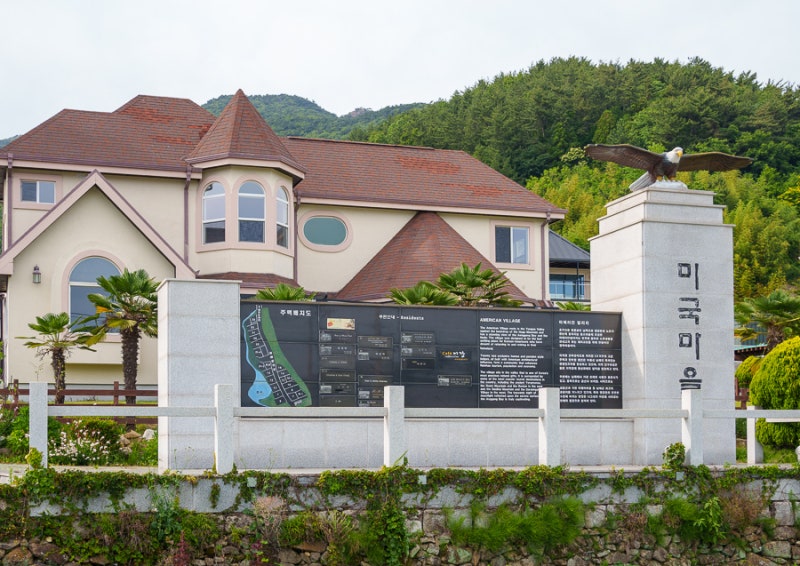
Namhae American Village was established by Namhae County to help Korean Americans returning from the United States settle back in their homeland. Twenty-one American-style wooden houses stand together in Yongso Village, Idong-myeon, facing Aenggang Bay with Hogu Mountain behind them. Open year-round with no admission fee, the village’s highlights include a Statue of Liberty replica, a metasequoia walking path, and the historic Yongmunsa Temple on the hill.
I’ve been here?
Your check-in helps the next traveler.
No one has checked in yet Be the first
One tap — no writing needed
Conditions for Becoming a “True Namhae Resident,” Announced by County Governor Ha Yeong-je in 2005
Namhae American Village began in 2005, when Namhae County Governor Ha Yeong-je announced plans to create a return-and-settlement village for Korean Americans. At the time, Namhae County required residents to give up their U.S. permanent residency, obtain South Korean citizenship, and transfer their resident registration to Namhae. This was intended to address the limited population-growth effect of the previously established German Village, where residents largely retained their German permanent residency.
Approximately 3 billion won was invested in the development, which built 21 American-style wooden houses, a welfare center, and sports facilities on a 24,750-square-meter site in Yongso-ri, Idong-myeon, Namhae-gun. Each house has a different roof color, window frame, and entrance decoration, making it enjoyable to look at the houses one by one even within the same village.
Between Hogu Mountain and Aenggang Bay, the Site of Yongso Village
The site of American Village was originally a small village in Idong-myeon, Namhae-gun, known as Yongso Village. Hogu Mountain stretches behind the village like a folding screen, while Aenggang Bay and the small island of Nodo in front of it can be seen at a glance to the south. Namhae is the fourth-largest island in South Korea and, being located at the southern tip, has relatively mild winters compared with inland areas at the same latitude.
The terrain, where the mountain blocks the wind and the sea unfolds before you, was the reason this site was chosen for Korean Americans planning to settle after retirement.
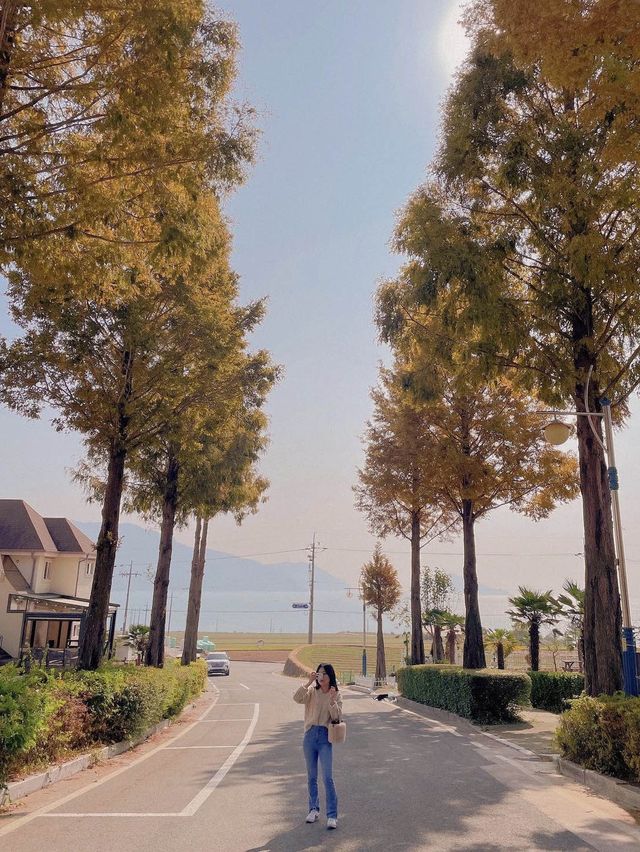
Metasequoia Foliage in Late Autumn, Hydrangeas at Yongmunsa Temple in Early Summer
Visitor accounts describe the metasequoia road at the village entrance as especially impressive when colored by autumn foliage. Accordingly, late October to early November, before the leaves have completely fallen, is considered a good time to walk along the road.
In early summer, it is worth changing direction. A visitor account posted in 2024 mentions that hydrangeas can also be seen at Yongmunsa Temple, located a little farther uphill from American Village. Even for a visit in June or July, you can plan a walking route that combines the village and the temple.
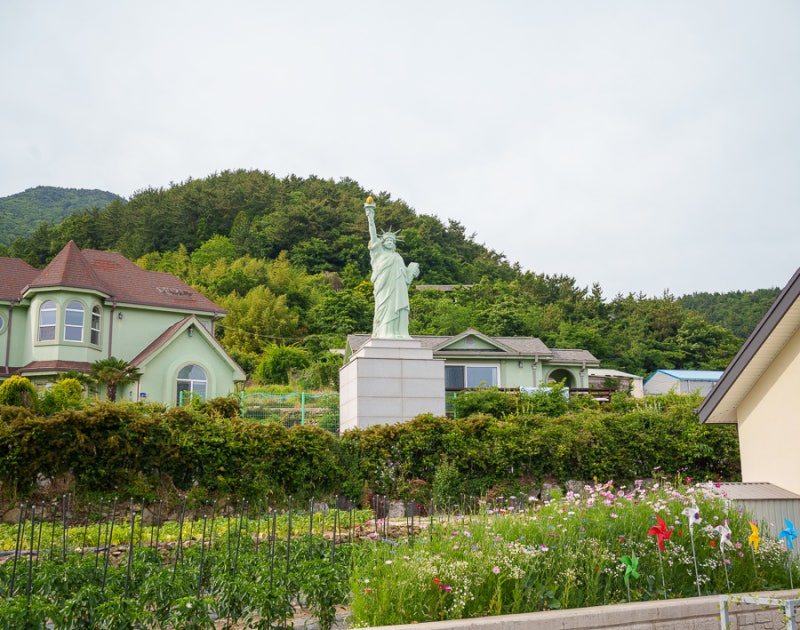
The Statue of Liberty Visible from Afar
As you approach the village by car, a replica of the Statue of Liberty, a symbol of New York, is the first thing that catches your eye. Although much smaller than the actual statue, it stands at the village entrance and serves as a landmark that immediately identifies the area as American Village.
Inside the village, a walking path lined with metasequoias is ideal for taking photos and strolling slowly. Since the village is not large, 30 minutes to an hour is enough to look around the entire area.
American Village Road 8: How to Get There by Bus or Car
By public transportation, take the Namhae–Gacheon bus from Namhae Public Bus Terminal and get off at the American Village stop. Since buses do not run frequently, it is advisable to check the schedule before departing. A taxi from the terminal takes about 25 minutes and costs approximately 24,000 won.
If driving, park at Yongmungokji Parking Lot at the top of the village (983-3 Yongso-ri, Idong-myeon, Namhae-gun, Gyeongsangnam-do) and walk downhill along the sloping village road. Visitor accounts repeatedly mention that the parking lot is spacious enough to accommodate large buses.
Open Year-Round Without an Admission Fee—but It Is a Residential Village
American Village is open year-round without a separate admission fee and operates every day of the year. Because it is a village made up of actual homes rather than a facility with opening and closing hours, there are no designated visiting hours.
Although the area was developed as a tourist attraction, it is also a residential space where people actually live. When walking along the village roads, visitors should be considerate by avoiding loud noises and refraining from casually looking into other people's yards. The main access road and the village entrance have no steps, making them accessible to wheelchairs and strollers.
Yongmunsa Temple on the Hill Inside the Village, Namhae’s Oldest Temple
A little farther uphill from the entrance to American Village is Yongmunsa Temple. It is said to be the successor of Bogwangsa Temple, which the monk Wonhyo established on Geumsan during the reign of King Aejang of Silla. In 1660, the first year of King Hyeonjong’s reign, the monk Baegwol moved the temple from its site opposite the local Confucian school to its present location above Yongso Village and named it Yongmun. The main hall was built in 1666, the seventh year of King Hyeonjong’s reign, while the building that remains today was reconstructed in 1703, the twenty-ninth year of King Sukjong’s reign.
Yongmunsa Temple preserves the Gwaebultaeng, a nationally designated cultural heritage item, as well as the main hall and a stone Buddha designated as a tangible cultural heritage item of Gyeongsangnam-do. The temple is often introduced as part of a walking route combined with American Village.
Later and Quieter Than German Village, Leading to Mixed Reviews
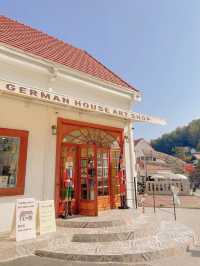
Namhae County began developing German Village in 2001, before American Village. Since many Korean Germans did not obtain Korean citizenship and retained their German permanent residency, the actual effect of population inflow was considered limited. American Village, developed later with citizenship acquisition as a condition, was planned to address this issue, but its recognition and visitor numbers remain relatively low compared with the better-known German Village.
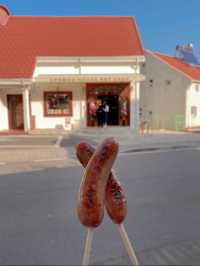
For that reason, American Village does not have the lively atmosphere of German Village, with rows of cafés and handmade sausage shops. Those expecting a flashy shopping district or crowded photo spots may be disappointed, while the village is better suited to people who want to take a slow walk through quiet residential alleys.
Places to Stay and Eat: Addresses Along American Village Road
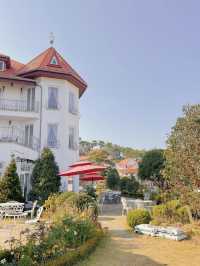
Several guesthouse-style pensions converted from actual homes operate within the village. Namhae Santa Fe Pension (13 American Village Road, Idong-myeon), Pension Manoa (6 American Village Road), Namhae Ever Rose (6-1 American Village Road), and Maryland Mansion (14-1 American Village Road) are located side by side along the village road. Most operate with check-in at 3 p.m. and check-out at 11 a.m.; advance inquiries are required for check-in after 10 p.m.
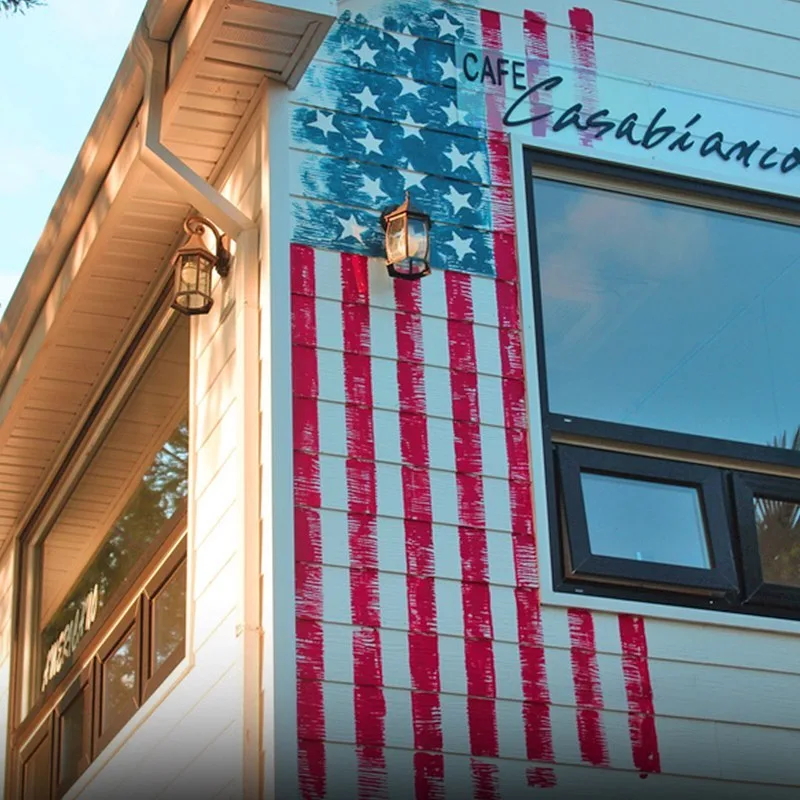
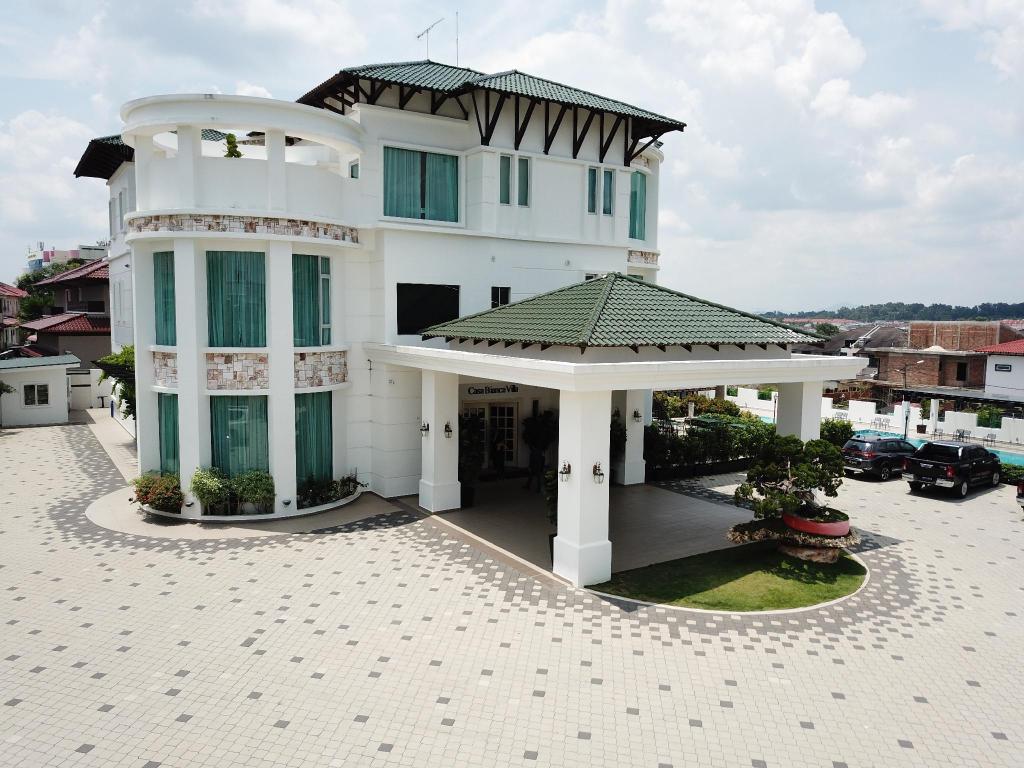
Meals are available at places such as Casa Bianca (12 American Village Road, Idong-myeon, 055-862-4575) within the village. If you want more choices, you can also travel to downtown Namhae or nearby German Village, so it is better to plan your route around mealtimes.
Before You Go
- Address
- 8 American Village Road, Idong-myeon, Namhae-gun, Gyeongsangnam-do
- Hours
- Open at all times (no separate operating hours)
- Closed
- Open year-round
- Admission
- Free
- Phone
- 055-860-8601 (Namhae County Tourism Promotion Division)
- Official site
- https://www.namhae.go.kr
- Transport
- Take the Namhae–Gacheon bus from Namhae Public Bus Terminal and get off at the 'American Village' stop / A taxi from the terminal takes about 25 minutes and costs approximately 24,000 won
- Parking
- Yongmungokji Parking Lot (983-3 Yongso-ri, Idong-myeon, Namhae-gun, Gyeongsangnam-do), free, large-bus parking available
- Time needed
- 30 minutes to 1 hour on foot
- Accessibility
- The main village access road has no steps, allowing wheelchair and stroller access (availability of foreign-language guidance has not been confirmed)
The information above is based on the time of writing. Please check the official guidance again before visiting.

Places
Nearby Attractions 4
-
 1
Yongmunsa TempleA Buddhist temple where visitors can explore cultural heritage and enjoy the scenery of a mountain temple.
1
Yongmunsa TempleA Buddhist temple where visitors can explore cultural heritage and enjoy the scenery of a mountain temple. -
 2
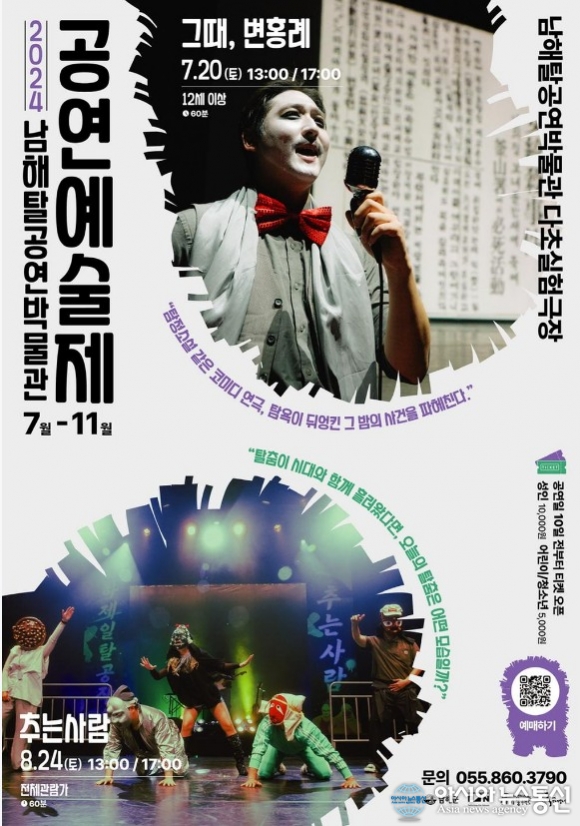
Namhae Mask Performance MuseumA museum exhibiting materials related to masks from around the world and the performing arts.
2
Namhae Mask Performance MuseumA museum exhibiting materials related to masks from around the world and the performing arts. -
 3
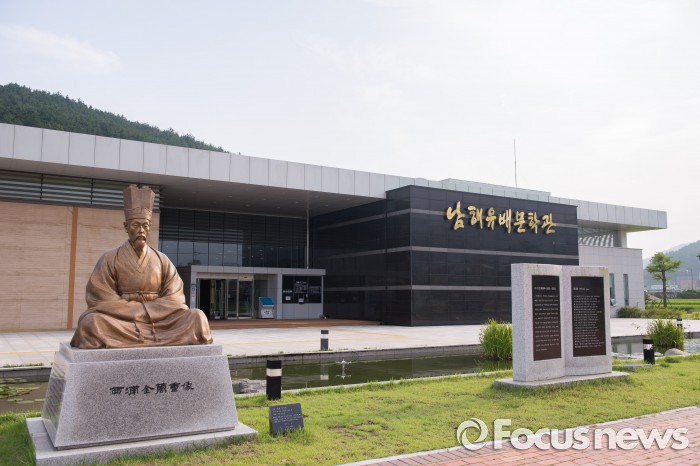
Namhae Exile Literature MuseumA literature museum that showcases and offers interactive experiences related to the history and literature of exile.
3
Namhae Exile Literature MuseumA literature museum that showcases and offers interactive experiences related to the history and literature of exile. -
 4
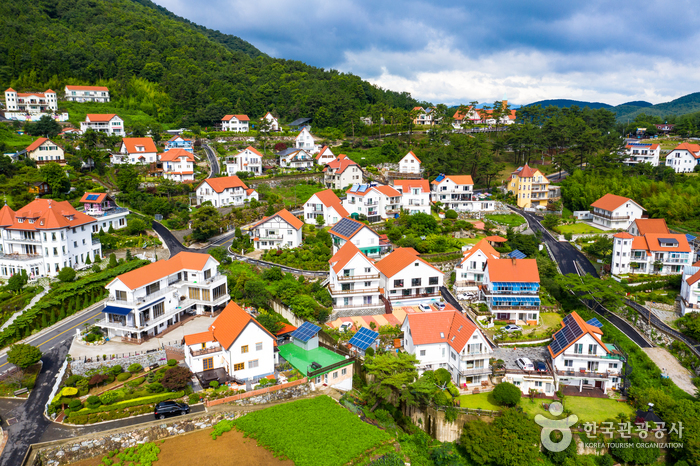
Namhae German VillageA tourist village where visitors can explore German-style houses and the history of Koreans dispatched to Germany.
4
Namhae German VillageA tourist village where visitors can explore German-style houses and the history of Koreans dispatched to Germany.
Food & Dining 3
-
 5
5
-
 6
Uri SikdangA restaurant serving anchovy ssambap and seasoned raw anchovy salad made with jukbang anchovies, caught using traditional bamboo fish traps.
6
Uri SikdangA restaurant serving anchovy ssambap and seasoned raw anchovy salad made with jukbang anchovies, caught using traditional bamboo fish traps. -
 7
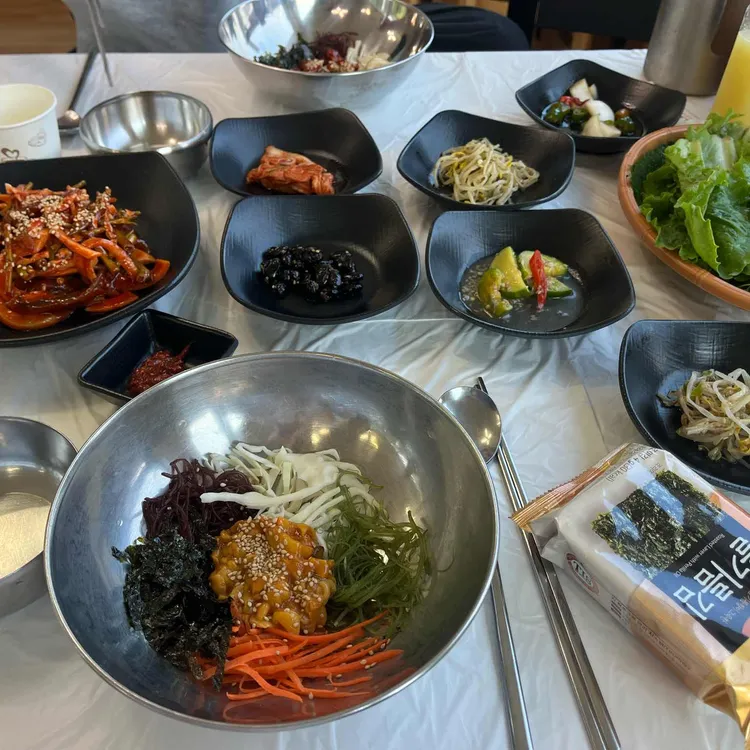
Howonjeong Myeolchi SsambapA Namhae regional cuisine restaurant where you can enjoy anchovy ssambap and spicy raw anchovy salad.
7
Howonjeong Myeolchi SsambapA Namhae regional cuisine restaurant where you can enjoy anchovy ssambap and spicy raw anchovy salad.
Events in This Area

Festivals in This Area
More Travel Guides in This Area
 Travel Guide
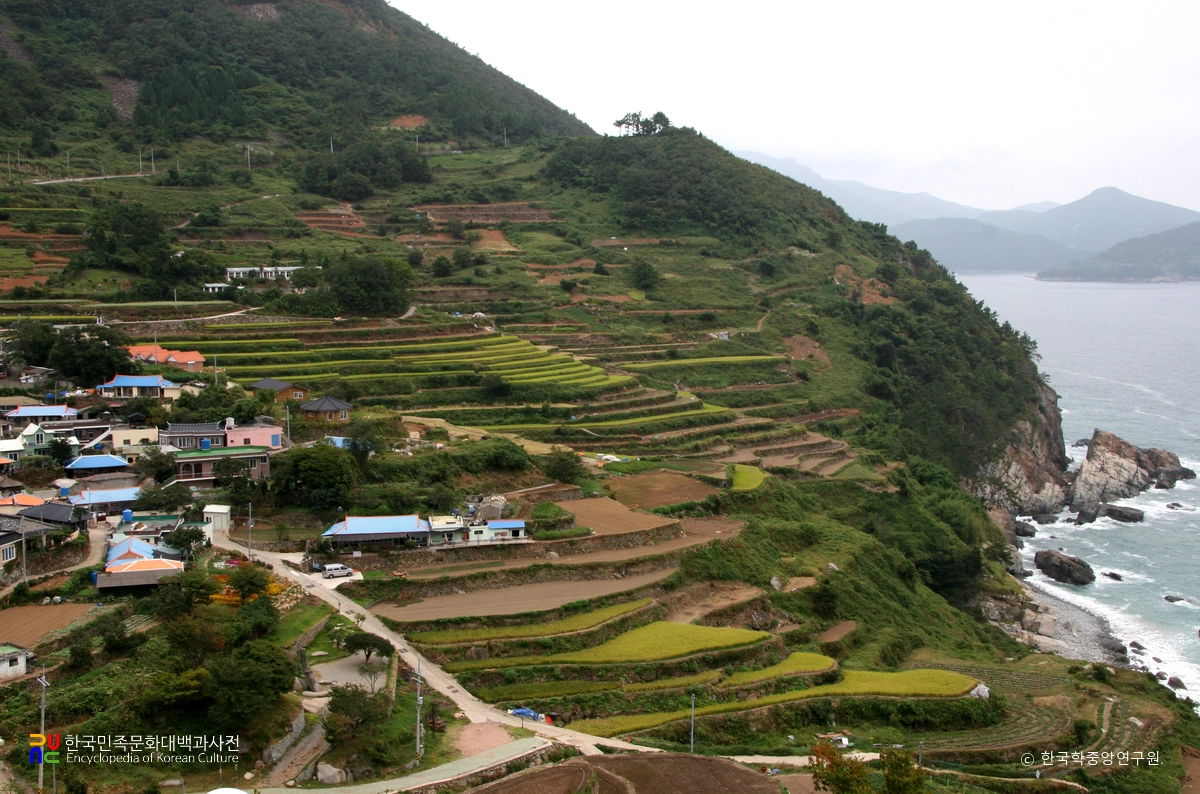
Namhae Gacheon Darangyi Village, Where 108 Tiers of Rice Terraces Descend to the Sea
 Travel Guide
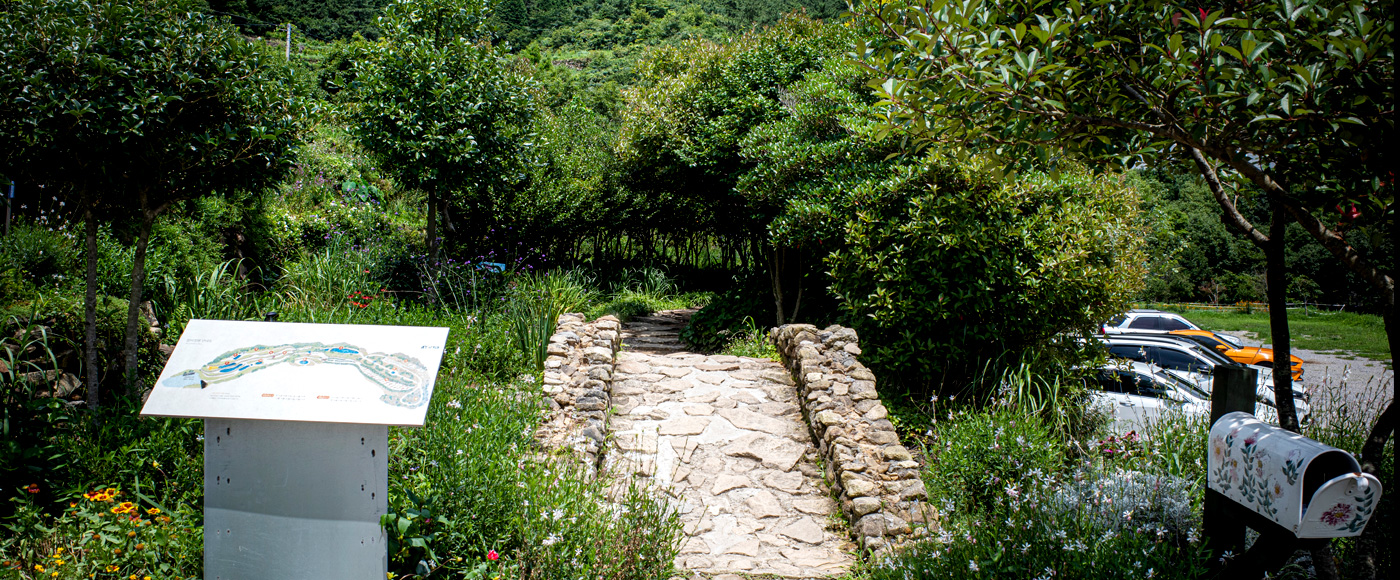
Namhae Seomi Garden: Nine Terraced Plots Transformed into Flowers
 Travel Guide
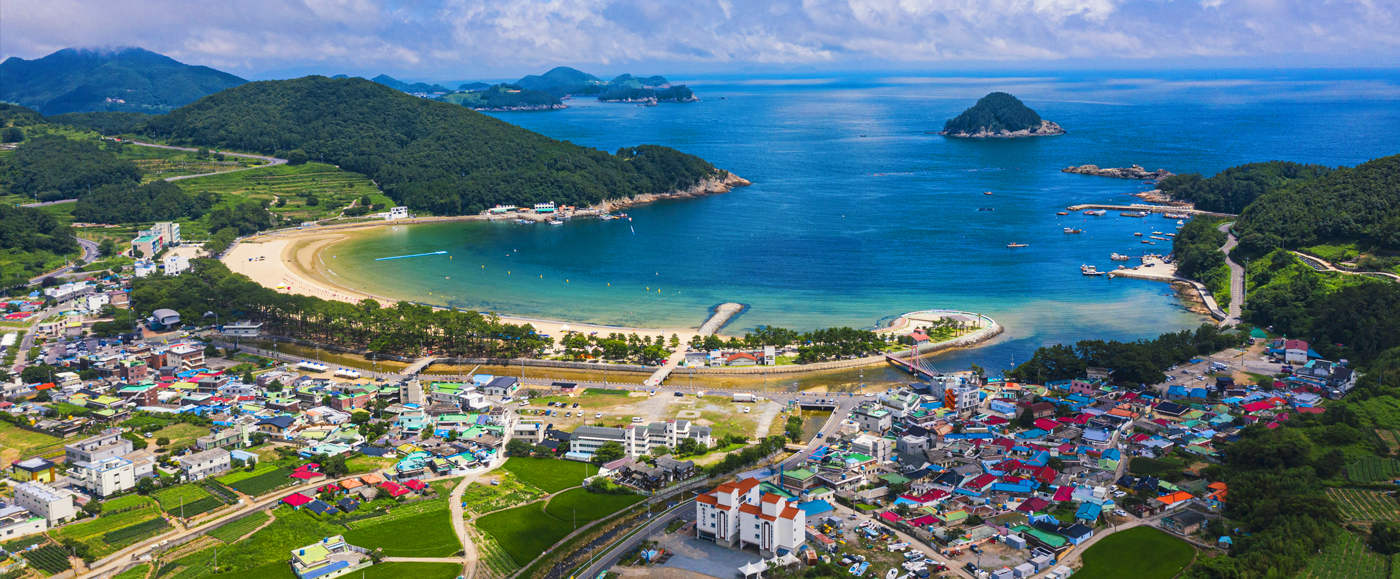
Namhae Sangju Silver Sand Beach
 Travel Guide
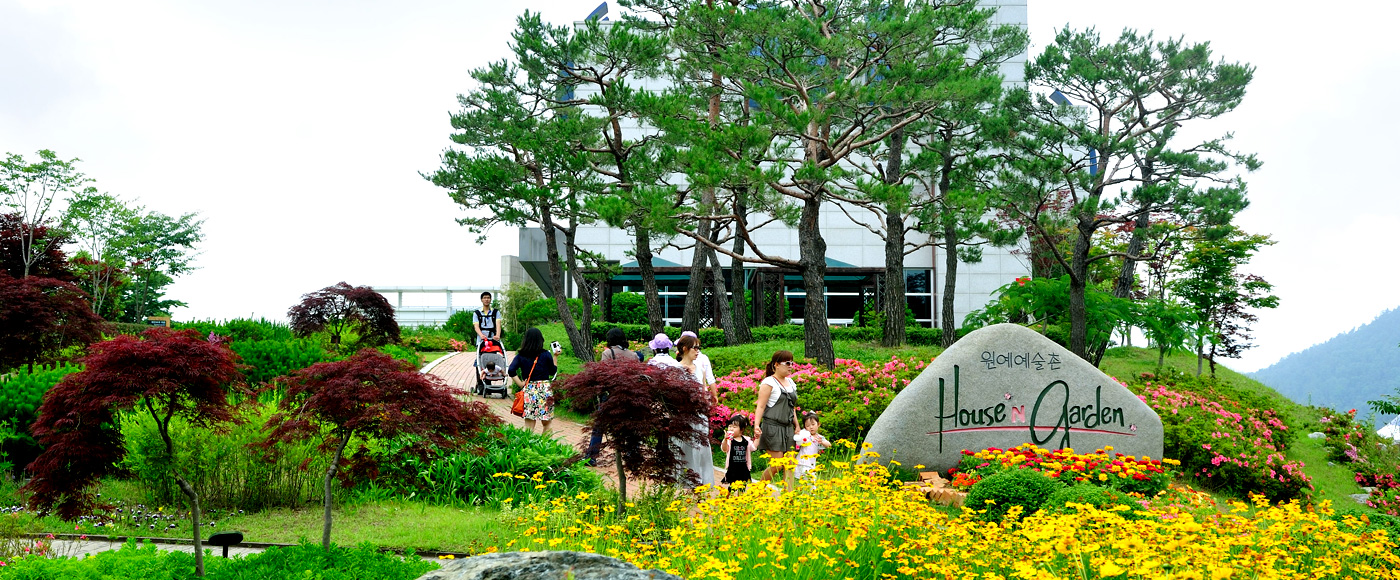
Namhae Garden Art Village Created by 20 Horticultural Artists: A 50,000-Pyeong Garden Community Next to German Village
Korea News
 News
News
TWS heightens comeback excitement with kitschy charm… Anticipation for “plot twist” rises
 News
News
BTS, Six Months After Its Release… ‘Arirang’ Climbs the U.S. Billboard 200
 News
News
'The Nation's Girl Group' RESCENE, Five Girls Transformed into Guardians… Additional Concept Photos for Their 4th Mini Album Revealed
 News
News