Reading Footprints on the Rocks at Goseong Deokmyeong-ri Coast Before the Tide Comes In
The Goseong Dinosaur Fossil Site is a natural heritage site where you can encounter dinosaur and bird footprints preserved in Cretaceous strata along the coast of Sangjokam County Park. As the museum is fully closed through the end of 2026, the focus of this visit is the coastal trail timed with the tide and the sea cave at Sangjokam.
I’ve been here?
Your check-in helps the next traveler.
No one has checked in yet Be the first
One tap — no writing needed
Why a Lakeshore from 120 Million Years Ago Remains on the Deokmyeong-ri Coast
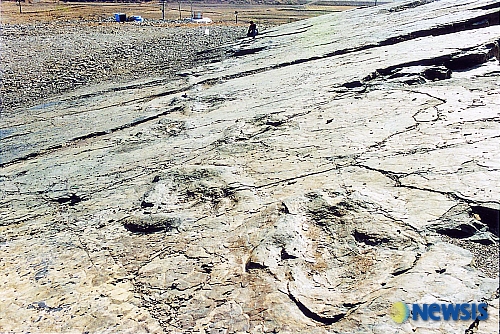
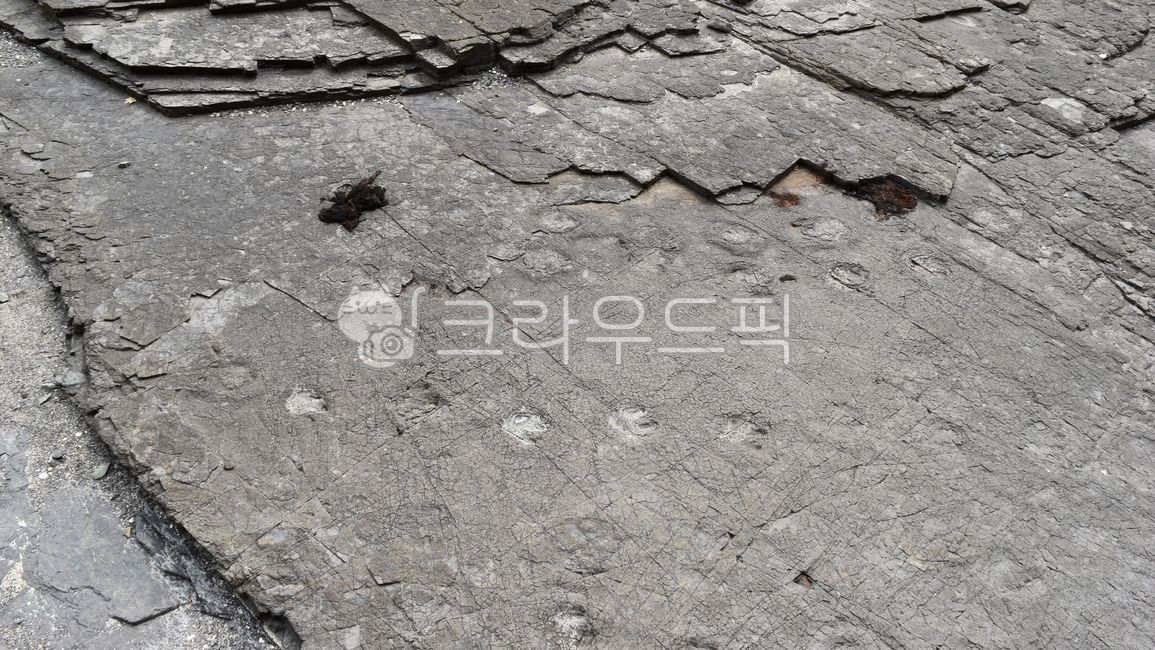
The core of the Goseong Dinosaur Fossil Site is officially designated as the “Dinosaur and Bird Footprint Fossil Site in Deokmyeong-ri, Goseong.” These are trace fossils discovered in sedimentary layers from the Cretaceous Period of the Mesozoic Era. The National Heritage digital service explains that they are academic materials that allow researchers to examine the natural and depositional environments, the distribution of land and sea, and the evolutionary process of birds at the time through the traces of living organisms from approximately 120 million years ago. The site was designated a Natural Monument on September 14, 1999, and covers 150,465㎡ of land and 1,261,372㎡ of sea area.
This is a place where the “ground walked on by dinosaurs” itself is the heritage, rather than a facility displaying dinosaur bones. National Heritage materials state that the quantity and diversity of dinosaur footprints rank among the world’s best, and that it is the largest bird-footprint fossil site from the Mesozoic Era in the world. Goseong County’s tourism information introduces the coast around Deokmyeong-ri as a place where sauropod, ornithopod, and theropod footprints have been identified, and advises visitors to check the time when the sea recedes first if they want to see both the fossil coast and the Sangjokam sea caves.
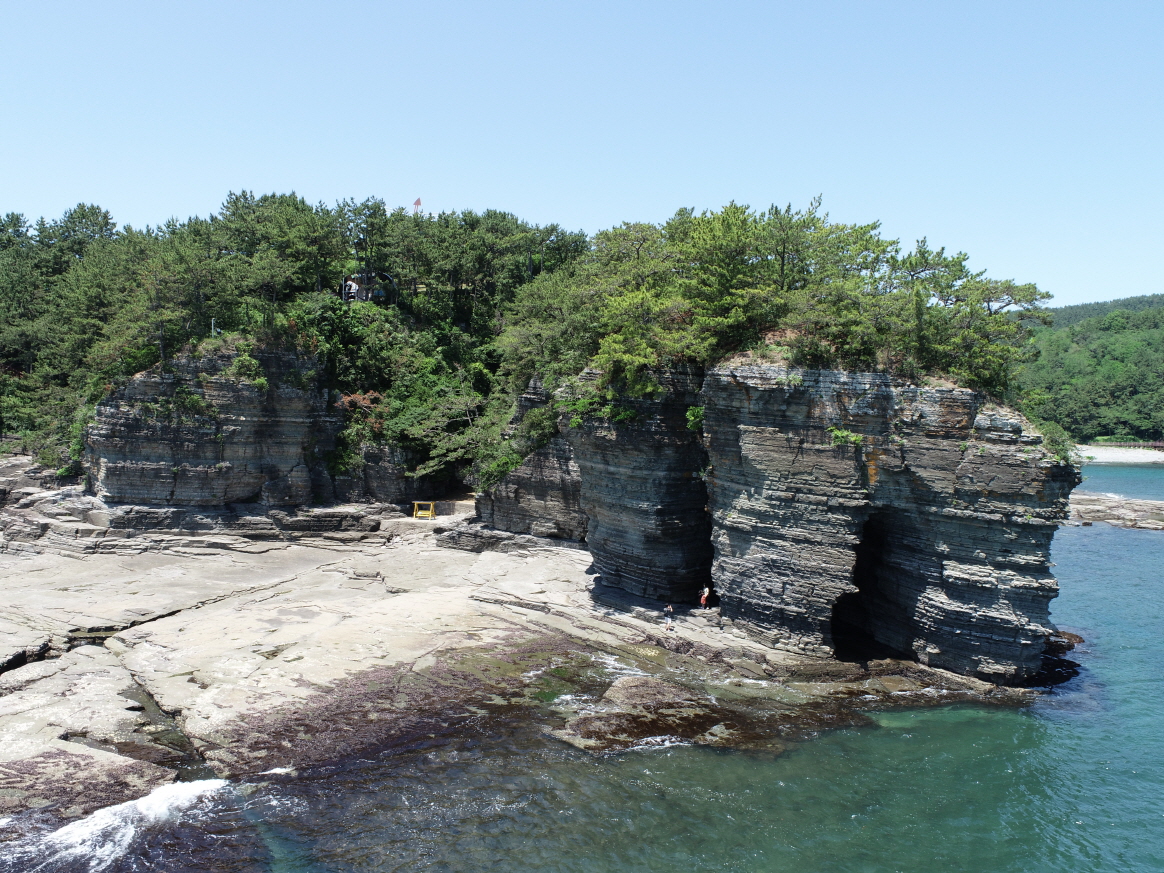
How to Include Sangjokam’s “Table-Leg Rocks” and Sea Caves on the Same Route
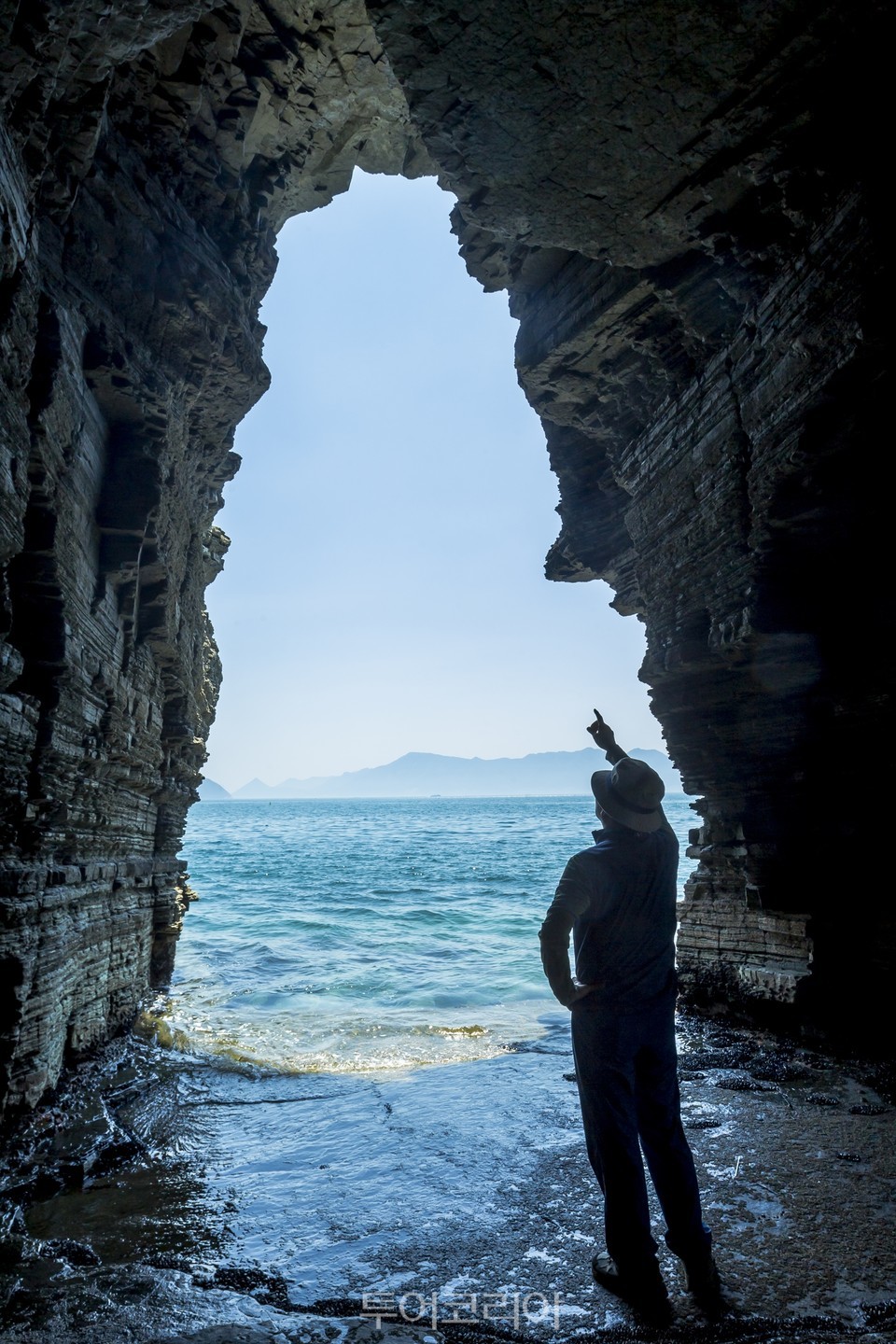
The address of Sangjokam County Park, the gateway to the fossil site, is 618 Jaranman-ro, Hai-myeon, Goseong-gun, Gyeongsangnam-do, and the contact number is 055-832-9021. “Sangjok (床足)” means “table legs,” a name derived from rocks resembling the legs of a dining table. Goseong County explains that Sangjokam is also called Sangjok or Ssangbal. Since coastal bedrock, unusual cliffs, and views of the Hallyeohaesang National Park waterway meet here, it is easy to combine fossil observation and coastal-landform viewing into one route.
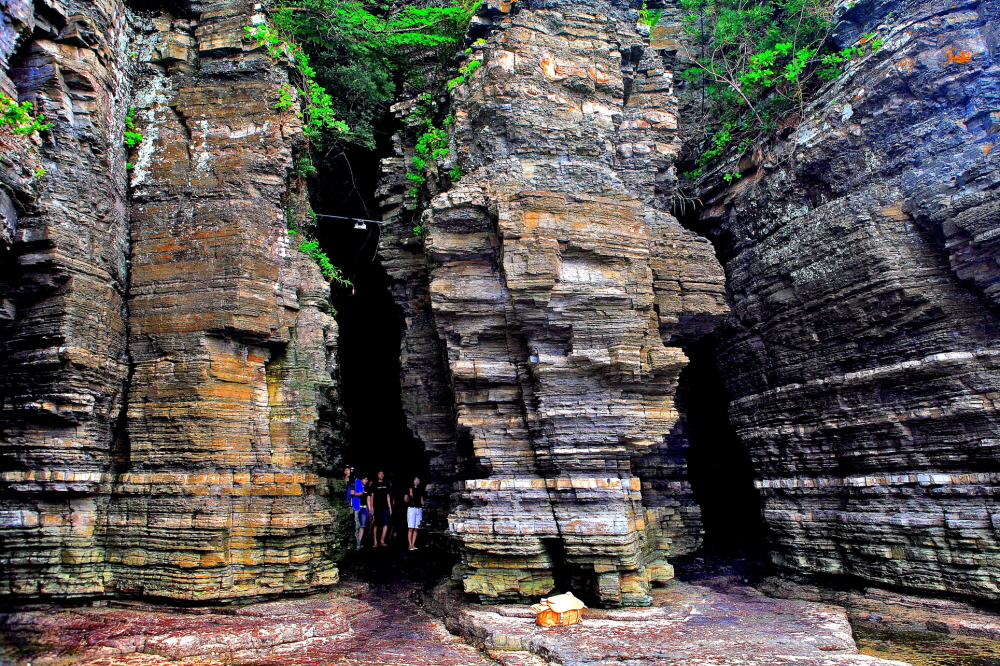
The Sangjokam sea caves are flooded by seawater at high tide. Therefore, if you plan to enter as far as the cave entrances, check the day’s tide table and any on-site access restrictions first. Wearing shoes with slip-resistant soles is safer on wet bedrock. The Goseong County Culture and Tourism website also separately announces monthly tide information for viewing the fossil site and sea caves. If the waves are high or the water is rising, do not force yourself to see the footprints and caves; it is better to change your route to focus on the decks and viewpoints.
3.5 km from Ipam Village to the Museum: The Actual Distance of the Dinosaur Fossil Coast Trail
The Dinosaur Fossil Coast Trail introduced by the Ministry of Oceans and Fisheries’ Coastal Portal connects the entrance to Ipam Village with Sangjokam Beach over 1 km, the Dinosaur Fossil Exploration Trail over 0.3 km, the Gyeongnam Youth Training Center over 1 km, Sangjokam over 0.4 km, and the Goseong Dinosaur Museum over 0.8 km. Adding the listed sections gives approximately 3.5 km. Since the route moves between coastal rocks and trails, it is more realistic to allow two to three hours, including photography, fossil observation, and waiting for the tide, rather than estimating time based solely on a flat walking pace.
Both the tide and the condition underfoot are important if you want to see the footprints up close. For a short itinerary focused only on the sea caves, concentrate on the area around Sangjokam. If you want to see more of the fossil site’s coastline, it is better to travel from the Ipam Village side. Because the rocky sections and cave access may not be suitable for wheelchair or stroller users, it is safest to call the park management office before departure and ask which deck sections are available that day.
In 2026, Plan Around the Outdoor Fossil Site Instead of the Goseong Dinosaur Museum
The Goseong Dinosaur Museum inside Sangjokam County Park is known as Korea’s first dinosaur museum, opened in 2004. In the past, admission was 3,000 won for adults, 2,000 won for youths and military personnel, and 1,500 won for children. Under the municipal ordinance, its usual operating hours from March through October were 09:00–18:00, and its closing days were January 1, Lunar New Year, Chuseok, and every Monday. If Monday was a public holiday, the first weekday afterward was the closing day.
However, the museum is fully closed from January through the end of 2026 for exhibition-environment improvements and remodeling. Therefore, you should not include museum exhibitions or ticket purchases in your current itinerary. The number listed for general inquiries about the Dinosaur Museum is 055-670-4451. Before setting out, check the reopening schedule and the operating status of some park facilities again through the Goseong County Culture and Tourism website or by phone.
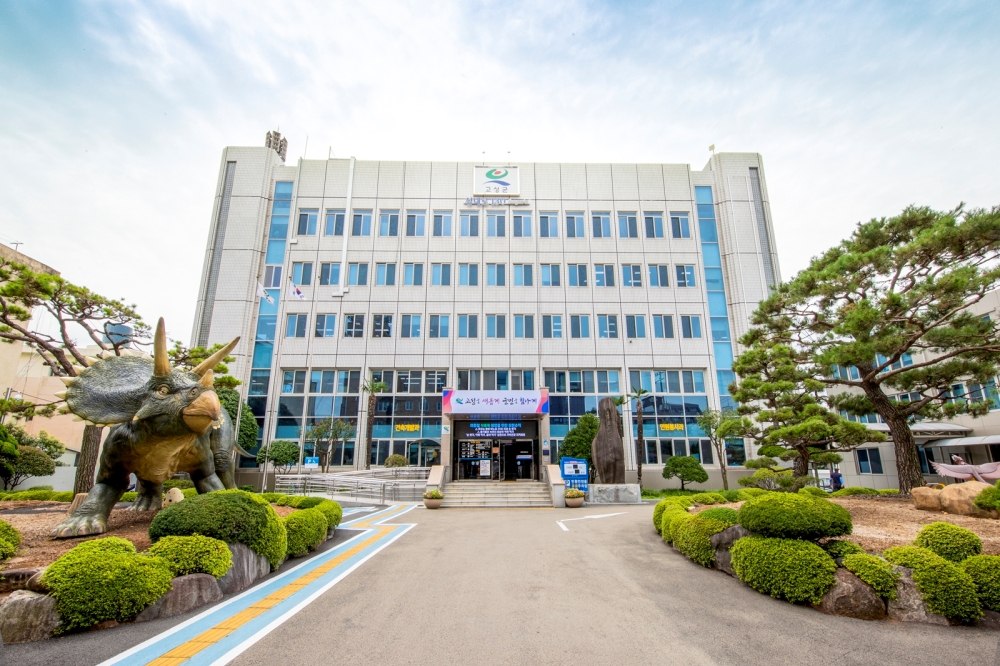
From Goseong Bus Terminal to Jejeon Stop: Leave the Final 400 m
For public transportation, visitors can take a rural bus bound for Hai-myeon from the Goseong Passenger Vehicle Terminal bus stop and get off at Jejeon Stop. According to travel information from the Rail Industry Information Center, Sangjokam County Park is approximately 400 m on foot from Jejeon Stop. However, rural bus schedules and service intervals may change, so be sure to reconfirm the Goseong County bus timetable on the day of departure.
Visitors arriving by car can plan around the museum and park parking lots. Under the parking-fee standards in the operating ordinance for the Goseong Dinosaur Museum, compact vehicles cost 2,000 won and large vehicles cost 3,000 won. Compact and large vehicles carrying low-emission vehicles or passengers with disabilities cost 1,000 won and 1,500 won, respectively. Compact vehicles include passenger cars, vans with up to 15 seats, and trucks under 1 ton; vehicles that exit within 30 minutes are not charged. Since on-site parking operations and fee application may change during the museum’s closure, follow the signs before entering.
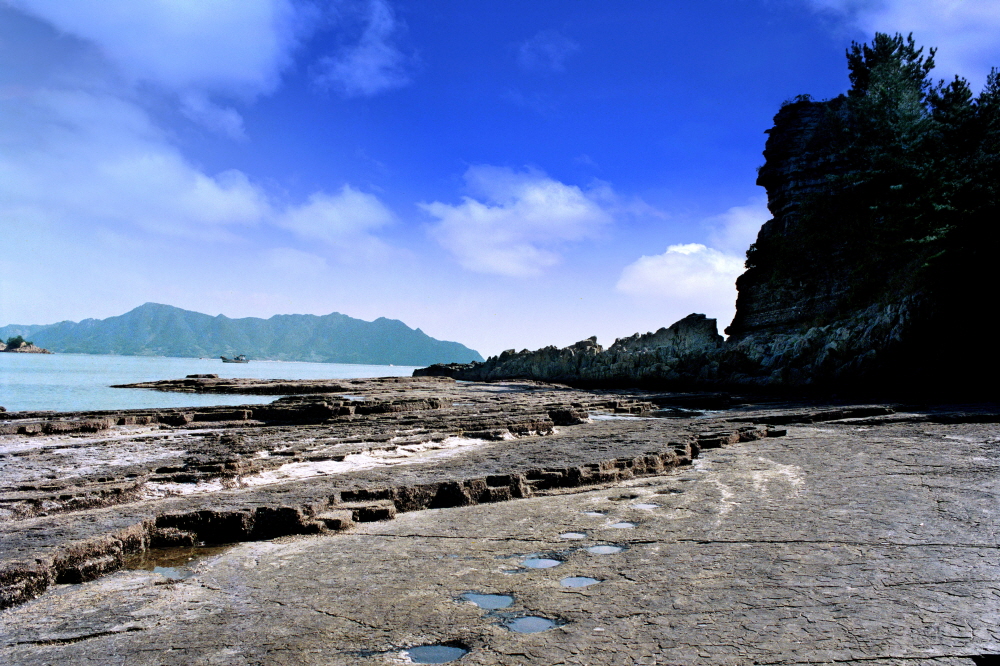
Five Things to Prepare for a Morning with the Right Tide or a Windy Day
The success of a visit here depends more on the low-tide time than on the admission time. Since the sea caves and coastal bedrock meet the sea, it is best to arrange your schedule so that you arrive around low tide, either in the morning or afternoon. The Dinosaur Fossil Coast Trail introduced by the Ministry of Oceans and Fisheries was selected in 2012 as one of Korea’s five representative Coastal Nuri Routes. However, because it is a coastal trail, rain, strong winds, and high waves can make the same distance feel much more difficult.
Recommended items are slip-resistant sneakers or trekking shoes, a windbreaker, water, a portable phone battery, and a tide-checking display or app. Fossils are protected resources, so do not damage the bedrock or rub its surface, and do not go beyond the safety line. During the museum’s 2026 closure, indoor places to rest or eat may be limited, so it is best to prepare water and simple snacks before entering the park.
Go Beyond the Fossil Site by Linking Sangjokam, the Youth Training Center, and Ipam Village
For a short half-day visit, the simplest option is to start at Jejeon Stop or the parking lot, see the Sangjokam coast and sea caves, and return. If you have more time for walking, continue from Sangjokam past the Gyeongnam Youth Training Center toward the Dinosaur Fossil Exploration Trail and Sangjokam Beach. This lets you view the same Cretaceous coastal landforms from different heights and distances. The Coastal Portal’s section guide lists the distance from Sangjokam to the Goseong Dinosaur Museum as 0.8 km, but the museum’s interior exhibitions cannot be visited in 2026.
Goseong County’s tourism information introduces the coastline around Sangjokam as a place where dinosaur footprints remain over approximately 6 km. Rather than trying to cover every section in one day, it is better to prioritize the sections permitted by the tide. For travelers who find walking on rocky paths difficult or expect indoor exhibitions, 2026 may not be the ideal time to visit. Conversely, travelers whose goal is outdoor geological heritage and coastal landforms can still find value in visiting regardless of the museum’s closure.
Two Coastal Views of Sangjokam County Park to See in Photos First
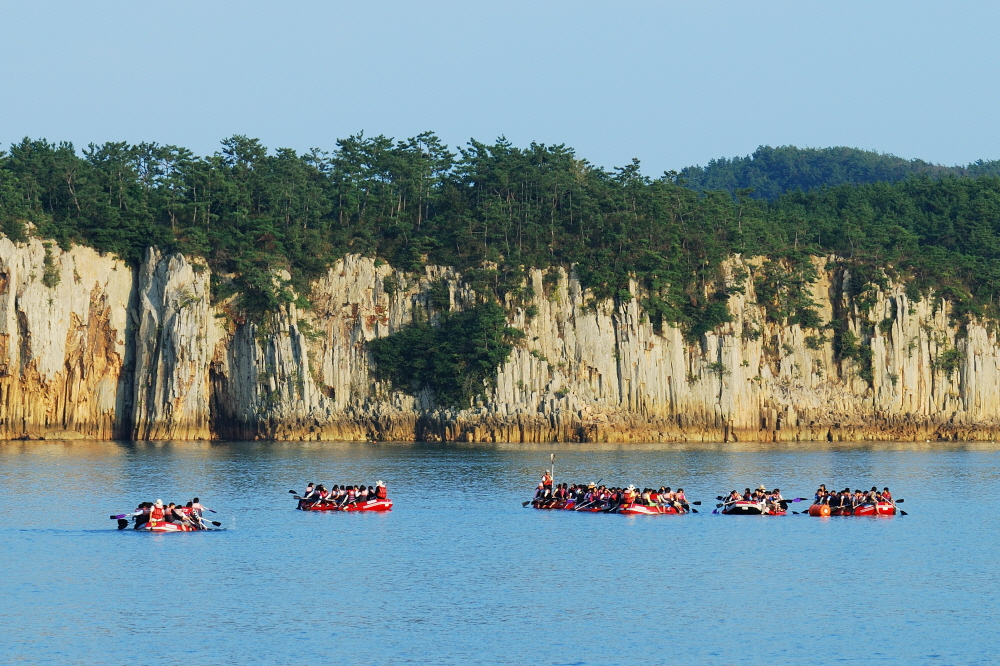
Photos on the official tourism page for Sangjokam County Park help visitors understand in advance the relationship between the sea-eroded landforms and coastal bedrock. The area that can actually be accessed may vary according to the tide, weather, and safety restrictions, so do not descend into dangerous areas in search of the same composition as a photograph.
Preserving dinosaur footprints is more important than simply discovering them. Follow the viewing route designated by the trail and information signs. When traveling with children, plan the visit around monitoring tidal changes and footing safety before focusing on the rock surfaces.
Before You Go
- Address
- 618 Jaranman-ro, Hai-myeon, Goseong-gun, Gyeongsangnam-do
- Hours
- The sections of the outdoor fossil site and Sangjokam County Park that can be visited may vary according to the tide, weather, and safety restrictions. The Goseong Dinosaur Museum is fully closed from January through December 2026.
- Closed
- The Goseong Dinosaur Museum is fully closed through the end of 2026. Its usual closing days under the ordinance are January 1, Lunar New Year, Chuseok, and every Monday. If Monday is a public holiday, the next first weekday is the closing day.
- Admission
- Admission fees for the outdoor fossil site could not be confirmed. The Goseong Dinosaur Museum’s previous individual admission fees were 3,000 won for adults, 2,000 won for youths and military personnel, and 1,500 won for children, but it is fully closed in 2026.
- Phone
- Sangjokam County Park 055-832-9021 / Goseong Dinosaur Museum 055-670-4451
- Official site
- https://www.goseong.go.kr/tour/index.do
- Transport
- Take a rural bus bound for Hai-myeon from the Goseong Passenger Vehicle Terminal bus stop, get off at Jejeon Stop, and walk approximately 400 m to Sangjokam County Park. The county bus timetable must be reconfirmed on the day.
- Parking
- Under the ordinance, compact vehicles cost 2,000 won and large vehicles cost 3,000 won. For low-emission vehicles and vehicles carrying passengers with disabilities, the fees are 1,000 won for compact vehicles and 1,500 won for large vehicles. Exits within 30 minutes are free; on-site operations during the closure must be confirmed.
- Time needed
- Two to three hours for the Sangjokam sea caves and the core fossil-site sections; the full listed Dinosaur Fossil Coast Trail sections cover approximately 3.5 km.
- Accessibility
- The coastal bedrock and sea caves are often wet and uneven, creating significant limitations for wheelchair and stroller access. Calling the management office to ask about available deck sections and same-day restrictions is recommended.
The information above is current as of the time of writing. Check the official information again before visiting.

Places
Nearby Attractions 5
-
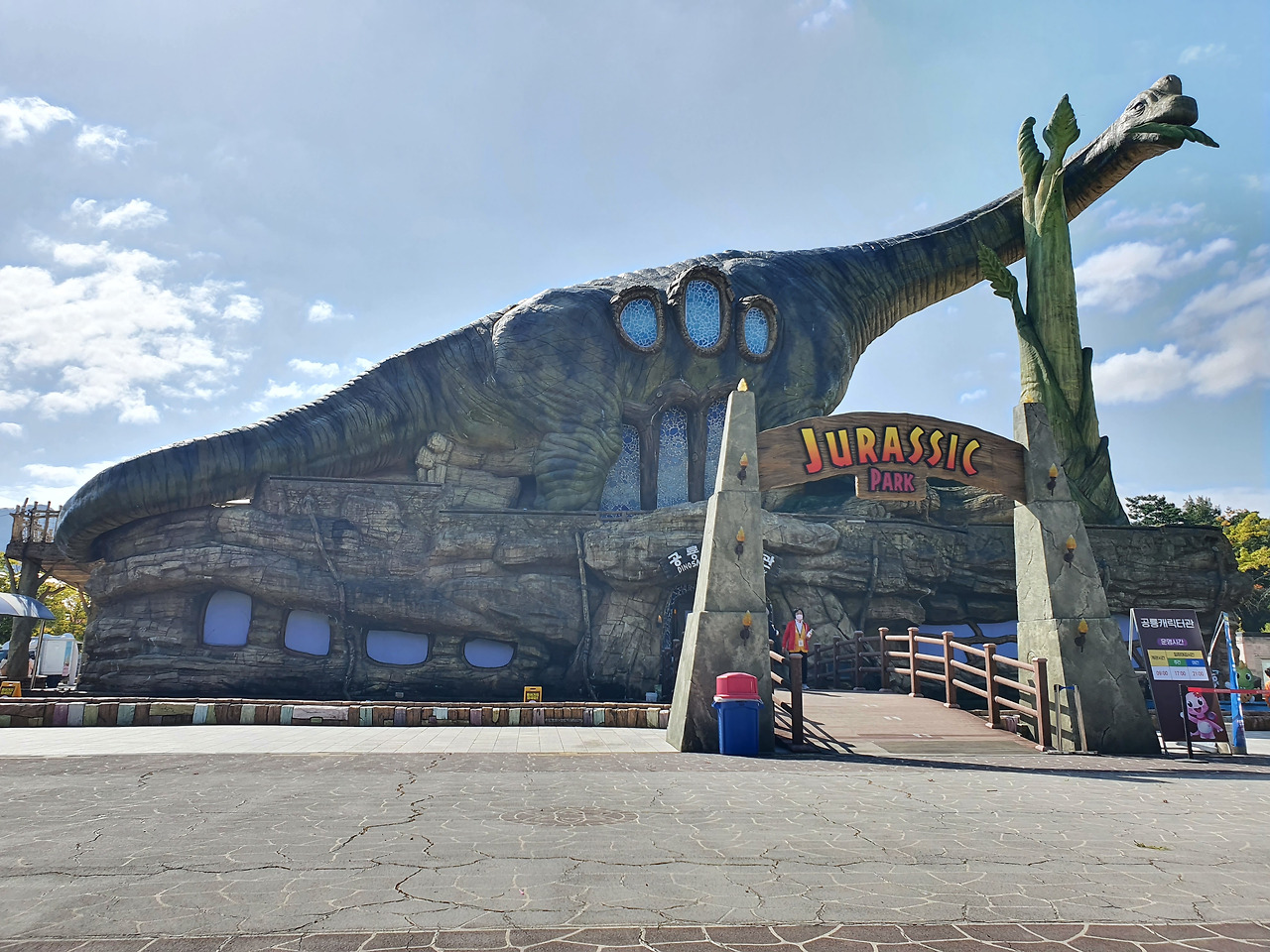 1
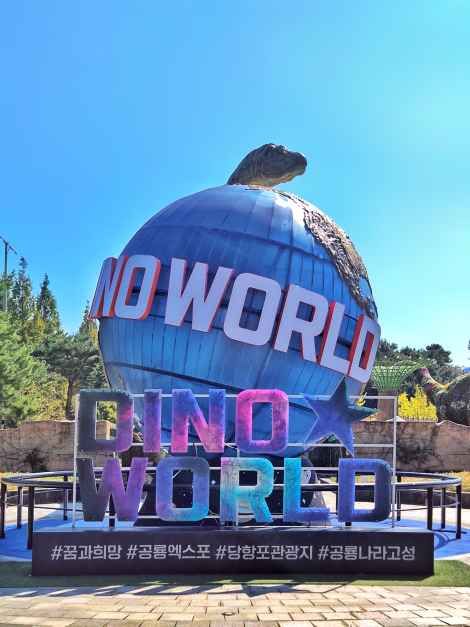
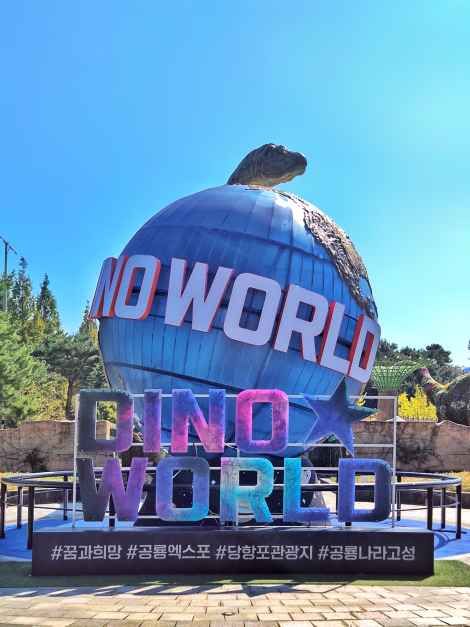
Gyeongnam Goseong Dinosaur World Expo
1
Gyeongnam Goseong Dinosaur World Expo -
 2
2
-
 3
3
-
 4
4
-
 5
5
Food & Dining 5
-
 6
6
-
 7
7
-
 8
8
-
 9
9
-
 10
10
Events in This Area

Festivals in This Area

More Travel Guides in This Area
 Travel Guide
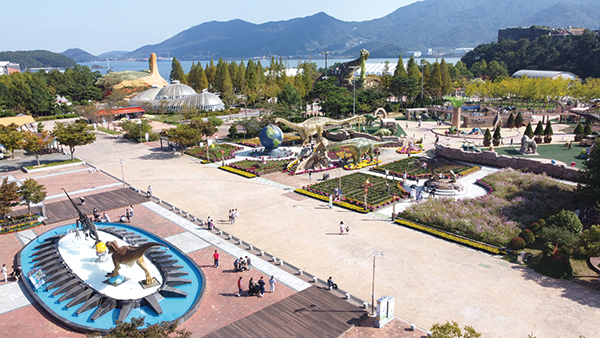
From the 1592 Naval Battle Site to the Dinosaur Exhibition Hall: A Route through Danghangpo Tourist Site in Goseong
 Travel Guide
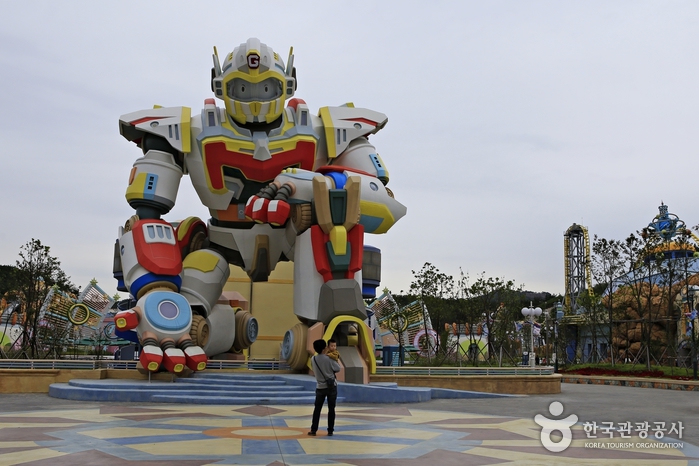
Gyeongnam Masan Robot Land
 Travel Guide
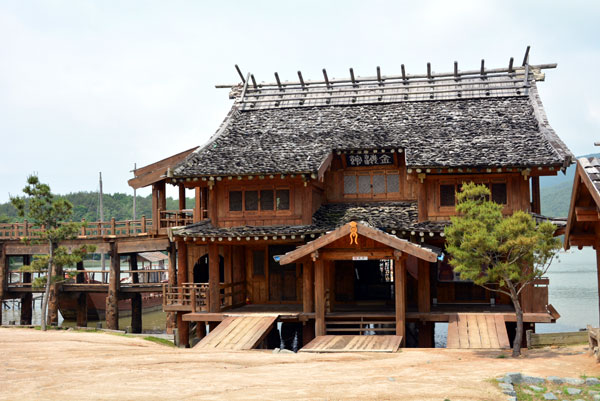
Maritime Drama Set: Walking Through a Gaya Port on the Masan Coast
 Travel Guide
Explore a 160,000㎡ Meadow and a 1,017 m Monorail at Geoje Forest Sound Park
Korea News
 News
News
"Overcoming the Getty curse" Jang Wonyoung, with unreal proportions and beauty straight out of a Barbie doll
 News
News
A2O LITE Tops Melon TOP100 Just 29 Hours After Debut, Setting the Fastest Record for a Debut Song
![Billlie's Tsuki 'Makes an Entrance Showing Off Her Beautiful Figure' [MK Photo]](https://kotourlive-images.s3.ap-northeast-1.amazonaws.com/news/1792027947835_957f0cb8_news_5c0023c5-e9a0-4640-9154-cb0b69d810c4.jpg) News
News
Billlie's Tsuki 'Makes an Entrance Showing Off Her Beautiful Figure' [MK Photo]
![ENHYPEN ‘Fighting for the Macau performance too!’ [★Video]](https://kotourlive-images.s3.ap-northeast-1.amazonaws.com/news/1792027887815_5057637d_news_8041e5cd-8b22-4193-bb46-880c65d944f7.jpg) News
News